
Many elderly individuals experience dysphagia, a swallowing disorder that affects a large share of nursing home residents. When liquids move too quickly through the mouth and throat, they can slip into the lungs and cause aspiration pneumonia, a serious and sometimes life-threatening condition. Thickening liquids slows their flow, giving older adults better control and dramatically reducing the risk of choking or aspiration.
This guide walks you through how to thicken liquids safely using the IDDSI framework, the global standard for texture-modified foods and drinks. You’ll learn the correct preparation method, the tools you need, how to avoid common mistakes, and why professional guidance is essential.
Always work with a speech and language therapist before thickening any drink. Only thicken liquids if specifically recommended after a formal swallowing assessment. Never guess the consistency—too thick or too thin can both increase risk. With the right technique, thickened drinks can be safe, enjoyable, and easy to manage at home.
Understanding IDDSI Drink Thickness Levels

What the IDDSI Framework Covers
The International Dysphagia Diet Standardisation Initiative (IDDSI) sets the global standard for modified food and drink textures. It defines five drink thickness levels, with Levels 1 through 4 applying to thickened liquids. Each level has specific flow characteristics and visual cues you can use to verify accuracy at home.
Level 1: Slightly Thick (Like Full-Fat Milk)
This is the thinnest safe option for modified liquids. It flows slowly but remains easy to drink through a straw and leaves minimal coating on a spoon. Level 1 suits individuals with mild swallowing difficulties who need just a small adjustment to their drinks.
Level 2: Mildly Thick (Like Single Cream)
Level 2 flows steadily but more slowly than water and leaves a thin film on the back of a spoon. It remains drinkable through a straw. This consistency offers more resistance than Level 1, improving oral control without making sipping difficult.
Level 3: Moderately Thick (Like Double Cream)
At this level, liquid drips slowly from a spoon in thick drops and is difficult to suck through a straw. It holds its shape briefly when tilted. Level 3 works well for individuals who need significantly more control over liquid movement in the mouth.
Level 4: Extremely Thick (Like Set Yogurt)
This level cannot be poured from a cup and holds its shape when spooned. It slides off a spoon without dripping and is typically eaten rather than drunk. Level 4 is reserved for severe dysphagia where eliminating uncontrolled flow is critical to safety.
Essential Equipment for Thickening Liquids

Gather These Supplies First
Having the right tools on hand ensures accurate, lump-free results every time. Always start with clean, dry equipment to maintain both hygiene and consistency.
You will need:
– A tin of commercial thickener with its matching scoop
– A measuring jug calibrated for accurate volume
– A clean, dry cup or mug
– A fork or teaspoon for stirring
– The drink you want to thicken, either hot or cold
Why the Scoop Size Matters
Scoop sizes vary between brands. Always use the scoop that came inside your specific thickener tin. Using a different scoop, even with the same number of scoops, will change the final consistency. Check the packaging regularly for any updates to formulation or recommendations.
Step-by-Step Instructions for Thickening Liquids
Follow This Exact Order
The sequence below prevents lumps and ensures uniform thickness. Skipping a step or reversing the order can ruin the drink, so follow it carefully.
-
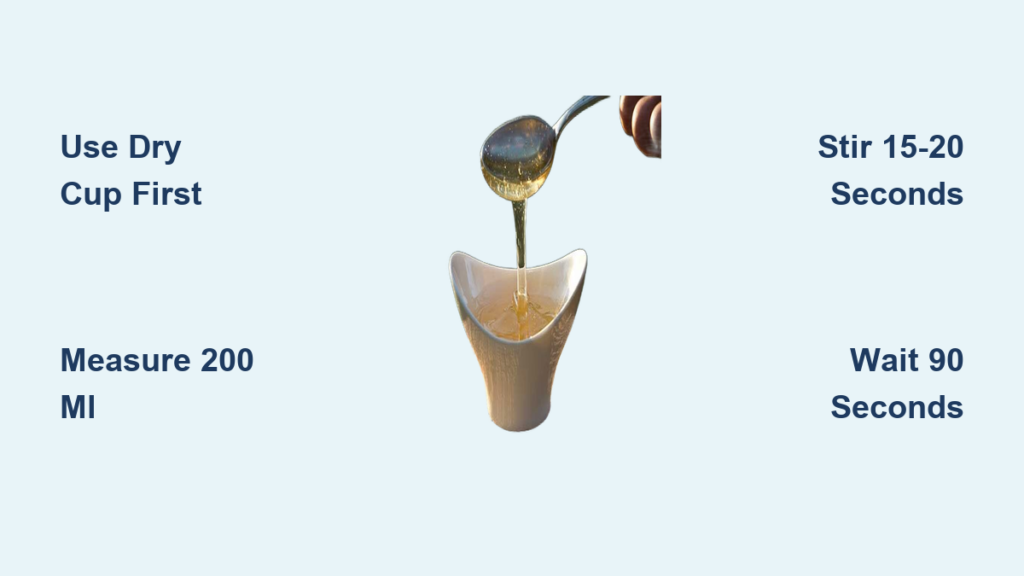
Add the powder to a dry cup first. Place the correct number of scoops into a completely dry container. This is the single most important step. Wet cups or reversed order cause clumping that cannot be fixed later.
-
Measure 200 mL of liquid. Use a calibrated measuring jug for accuracy. The standard serving size is 200 mL, roughly a small glass. Do not estimate. Too much liquid dilutes the thickener; too little makes it overly dense.
-
Pour the liquid into the cup with the powder. Add the measured drink slowly, letting it flow down the inside of the cup to minimize splashing and air bubbles.
-
Stir thoroughly for 15 to 20 seconds. Use a fork or small spoon to scrape the bottom and sides. Make sure no dry pockets of powder remain. Stirring distributes the thickener evenly and activates its thickening properties.
-
Wait 60 to 90 seconds. Let the mixture sit undisturbed. Thickening occurs during this time, so do not serve immediately. Checking too early may show falsely thin results.
Troubleshooting Common Thickening Problems
What to Do When Consistency Is Wrong
Even with careful preparation, problems can arise. Know how to respond so you never serve an unsafe drink.
If the Drink Is Too Thick or Lumpy
Discard it immediately and start over. Do not try to fix it by adding more liquid, because this creates uneven texture and unsafe pockets of thin liquid. Lumps also pose choking hazards and should never be served.
If the Drink Is Too Thin
Wait the full 90 seconds before judging. If it is still too thin after that, do not add more thickener to the current drink. Instead, adjust the scoop count for the next round. For example, if you used one scoop, try 1.5 scoops next time. Never re-thicken a drink that has already been prepared.
Key Tips for Preventing Lumps
Always add powder to the dry cup first, and stir quickly and completely after pouring. Avoid blenders unless a therapist specifically recommends them, since blending can alter texture. When possible, use room-temperature liquids, because extreme heat or cold can affect how evenly the thickener activates.
Thickening Different Types of Beverages
Adjust Technique Based on the Drink
Not all liquids behave the same way. Special handling ensures proper consistency and safety across different beverages.
Carbonated Drinks: Degas First
Stir fizzy drinks such as soda or sparkling water in an open container. Wait until the bubbles stop rising, then follow the standard thickening steps. Thickening carbonated liquids without degassing causes overflow and inconsistent texture.
Hot Drinks Like Coffee and Tea
Brew the drink as usual, then measure 200 mL after brewing. Add the thickener using the standard method and wait 90 seconds before serving. Many commercial thickeners are heat-stable, so thickened coffee or tea retains both flavor and safety.
Milk and Cereal
All milk must be thickened, including milk poured over cereal. Pour the milk into the bowl first, then thicken it using the standard method, and stir well before adding the cereal. This ensures safe swallowing from the very first bite, since unthickened milk on cereal creates hidden aspiration risks.
Improving Water Clarity
For clearer results, use cold boiled or bottled water instead of tap water. Tap minerals can react with some thickeners and cause cloudiness. Clearer water looks more natural and encourages better hydration, especially when served on its own.
Comparing Natural and Commercial Thickeners

Choose Based on Safety and Purpose
While natural options exist, most have significant limitations. Commercial products remain the safest and most reliable choice for daily liquid modification.
Why Commercial Thickeners Work Best
Examples include products like Thick-It and similar options available through pharmacies and healthcare suppliers. Their advantages include:
– Flavorless and colorless, so they do not alter taste
– Work in both hot and cold drinks
– Adjustable from nectar to pudding thickness by varying the amount used
– IDDSI-compliant when prepared according to instructions
These are the only recommended option for daily thickening in elderly care.
Starch-Based Natural Thickeners
Flour, cornstarch, arrowroot, and tapioca can thicken liquids, but they require heating to activate. This limits their use to hot beverages and soups. They do not work reliably in cold drinks like juice or water, because they break down without heat.
Food-Based Thickeners for Meals
Mashed potatoes, pureed vegetables, oatmeal processed into flour, and cream of wheat are good options for thickening soups, stews, and casseroles. They add body and nutrition to solid foods but should not replace commercial thickeners in drinks.
Products to Avoid: Gelatin and Puddings
Jell-O, gelatin desserts, and pudding should never be used as thickeners. They melt at body temperature and turn back into thin liquid inside the mouth or throat. This dramatically increases aspiration risk, even when they appear thick on the spoon.
Essential Safety Rules for Caregivers
Never Skip Professional Guidance
Thickened liquids are a medical intervention, not a matter of personal preference. Safety depends entirely on expert oversight.
Get a Swallowing Evaluation First
Request a formal assessment from a speech and language therapist. They will determine the correct IDDSI level, may recommend trials with different consistencies, and can reassess regularly as needs change. Never start thickening without this evaluation.
Follow the Prescribed Level Strictly
All drinks must match the prescribed thickness, including alcohol, juice, and milk. Mixing levels increases risk. If you care for multiple people with different needs, use clearly labeled containers to avoid confusion.
Watch for Aspiration Warning Signs
Contact a healthcare provider immediately if you notice:
– Coughing during or after drinking
– A wet-sounding voice after swallowing
– Shortness of breath following a drink
– Frequent chest infections
Frequently Asked Questions About Thickening Liquids for the Elderly
What Consistency Should an Elderly Person Drink?
The right consistency depends on the individual’s swallowing ability, which must be assessed by a speech and language therapist. The IDDSI framework offers five levels, ranging from slightly thick (like milk) to extremely thick (like set yogurt), and only a professional can determine which is safe.
Can You Use Cornstarch to Thicken Drinks for the Elderly?
Cornstarch requires heating to activate, so it only works in hot liquids like soups or coffee. It is not reliable for cold drinks such as juice or water. Commercial thickeners are strongly preferred because they work at any temperature and deliver consistent results.
Why Can’t You Use Jelly or Pudding to Thicken Drinks?
Jelly, gelatin, and pudding melt at body temperature. Once inside the mouth, they return to a thin liquid and can easily enter the lungs. This makes them unsafe for anyone with dysphagia, despite appearing thick on the spoon.
How Long Does It Take for Liquid Thickener to Work?
Most commercial thickeners reach their full consistency within 60 to 90 seconds. Always wait the full time before serving, because checking too early can give a falsely thin reading.
Do You Need to Thicken Milk on Cereal?
Yes. Milk poured over cereal must be thickened to the same prescribed level as all other drinks. Unthickened milk creates a hidden aspiration risk because it mixes with the food and can slip into the airway during swallowing.
Can Elderly People Stop Using Thickened Liquids?
Some individuals regain safer swallowing over time, but this should never be decided without a therapist’s reassessment. Swallowing ability can improve or decline, and only a professional evaluation can confirm when a change is safe.
Key Takeaways for Thickening Liquids Safely
Thickening liquids for the elderly is a critical safety measure for anyone living with dysphagia. The most important steps are getting a formal swallowing evaluation from a speech and language therapist, following the IDDSI level exactly as prescribed, and using commercial thickeners for reliable, repeatable results. Always add powder to a dry cup first, measure 200 mL precisely, stir thoroughly, and wait the full 90 seconds before serving. Avoid natural alternatives like gelatin and unheated starches, and never adjust thickness without professional input. With the right approach and proper guidance, thickened liquids can keep your loved one both safe and comfortably hydrated.
Practical next step: If you suspect swallowing difficulty in yourself or a loved one, request a swallowing assessment from a speech and language therapist before making any changes to drink consistency.





