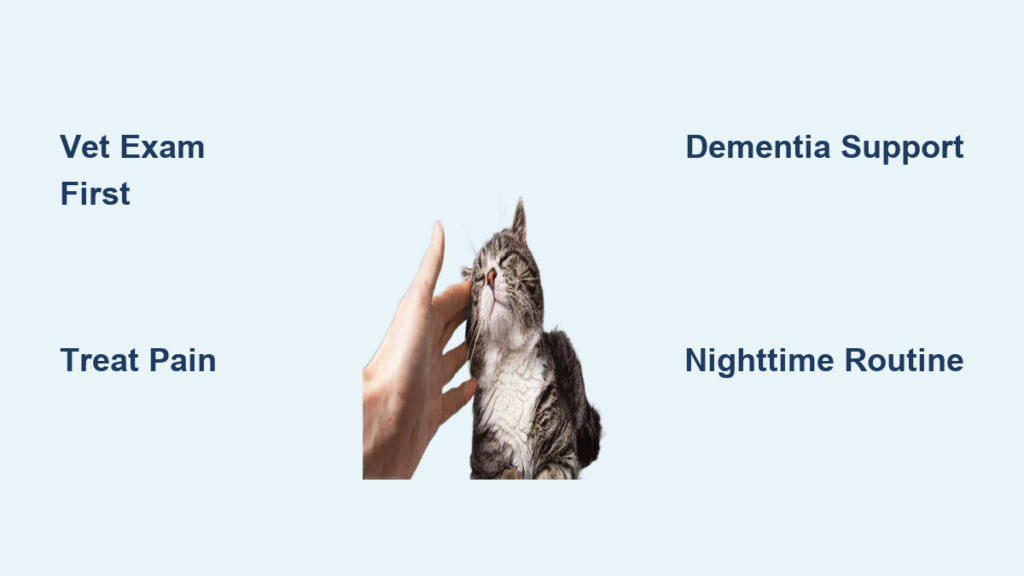
Your 16-year-old tabby wakes the household at 4 a.m. with loud, drawn-out cries. You stumble to the kitchen, worried something is seriously wrong. By the time you arrive, she stares at you blankly, then wanders off as if she forgot why she called. If this sounds familiar, you are not alone. Excessive vocalization is one of the most reported behavioral changes in senior cats, and learning how to stop elderly cat from yowling starts with understanding that this behavior is a signal, not a nuisance.
This guide explains the most common medical and environmental triggers behind senior cat yowling, then walks you through vet-approved strategies to restore calm. You will learn when to seek immediate veterinary care, how to support a cat with feline dementia, and which nighttime strategies actually work.
Schedule a Veterinary Exam Before Anything Else
Yowling is almost always a symptom of something deeper. Behavioral adjustments will not help if an illness is driving the noise.
Why a Senior Wellness Check Comes First
Cats are masters at hiding pain. By the time they vocalize, a condition may already be advanced. A geriatric veterinary exam can catch silent problems like kidney dysfunction, thyroid disease, or arthritis before they become emergencies. Vets typically recommend biannual visits for cats aged 7 and older, but sudden vocalization warrants an immediate appointment.
Tests Your Vet Will Likely Recommend
Expect your veterinarian to suggest a combination of:
– Complete blood count (CBC) and chemistry panel to evaluate organ function
– Thyroid level testing to rule out hyperthyroidism
– Urinalysis to screen for kidney disease and urinary tract problems
– X-rays or ultrasound if joint pain, dental issues, or internal discomfort is suspected
Hyperthyroidism and kidney disease are particularly common culprits in older cats. Treating the underlying disease often reduces or eliminates yowling within weeks.
Emergency Warning Signs That Cannot Wait
Contact your clinic immediately if yowling is accompanied by:
– Loss of appetite lasting more than 24 hours
– Vomiting or diarrhea
– Labored breathing
– Inability to urinate or defecate
– Sudden collapse or extreme lethargy
These symptoms signal a potential medical emergency rather than routine aging.
Treat Pain Before Modifying Behavior
Pain is one of the leading causes of increased vocalization in senior cats. Once a vet has identified the source, targeted treatment can bring quick relief.
Managing Arthritis and Joint Discomfort
Arthritis affects the majority of older cats, yet it often goes undiagnosed because cats simply move less rather than limping. Watch for stiffness, reluctance to jump, reduced grooming, or crying when picked up. Treatment options include:
– Veterinary NSAIDs such as meloxicam, prescribed and monitored carefully
– Joint supplements containing glucosamine and chondroitin
– Omega-3 fatty acids to reduce inflammation
– Pain-relief injections like Adequan for chronic cases
Never adjust medication doses without consulting your vet first.
Addressing Dental Disease
Tooth decay, fractured teeth, and oral tumors cause persistent pain that can trigger yowling during meals or even at rest. A professional dental cleaning under anesthesia, followed by at-home dental care, can eliminate this source of distress.
Controlling Organ-Related Pain
Kidney disease and hyperthyroidism both cause discomfort and restlessness. Hyperthyroidism can be managed with daily medication, prescription diet, or radioiodine therapy. Kidney disease is typically controlled through renal-support diets, hydration therapy, and ongoing monitoring. Treating these conditions often produces noticeable improvement in vocalization within a month.
Recognize Feline Dementia (Cognitive Dysfunction)
If medical testing comes back clear, cognitive dysfunction may be the answer, especially in cats 16 years and older.
Common Signs of Feline Dementia
Cats with cognitive dysfunction often:
– Yowl randomly, particularly at night
– Appear disoriented or get stuck in corners
– Forget the location of their litter box or food bowl
– Stare into empty space for long periods
– Wake suddenly and cry as if frightened
Owners frequently describe their cat as “forgetting what they wanted” moments after getting it. A 16-year-old cat waking at dawn and crying while wandering the room is a textbook presentation.
Why Punishment Makes Dementia Worse
Cats experiencing cognitive decline know something is wrong. They seek comfort from trusted humans. Responding with scolding or strict ignoring increases anxiety and can make symptoms worse. Treat these vocalizations as a plea for reassurance rather than misbehavior.
Build a Predictable, Senior-Friendly Environment

Routine and comfort go a long way toward calming an anxious older cat.
Keep Daily Routines Consistent
Feed, play, groom, and sleep on the same schedule every day. Older cats become deeply unsettled by even small disruptions. Lockdowns, work-from-home changes, rearranged furniture, or new household members can all trigger demanding behavior. Predictability reduces confusion and lowers stress-related vocalization.
Use Calming Pheromone Diffusers
Feliway diffusers release synthetic versions of the facial pheromones cats use to mark territory as safe. Plugging one into your cat’s primary living area or bedroom can reduce anxiety-driven yowling. Many owners notice improvement within two to three weeks.
Provide Warm, Supportive Sleeping Spots
Senior cats lose body fat and struggle to regulate temperature. Offer heated beds, soft blankets, and quiet resting areas away from drafts. Position beds in family spaces so your cat feels included without being underfoot.
Quiet Nighttime Yowling with Targeted Strategies

Nighttime vocalization disrupts the entire household. The following approaches address the most common triggers.
Tire Your Cat Out Before Bed
Spend 10 to 15 minutes playing with your cat using wand toys or laser pointers. Mimic a hunting sequence with a chase, pounce, and final capture. A physically tired cat is more likely to sleep through the night.
Install Night Lights Throughout the Home
Vision declines steadily with age. Senior cats can become disoriented and frightened in complete darkness, prompting cries for help. Place soft night lights in hallways, bedrooms, and near the litter box to help your cat find their way.
Set Up a Timed Feeder
Many cats yowl at dawn because they are hungry. A timed feeder that dispenses a small meal around 4 or 5 a.m. can prevent early wake-ups. Some models even play a recorded message, offering comfort when no human is available.
Avoid Accidentally Rewarding the Behavior
Responding to yowling with food, play, or door access teaches your cat that crying produces results. Wait until your cat is quiet before offering attention. However, a 19-year-old cat is not a kitten. A gentle word or brief touch may be the humane response when fear or confusion is the cause.
Redirect Attention-Seeking Behavior Thoughtfully
Sometimes yowling has no medical trigger at all. Cats learn quickly which sounds bring their humans running.
Identify What Your Cat Wants
Yowling that occurs at predictable times for predictable outcomes, like wanting fresh food, lap access, or outdoor time, tends to be attention-seeking. Yowling that happens randomly, especially in cats over 16, is more often dementia-related.
Set Boundaries with Compassion
You cannot train dementia away, but you can redirect simple attention-seeking:
– Offer a puzzle feeder instead of immediate food
– Pet briefly, then step away before the behavior escalates
– Acknowledge with a calm voice rather than full engagement
Think of it as caring for an elderly relative with memory loss. Patience and presence matter more than perfect silence.
Consider Supplements and Comfort Aids
Several supplements can support brain health and reduce anxiety, but only under veterinary guidance.
Calming Supplements Worth Discussing with Your Vet
- L-theanine promotes relaxation without sedation
- Tryptophan supports serotonin production for mood balance
- Melatonin helps regulate disrupted sleep cycles, especially helpful for night yowling
Never give melatonin without veterinary approval, since dosing depends on weight and existing medications.
Joint and Cognitive Support
Omega-3 fatty acids reduce inflammation and support brain aging. Antioxidant-rich prescription diets such as Hill’s b/d or Purina NeuroCare are formulated specifically for cognitive support. Joint supplements like glucosamine provide additional comfort for arthritic seniors.
Shift Your Mindset from Training to Accommodation
An elderly cat is not misbehaving. They are struggling.
Embrace Compassionate Accommodation
For cats aged 16 and older, compassionate accommodation typically produces better outcomes than strict training. Ask yourself how you would respond if an aging parent called out at night. Your cat may be scared, in pain, or confused, and your calm presence is often the best medicine.
Prioritize Comfort Over Silence
If yowling continues despite thorough medical care and environmental support, it may simply be part of your cat’s new reality. That is okay. Quality of life and emotional security matter far more than a quiet house.
Maintain Progress with Preventive Care
Once vocalization has decreased, protect your progress through ongoing vigilance.
Schedule Biannual Veterinary Visits
Cats aged 7 and older benefit from check-ups every six months. Blood work and urinalysis every 6 to 12 months catch kidney disease, thyroid changes, and diabetes before they trigger new symptoms.
Track Behavior Changes in a Log
Note the frequency and timing of yowling, appetite, water intake, litter box habits, and activity levels. Patterns help your vet adjust treatment plans quickly.
Adapt Your Home for Senior Mobility
Keep food, water, and litter boxes on every floor of your home. Add pet ramps or steps to favorite perches. Avoid rearranging furniture, which can disorient aging cats. Minimize loud noises and avoid introducing new pets during this stage of life.
Frequently Asked Questions About Senior Cat Yowling
Why is my elderly cat yowling at night?
Nighttime yowling in senior cats usually stems from cognitive dysfunction, vision loss, or an unmet need like hunger. Cats with declining vision become disoriented in the dark, while cats with dementia wake confused and cry for reassurance. A timed feeder and night lights often help.
When should I worry about my old cat yowling?
Any new or worsening vocalization in a senior cat warrants a veterinary visit. Yowling paired with appetite loss, bathroom changes, vomiting, or lethargy may indicate pain or organ disease and should be addressed within 24 hours.
Can feline dementia be treated?
There is no cure for feline cognitive dysfunction, but symptoms can be managed. Prescription diets rich in antioxidants, omega-3 supplements, environmental consistency, and supportive care all slow progression and improve quality of life.
How do I stop my senior cat from yowling without medication?
Start with a full medical workup to rule out pain and illness. Once health issues are addressed, focus on a stable routine, night lights, pre-bedtime play, and pheromone diffusers. Avoid reinforcing the behavior with food or attention, but respond compassionately when your cat seems frightened.
Is yowling a sign that my cat is dying?
Yowling alone does not mean a cat is dying. However, it can signal declining health or significant discomfort. Work with your vet to assess quality of life and discuss hospice or palliative options if your cat is approaching end-of-life stages.
Final Thoughts on Calming Your Senior Cat’s Yowling
The most important takeaway is that yowling in elderly cats is communication, not misbehavior. Start with a thorough veterinary exam to rule out pain, illness, or cognitive decline. Pair medical treatment with a predictable routine, a calm environment, and supportive supplements where appropriate. Most importantly, respond to your aging companion with patience and empathy. By treating the root cause and adjusting your expectations, you can ease their distress and make their golden years peaceful and dignified. Your next step is simple: if you have not already, book that senior wellness exam today.