

Selecting a wheelchair for an elderly loved one directly shapes their daily independence, comfort, and long-term health. A chair that fits poorly can trigger pressure sores, worsen posture, and reduce the willingness to move around at all. Many families feel overwhelmed by the sheer number of models, features, and price points on the market. This guide breaks down every factor that matters, so you can confidently choose a wheelchair for elderly use that genuinely matches the user’s body, lifestyle, and environment.
Assess Mobility and Medical Needs Before Comparing Models
The right wheelchair starts with a clear picture of the user’s physical condition and daily routine. Skipping this step often leads to buying a chair that looks good on paper but fails in real life.
Evaluate Current Independence Level
Ask a few honest questions before shopping:
- Can the user self-propel a manual chair, or will a caregiver always push?
- Is the chair for short outings, full-day use, or full-time mobility?
- Does the user walk some of the time, or is the chair their primary way to move?
Seniors with decent upper body strength and occasional use often thrive in a manual wheelchair. Those with fatigue, weakness, or long daily distances usually benefit more from electric power chairs.
Match the Chair to Medical Conditions
Health issues directly influence which features matter most:
- Arthritis calls for lightweight frames, easy-grip push rims, and low-effort brakes.
- Balance problems require higher backrests, seat belts, and anti-tip wheels.
- Spinal or posture concerns point toward adjustable or tilt-in-space backrests.
- Pressure sore risk demands high-quality cushions and a properly sized fit.
A standard foam seat may actually harm someone prone to skin breakdown, so cushion choice matters as much as frame choice.
Plan for Future Mobility Changes
Mobility rarely stays the same over the years. A chair that fits today but cannot adapt may need replacement within months.
- Choose adjustable armrests, footrests, and seat depth.
- Consider tilt-in-space or reclining features for future pressure relief.
- Look for models that accept accessories like oxygen holders or trays later on.
Compare the Three Main Wheelchair Types

Not all wheelchairs serve the same purpose. Manual, electric, and transport chairs differ in cost, effort, and ideal use cases.
Manual Wheelchairs for Active Seniors
Manual wheelchairs work best for users with good upper body strength and limited indoor or short-distance needs.
Pros:
– Lightweight and easy to maneuver indoors
– Affordable, typically $150 to $500
– No charging or batteries required
– Most models fold for car transport
Cons:
– Require physical strength and endurance to self-propel
– Less effective for long distances or rough terrain
– Can strain shoulders and wrists over time
Electric Wheelchairs for Maximum Independence
Power chairs suit users who have limited strength, chronic fatigue, or extensive daily travel.
Pros:
– Hands-free joystick operation
– Handle outdoor terrain, inclines, and longer routes
– Reduce physical strain on both user and caregiver
Cons:
– Higher cost, often $1,500 to $5,000 or more
– Heavy, typically requiring a vehicle lift for transport
– Need daily charging and more complex maintenance
Key features to verify before buying:
– Battery range of 10 to 30 miles per charge to match daily travel
– Intuitive controls that suit users with arthritis or cognitive concerns
– Safety systems including anti-tip wheels, seat belts, and stability controls
Transport Wheelchairs for Short-Term Needs
Transport chairs are designed for caregivers to push, not for self-propulsion.
Pros:
– Ultra-lightweight at 15 to 25 pounds
– Fold compactly for any car trunk
– Affordable, usually $100 to $300
Cons:
– The user cannot move independently
– Smaller wheels struggle outdoors or on rough ground
– Not built for full-time daily use
Ensure Proper Fit with Accurate Body Measurements
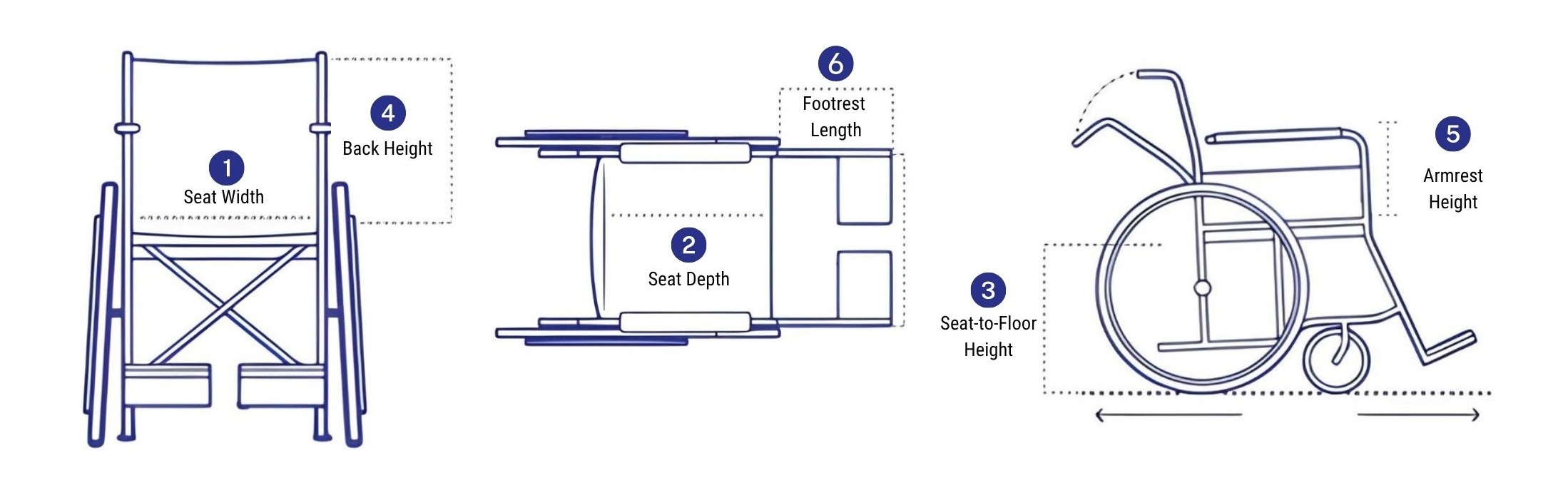
A wheelchair that does not match the user’s body causes pain, posture problems, and pressure injuries. Always measure before buying.
Measure Seat Width Correctly
- Measure the hips at the widest point
- Add 1 to 2 inches for clothing and comfort
- Too narrow creates pressure and circulation issues
- Too wide reduces stability and encourages slouching
Most adult seats range from 16 to 20 inches, with pediatric and bariatric models outside this range.
Set the Right Seat Depth
- Measure from the back of the buttocks to the back of the knees
- Subtract 1 to 2 inches so the seat does not press behind the knees
- Proper depth supports the full thigh without restricting blood flow
A shallow seat concentrates pressure on the sit bones. A deep seat causes knee discomfort and poor foot positioning.
Choose Backrest Height by Support Needs
- Low-back (16 to 18 inches) suits users with strong trunk control and easier transfers
- High-back (18 to 20 inches or more) supports the spine, head, and neck for weak posture
- Tilt-in-space or reclining backrests are critical for pressure relief and serious medical needs
Adjustable backrests offer the most flexibility as conditions change.
Prioritize Brakes and Safety Features
Safety is not optional, especially for elderly users with balance or strength concerns.
Install Reliable Brakes
- Push-to-lock wheel locks are easy for caregivers to engage
- Self-propel brakes must be reachable and operable with limited hand strength
- Anti-rollback systems prevent backward sliding on inclines
Always test brake ease in person. Stiff or hard-to-reach brakes become dangerous over time.
Add Essential Safety Features
- Anti-tip wheels prevent backward tipping on ramps or curbs
- Seat belts or lap harnesses improve security during movement
- Reflective strips boost visibility in low-light conditions
These features are non-negotiable for outdoor or uneven terrain.
Test Stability on Real Inclines
- Try the chair on home ramps, thresholds, and sloped driveways
- Ensure it does not wobble or tip during turns
- A wider wheelbase offers better balance overall
Match Wheels and Tires to Terrain

The right wheels make a dramatic difference in daily comfort and usability.
Optimize for Indoor Use
- Smaller front casters (5 to 6 inches) improve turning in tight hallways
- Smooth, lightweight tires glide easily on hardwood or tile
- Compact frames fit through standard doorways of 32 inches or more
Avoid large, rugged wheels indoors because they are harder to maneuver.
Prepare for Outdoor Mobility
- Larger rear wheels (22 to 24 inches) roll over cracks, curbs, and grass
- Pneumatic or all-terrain tires provide cushioning and grip
- Suspension systems reduce vibration on bumpy sidewalks
All-terrain electric models handle gravel, grass, and steep inclines best.
Choose Tire Type Wisely
- Solid tires require zero maintenance but give a rougher ride
- Pneumatic tires feel smoother but can puncture
- Puncture-proof foam inserts offer a smooth ride without flats
For mixed indoor and outdoor use, pneumatic or hybrid tires are usually ideal.
Evaluate Comfort and Long-Term Health Protection

A comfortable wheelchair prevents pain and protects against serious long-term health issues.
Prevent Pressure Sores with the Right Cushion
- Standard foam cushions work for low-risk users
- Gel, air, or hybrid cushions distribute weight for high-risk users
- Look for moisture-wicking, breathable covers
Even with good cushioning, repositioning every 15 to 30 minutes is still essential.
Support Posture with Adjustable Features
- Adjustable armrests keep shoulders relaxed and reduce strain
- Lumbar support maintains the natural curve of the spine
- Headrests are essential for users with weak neck muscles
Poor posture leads to back pain, fatigue, and even breathing difficulties.
Involve the User in the Final Choice
- Let them test multiple models in person
- Ask about comfort, visibility, and ease of use
- Consider color, design, and aesthetics, since pride in appearance boosts acceptance
A chair the user dislikes will sit unused, no matter how functional it is.
Check Weight, Portability, and Transport Needs
Practical daily logistics matter as much as features.
Compare Chair Weights
- Transport models weigh 15 to 25 pounds
- Lightweight manual chairs weigh 30 to 40 pounds
- Standard manual chairs weigh 40 to 50 pounds
- Electric chairs weigh 100 to 300 pounds or more
Choose based on who will lift and transport the chair. Under 40 pounds is ideal for caregiver lifting.
Confirm Folding and Storage
- Most manual chairs fold for trunks or back seats
- Check folded dimensions against your vehicle
- Look for quick-release wheels to reduce size further
Electric chairs usually require a vehicle lift or van conversion.
Plan for Travel and Transportation
- Confirm airline wheelchair policies before flying
- Check public transit size and weight limits
- Consider a second, portable chair for trips when needed
Verify Durability, Frame Quality, and Weight Capacity
A durable chair lasts for years and handles daily wear without issue.
Choose the Right Frame Material
- Aluminum is lightweight, rust-resistant, and mid-priced
- Steel is stronger, heavier, and more affordable
- Titanium is the lightest and strongest but expensive
Aluminum suits most users well, balancing lightness and durability.
Confirm Adequate Weight Capacity
- The chair must support user weight plus at least 50 pounds for safety
- Standard capacity ranges from 250 to 300 pounds
- Bariatric models support up to 700 pounds or more
Overloading damages frames and voids warranties.
Inspect Build Quality Before Buying
- Check welds, joints, and wheel attachments closely
- Test the folding mechanism for smooth, secure operation
- Look for lifetime frame coverage in the warranty terms
Consult Professionals Before Making a Final Decision
Expert input is especially valuable for medical or long-term use.
See a Physical or Occupational Therapist
- They assess mobility, strength, and posture accurately
- They recommend features based on specific medical needs
- They help determine correct measurements and support levels
Many insurance plans require a therapist’s prescription before covering a wheelchair.
Try Before You Buy Whenever Possible
- Test chairs in-store or request a home trial
- Use a simple checklist during testing:
- Transfer in and out ease
- Comfort after sitting 20 minutes or more
- Maneuverability in tight spaces
- Brake accessibility
- Visibility from the seated position
Renting first can reveal issues that only appear after extended use.
Use Insurance and Funding Resources
- Medicare Part B covers 80 percent of approved wheelchairs with a doctor’s order
- Medicaid and VA benefits may cover full cost for eligible users
- Non-profits offer assistance to those who qualify
Check coverage rules carefully, since some plans only pay for basic models.
Avoid Common Selection Mistakes
Even well-meaning choices can backfire without proper planning.
Do Not Guess on Sizing
- Never buy based on a generic “one size fits all” label
- Measure the user directly rather than relying on clothing size
- Ill-fitting seats cause sores, pain, and poor posture
Do Not Skip Terrain Testing
- Test the chair on actual sidewalks, carpets, and thresholds
- A chair that glides indoors may struggle badly on gravel or grass
Do Not Ignore Caregiver Needs
- Consider who will push or lift the chair
- Choose ergonomic push handles and manageable weight
- Electric models significantly reduce physical strain on caregivers
Do Not Choose by Price Alone
- The cheapest chair often costs more in repairs or early replacement
- Invest in quality for daily, long-term use
Frequently Asked Questions About Choosing a Wheelchair for Elderly
What type of wheelchair is best for elderly users with limited strength?
Electric power wheelchairs are best for seniors with limited upper body strength, chronic fatigue, or long daily travel distances. They operate via joystick, handle outdoor surfaces, and reduce physical strain on both the user and caregiver.
How do I measure for the correct wheelchair seat size?
Measure the user’s hips at the widest point and add 1 to 2 inches for seat width. For seat depth, measure from the back of the buttocks to the back of the knees and subtract 1 to 2 inches. Always measure while the user wears typical clothing.
How can I prevent pressure sores in a wheelchair user?
Use a high-quality cushion (gel, air, or hybrid for high-risk users), maintain proper seat fit, and choose breathable cushion covers. Even with good cushioning, reposition the user every 15 to 30 minutes to relieve pressure.
Does Medicare cover the cost of an elderly wheelchair?
Medicare Part B typically covers 80 percent of the cost of an approved wheelchair when prescribed by a doctor. Medicaid and VA benefits may cover the full cost for eligible users. Coverage rules vary, so verify with the specific plan.
What is the difference between a manual and a transport wheelchair?
A manual wheelchair has large rear wheels that the user can self-propel. A transport wheelchair has smaller wheels and is designed to be pushed by a caregiver, since the user cannot move it independently.
How often should a wheelchair be replaced?
A well-built wheelchair typically lasts 3 to 5 years with regular use, though frames may last much longer. Cushions, tires, and batteries usually need replacement sooner. Replace immediately if the chair no longer fits safely or supports the user’s needs.
Key Takeaways for Choosing the Right Wheelchair for an Elderly Loved One
Focus first on the user’s medical needs, daily routine, and home environment, not on price or brand alone. A properly fitted chair with the right safety features, cushions, and terrain capability protects health and supports independence for years. Always involve a physical or occupational therapist, test multiple models in person, and plan for future mobility changes. The right wheelchair is far more than a mobility aid; it is a daily tool for dignity, comfort, and a better quality of life.





