
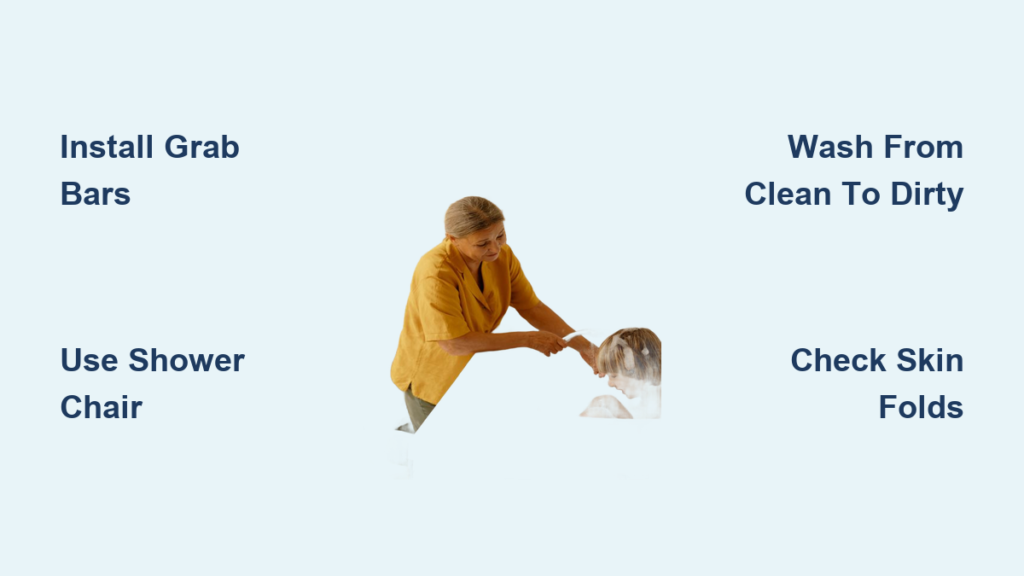
Bathing an elderly person can feel awkward, especially when you’re unsure where to start. Beyond hygiene, it’s about protecting fragile skin, preserving dignity, and creating moments of genuine connection. Many older adults resist bathing due to fear, pain, or loss of independence, which can leave caregivers feeling helpless or guilty. The good news is that small adjustments to your approach can transform bath time into a calmer, safer experience for everyone.
This guide walks you through practical methods for showering, sponge baths, and waterless options, along with safety tips, perineal care techniques, and ways to handle resistance. Whether you’re caring for a parent at home or supporting someone in a professional setting, you’ll find step-by-step guidance to make the experience respectful, thorough, and stress-free.
Prepare a Safe Bathing Environment

Install Essential Safety Equipment
A single slip in the bathroom can lead to serious injury. Reduce the risk by installing grab bars near the tub and toilet, and place non-slip mats inside the shower and on the floor outside. A shower chair or bench lets the person sit while bathing, which reduces fatigue and fall risk. A detachable showerhead with a long hose gives better control over water direction and makes rinsing easier. Keep the room warm and dry, remove clutter, and have all supplies within arm’s reach before you start.
With the towel all within reach, sudden interruptions are avoided, which is especially helpful for someone with dementia.
Gather Supplies Ahead of Time
Before you begin, gather mild soap, clean washcloths, towels, perineal cleanser, and a terry cloth robe. Offering the robe early provides warmth and modesty while you set up. If you plan to use waterless products, keep no-rinse body wash or fragrance-free wipes nearby. Staying organized prevents you from leaving the person unattended mid-bath and keeps the routine smooth and calm.
Choose the Right Bathing Method
Showering: When Standing Is Possible
A shower provides the most thorough cleaning when the person can stand or sit safely. Always test the water temperature with the back of your hand, since older skin burns more easily. Let the person feel the water too if they can, and let them hold the handheld showerhead if they’re able. Drape a towel over their shoulders to ease feelings of exposure, and start washing from the cleanest areas (face and neck) before moving downward to the groin and feet. Offer help only where needed and encourage independence whenever possible.
Sponge Bath: For Limited Mobility or Fear of Water
When standing isn’t safe or the person resists the shower, a sponge bath works beautifully. Have them sit on a towel-covered chair or toilet seat, then fill a sink with warm, mildly soapy water. Use clean washcloths to wipe the body from top to bottom, then rinse with fresh water and clean cloths. This method is gentle, less intimidating, and ideal for daily hygiene between full showers.
Waterless Bathing: Quick and Low-Stress Option
When water isn’t an option, waterless body washes, foams, and wipes keep skin clean without rinsing. Pair them with dry shampoo for hair care. These products work well for bedbound individuals or anyone who strongly resists traditional bathing. Choose fragrance-free, no-rinse formulas to protect sensitive skin from irritation.
Wash in the Correct Order
Clean from Cleanest to Dirtiest Areas
Always begin with the face and work downward: arms, chest, back, legs, and feet, ending with the groin and anal area. This prevents spreading bacteria from soiled zones to cleaner ones. Use separate cloths for different body parts, especially for private areas. During sponge baths, refill the sink with fresh water for rinsing so no soap residue remains, which can cause itching or rashes.
Focus on Skin Folds and High-Risk Zones
Moisture trapped under breasts, in stomach folds, or between thighs creates a breeding ground for fungal infections and rashes. Gently lift and clean these areas with a damp cloth, then dry thoroughly. Apply cornstarch or a barrier cream like Desitin to keep skin dry and protected, especially if the person wears incontinence briefs. Check bony areas like elbows and heels for redness or early signs of pressure sores.
Handle Perineal Care with Care

Use Gentle, Effective Techniques
Start with a warm, damp washcloth laid gently over the area to soothe and prepare the skin. Squeeze warm water over the region to cleanse and encourage urination. A no-rinse perineal cleanser is gentler than soap and reduces wiping. Avoid scented wipes, even “hypoallergenic” ones, since they can sting. Dispose of each cloth after one use; never reuse.
Promote Independence When Possible
If the person can help, hand them a small amount of cleanser and let them wash under your supervision. This preserves dignity and reduces embarrassment. Position them on a toilet, chair, or bed with a waterproof pad, depending on mobility. For incontinence care, change briefs frequently, even if they aren’t fully soiled, to prevent moisture buildup. Replace hidden or reused towels discreetly without confrontation.
Inspect Skin During Bathing

Check for Rashes, Sores, or Redness
Bathing offers the perfect opportunity to examine the skin. Look closely at skin folds, bony areas like hips, heels, and elbows, and any pressure points. Note redness, swelling, or broken skin. If you see early signs of a pressure sore, do not massage the area, since this can worsen tissue damage. Treat fungal rashes with athlete’s foot cream and use Desitin for irritation from incontinence.
Act Early on Skin Issues
Minor problems can escalate quickly in older adults. Keep skin dry, apply protective creams, and reposition immobile individuals regularly. If a sore doesn’t improve or looks infected (oozing, warmth, odor), contact a healthcare provider. Catching issues early prevents small skin problems from becoming major health risks.
Manage Hair, Nails, and Shaving
Wash Hair Safely and Gently
Always seat the person when washing hair. Use a detachable showerhead and place a washcloth over their eyes to keep soap out. Choose tear-free or no-rinse shampoo to minimize discomfort. If the person is used to salon visits, try to keep that routine for a sense of normalcy and self-esteem. At home, comb wet hair with a wide-tooth comb to prevent breakage.
Trim Nails to Prevent Injury
Keep fingernails and toenails short and filed straight across to avoid scratching or ingrown nails. Use clippers carefully and file sharp edges smooth. Push cuticles back softly rather than cutting them. If the person has diabetes or poor circulation, consult a professional for foot care to lower the risk of infection.
Shave with Safety in Mind
Electric razors are the safest option and let the person shave independently if able. If you use a safety razor, only the caregiver should handle it, since older skin is thin and bleeds easily. Always shave in the direction of hair growth to reduce irritation and razor burn.
Dress with Ease After Bathing

Choose Adaptive Clothing
Pick garments with Velcro, elastic waistbands, or large buttons. Avoid zippers, small buttons, and tight sleeves. Low-cut shoes with non-slip soles make dressing easier and reduce fall risk. Lay out clothes in the order they’ll be worn to reduce confusion and decision fatigue, especially for those with dementia.
Use a Terry Cloth Robe for Drying
A terry cloth robe isn’t just comfortable; it helps with drying while maintaining modesty. Let the person wear it while you assist with hard-to-reach areas. Once dry, help them dress one piece at a time, starting with underwear and moving upward. Lay out the outfit the night before to streamline the morning routine.
Respond to Resistance Calmly
Never Force a Bath
If the person refuses, stop and try again later, even hours or the next day. Forcing leads to fear, aggression, or injury. Instead, offer choices: “Would you like to bathe now or after lunch?” or “Would you prefer a shower or a quick wipe-down?” Giving control lowers anxiety. For dementia patients, confusion or fear of water may be the cause; a sponge bath often works as a compromise.
Use Humor and Connection Wisely
After the task is done, light humor can ease tension. Joking about gas or bathroom habits, when appropriate, normalizes bodily functions and builds rapport. Avoid jokes during cleaning; keep the focus on care. Over time, routines become less awkward, and shared vulnerability, like using the same small bathroom, can actually strengthen your bond.
Prevent Infections and Protect Yourself
Follow Hygiene Best Practices
Wash from clean to dirty areas, use fresh water for rinsing, and dispose of used washcloths promptly. Gloves aren’t required for routine bathing but are wise if there’s exposure to bodily fluids. Wear a mask if either of you has a cold or flu. Clean supplies regularly and store them in a dry place to prevent mold or bacteria.
Change Incontinence Products Frequently
Even if not fully soiled, change briefs regularly due to sweat and moisture. Leaving them on too long causes rashes and skin breakdown. Wipe at least twice daily (morning and evening) and apply barrier creams as needed. If the person hides soiled towels in their briefs, replace them discreetly and clean their clothes without shaming.
Frequently Asked Questions About Bathing an Elderly Person
How often should an elderly person bathe?
Weekly showers are usually enough if done thoroughly. Between showers, use wipes or sponge baths to keep skin folds clean and prevent rashes. Let the person’s comfort level and health condition guide the schedule.
What if the person refuses to bathe?
Stop and try again later. Forcing creates fear and resistance. Offer choices, use a sponge bath as a compromise, or switch to waterless products. Patience and flexibility matter more than sticking to a rigid schedule.
What is the safest way to wash an elderly person’s private areas?
Use a warm, damp washcloth and a no-rinse perineal cleanser. Avoid scented wipes. If they can, let them clean themselves under your supervision to preserve dignity. Pat dry gently and apply a barrier cream like Desitin if needed.
How can I prevent falls during bathing?
Install grab bars, use non-slip mats inside and outside the shower, and place a shower chair or bench in the tub. Keep the bathroom warm and dry, and never leave a person unattended if there’s any fall risk.
Should I wear gloves when bathing an elderly person?
Gloves aren’t required for routine bathing but are useful if there’s exposure to bodily fluids or if the person has been sick. A mask is wise if either of you has a cold or flu.
What products are best for elderly skin?
Use mild, fragrance-free soap, no-rinse perineal cleansers, and barrier creams like Desitin. Apply cornstarch under skin folds to absorb moisture, and choose gentle lotions to soothe dry skin.
Key Takeaways for Bathing an Elderly Person Safely and Respectfully
Bathing an elderly person is more than a routine task; it’s an act of care, respect, and connection. By preparing the environment, choosing the right method, and adapting to individual needs, you make the experience safer and more comfortable. Focus on dignity, encourage independence, and never force the process. Inspect the skin during every bath, handle perineal care with gentle techniques, and use adaptive tools like shower chairs and terry cloth robes to simplify the routine. With patience, preparation, and compassion, bathing becomes a moment of trust that supports both health and emotional well-being. Start today by setting up your bathroom with grab bars and non-slip mats, and gather your supplies so you’re ready for a calmer, safer bath tomorrow.





