
A single sip of water can become dangerous for older adults with swallowing problems. When aging, stroke, Parkinson’s disease, or dementia weakens the throat muscles, thin fluids like water, juice, or coffee can slip into the lungs instead of the stomach. This silent event, called aspiration, can trigger aspiration pneumonia, one of the leading causes of hospitalization and death among seniors.
Thickening liquids slows their movement, giving the body more time to seal off the airway during swallowing. This practice is not about changing what someone drinks. It is about helping them drink without risking their life. Healthcare providers follow evidence-based protocols like the International Dysphagia Diet Standardisation Initiative (IDDSI) to guide thickening decisions. This guide explains why thickened liquids matter, how they prevent complications, and what caregivers need to know to keep loved ones safe and hydrated.
Prevent Aspiration in Elderly Swallowing
How Aging Affects Swallowing
Aging naturally weakens the muscles and nerves used in swallowing. Doctors call this decline presbyphagia. The danger multiplies when neurological conditions like stroke, Parkinson’s disease, or dementia join the picture. These illnesses disrupt the brain’s ability to coordinate the precise muscle movements needed to move food and liquid safely from mouth to stomach.
During a healthy swallow, the airway closes tightly to protect the lungs. In elderly individuals with dysphagia (the medical term for swallowing difficulty), this protective reflex may be delayed or incomplete. Thin liquids move too quickly and spill into the trachea before the airway seals. When fluid enters the lungs without any coughing or choking, it is called silent aspiration. Repeated episodes dramatically increase the risk of aspiration pneumonia.
Why Aspiration Can Be Fatal
Aspiration is not just about the moment of choking. What happens afterward matters even more. Fluid in the lungs introduces bacteria and irritates delicate tissue. The body responds with inflammation, but elderly patients with weakened immune systems often cannot clear the infection effectively.
- Aspiration pneumonia develops in many stroke survivors within the first week
- It remains a leading cause of rehospitalization in nursing home residents
- Mortality rates can exceed 20 to 30 percent in frail elderly patients
Thickened liquids reduce this risk by slowing fluid flow. The extra time allows the airway to close and the swallow reflex to activate. This simple adjustment often means the difference between safe hydration and a trip to the intensive care unit.
Reduce Choking and Pneumonia Risk
The Problem with Thin Liquids
Water, tea, juice, and soda are the most dangerous drinks for people with dysphagia. These thin fluids travel too fast through the mouth and throat. A delayed swallow reflex leaves the airway open when liquid arrives, increasing the chance it will slip into the lungs.
Thickened liquids move more slowly and stay together as a cohesive mass. This gives the person better bolus control (meaning more command over the ball of liquid in the mouth), reducing premature spillage into the airway, incomplete swallows, and silent aspiration. Patients on appropriately thickened diets experience significantly fewer episodes of aspiration pneumonia than those drinking thin liquids.
Real-World Consequences of Skipping Thickening
One documented case involved a woman with advanced dementia who repeatedly refused pureed foods and thickened drinks. Her family, wanting to honor her preferences, gave her a sandwich she had requested. Moments later, she choked and died in front of her daughter. She had been hospitalized seven times in less than a year for aspiration pneumonia, each episode linked to unsafe eating practices.
This tragic example shows a hard truth: safety must come before preference when dysphagia is present. Allowing someone to drink regular water or eat normal food without professional guidance can have fatal consequences.
Understand Dysphagia Causes in Seniors
Common Conditions Behind Swallowing Problems
Dysphagia in older adults rarely comes from aging alone. It usually signals an underlying medical condition. The most common causes include:
- Stroke: Damages brain regions that coordinate swallowing
- Parkinson’s Disease: Causes muscle rigidity and a delayed swallow reflex
- Dementia (including Alzheimer’s): Impairs awareness of food in the mouth and timing of swallows
- Head and neck cancers or surgeries: Physically alter the swallowing mechanism
- Neurodegenerative diseases: Such as ALS or multiple system atrophy
These conditions disrupt all four phases of swallowing: oral preparatory, oral, pharyngeal, and esophageal. The pharyngeal phase, where the airway closes and food moves toward the stomach, is the most vulnerable to failure in older adults.
Silent Aspiration: The Hidden Danger
Many seniors with dysphagia do not cough or choke when they aspirate. This silent aspiration makes the condition especially dangerous because caregivers may assume everything is fine until pneumonia develops.
Watch for these warning signs:
- Wet or gurgly voice after drinking
- Frequent throat clearing
- Unexplained fevers or fatigue
- Recurrent chest infections
Only a formal swallow evaluation with imaging can confirm whether aspiration is occurring. Tests like the videofluoroscopic swallow study (VFSS) or fiberoptic endoscopic evaluation of swallowing (FEES) let clinicians see swallowing in real time and determine the safest food and liquid consistency.
How Thickened Liquids Improve Swallow Safety
Slower Flow Means Safer Swallows
The core principle behind thickening is time. Thin liquids move so quickly that even a slight delay in the swallow reflex can result in aspiration. Thickened liquids move more slowly, giving the body extra seconds to detect fluid in the mouth, trigger the swallow reflex, close off the airway via the epiglottis, and propel the liquid safely into the esophagus.
This increased control reduces premature spillage and allows better coordination between breathing and swallowing, which is critical for elderly patients whose systems are already compromised.
Better Sensory Feedback
Thicker fluids provide stronger sensory input to the nerves in the mouth and throat. This improved proprioception (the body’s sense of where food and liquid are in the mouth and throat) helps the brain register where the liquid is, making it easier to start and complete a safe swallow. For individuals with neurological impairments, this extra feedback often determines success or failure.
Thickened liquids also maintain bolus cohesion, meaning they stay together as a single mass rather than breaking apart. This prevents small droplets from lingering in the throat and later slipping into the airway.
Follow IDDSI Fluid Thickness Levels

Level 1: Slightly Thick (Nectar-Like)
Slightly thick liquids flow easily through a straw and resemble full-fat milk. This consistency suits mild dysphagia, where the person has occasional coughing with thin liquids but can still manage some fluid intake.
- Best for: Early-stage Parkinson’s, mild post-stroke dysphagia
- Test method: Pour from a cup. It should flow steadily but slightly slower than water
- Preparation tip: Use 1 scoop of xanthan gum-based thickener per 100 mL of liquid
Avoid over-thickening, which can lead to dehydration if the person refuses to drink.
Level 2: Mildly Thick (Honey-Like)
Mildly thick fluids flow slowly through a straw and leave a thin coating on the back of a spoon. They work well for moderate dysphagia, especially when silent aspiration is suspected.
- Best for: Moderate stroke recovery, mid-stage dementia
- Visual cue: Drops fall slowly from a tilted cup
- Stir time: 20 seconds, then wait 60 to 90 seconds for full thickening
If the liquid is too thin after waiting, add a small amount of thickener next time. Never stir in extra powder after the drink has set.
Level 3: Moderately Thick (Spoon-Thick)
These liquids cannot be drunk from a cup and must be eaten with a spoon. They flow slowly in drops and hold their shape briefly when scooped.
- Best for: Severe dysphagia, frequent choking with thinner consistencies
- Warning: Do not attempt unless prescribed. This level requires careful monitoring
- Common mistake: Trying to drink it through a straw, which increases aspiration risk
Serve in small portions and allow full swallowing before offering more.
Level 4: Extremely Thick (Pudding-Like)
At this level, the liquid holds its shape when the cup is tilted. It slides off the spoon without dripping and must be eaten like pudding.
- Best for: End-stage neurological decline, near-end-of-life care
- Caution: High risk of coating the throat or causing intestinal blockage if overused
- Alternative: Consider a feeding tube if nutrition becomes a concern
This consistency is used when swallowing function is severely impaired and even honey-thick liquids pose a risk.
Prepare Thickened Drinks Correctly
Step-by-Step Mixing Guide
Getting the consistency right matters. Too thin creates aspiration risk. Too thick creates dehydration or blockage risk. Follow these steps:
- Add powder first. Place the correct number of scoops into a dry cup
- Pour liquid slowly. Add 200 mL of drink (water, juice, or coffee)
- Stir vigorously for at least 20 seconds to prevent lumps
- Wait 60 to 90 seconds to let the thickener fully activate
- Check consistency using the IDDSI flow test or spoon tilt method
Never add thickener to a full glass. This leads to uneven mixing and lumps.
Avoid Common Preparation Mistakes
- Adding powder after pouring liquid causes clumping
- Not waiting long enough leaves a drink that appears thin but has not fully thickened
- Using the wrong scoop size throws off consistency (each brand has different scoop volumes)
- Re-stirring after setting breaks down the gel structure
If the drink is too thick, discard it and start over. You cannot thin a fully thickened liquid without compromising safety.
Choose the Right Thickener Type
Xanthan Gum vs. Corn Starch
Not all thickeners work the same way. The two main types are:
- Corn starch-based (such as Thick-It Original): Inexpensive but can create a pasty texture that coats the mouth and throat
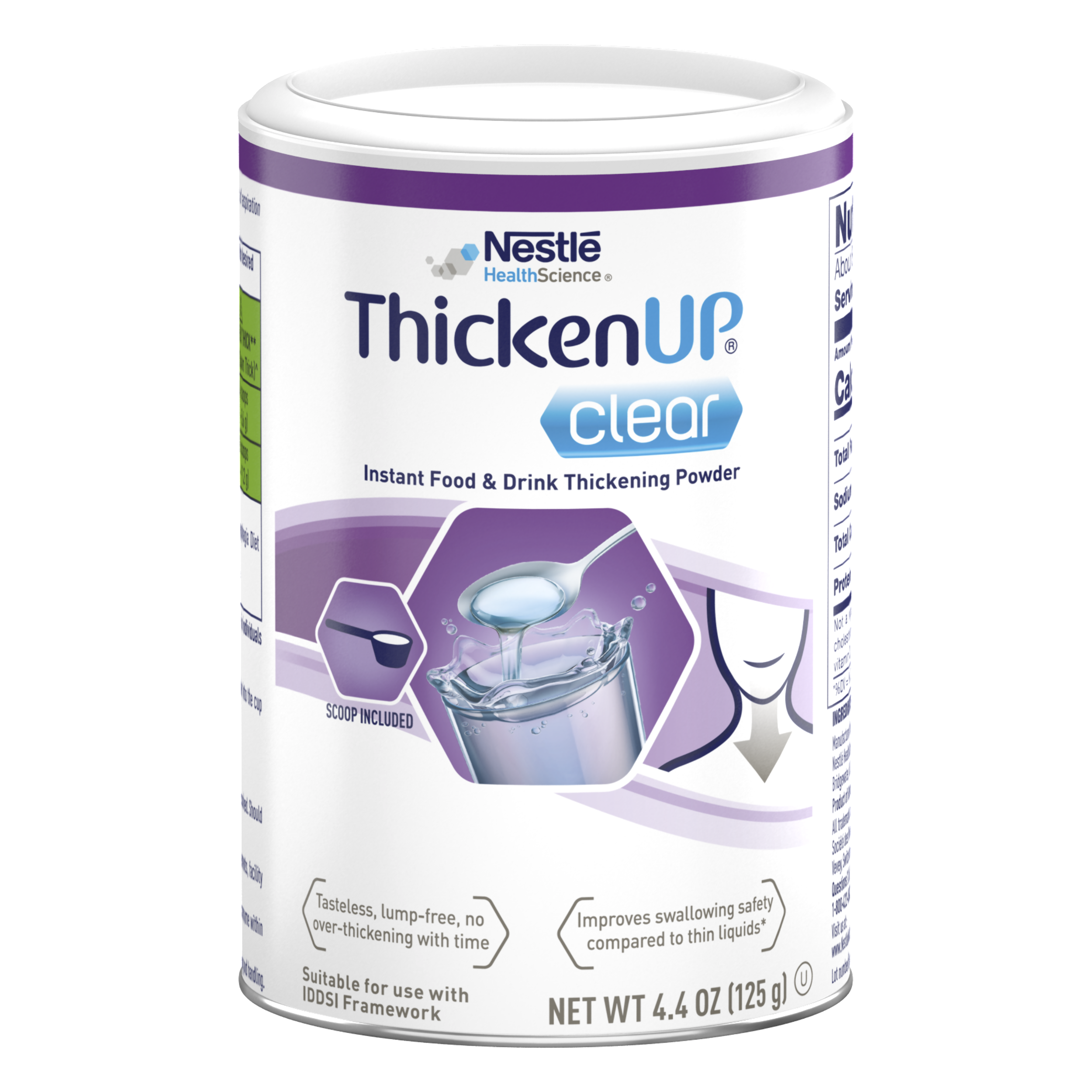
- Xanthan gum-based (such as Thick & Clear, Thicken Up): Smoother, more stable across temperatures, and less likely to separate or coat
Dietitians often recommend xanthan gum because it maintains consistency longer, works well with hot and cold drinks, and is less likely to cause throat buildup. One caregiver reported that after switching from corn starch to xanthan gum, their loved one no longer required suctioning due to thickener buildup in the throat.
Trusted Thickener Brands
| Brand | Base | Best For |
|---|---|---|
| Thick & Clear (Hormel) | Xanthan gum | Smooth texture, reliable |
| Thicken Up (Nestle) | Xanthan gum | Widely available, easy to use |
| Simply Thick | Xanthan gum | Good for hot beverages |
| Thick n’ Easy (Hormel) | Modified starch | Budget-friendly option |
These products are available at CVS, Walgreens, Walmart, and Amazon. Always check expiration dates because old powder loses effectiveness.
Handle Problematic Beverage Types
Thickening Hot Drinks Safely
Coffee and tea can be thickened, but they behave differently as they cool:
- Hot liquids thin out temporarily when mixed with powder
- As they cool, they thicken further and sometimes become too thick
To avoid problems, prepare at the correct level when hot, serve immediately while still warm, and monitor for consistency changes as the drink cools. Some patients prefer chilled thickened drinks, which may trigger the swallow reflex better than room-temperature fluids.
Carbonated Drinks: Proceed with Caution
Soda and sparkling water can be thickened, but stirring releases carbonation, the resulting drink loses its fizz, and foaming can make mixing difficult. Better alternatives include using flat soda, choosing non-carbonated versions, or selecting pre-thickened fruit juices instead. Never serve carbonated thickened drinks to someone with severe dysphagia because foam increases aspiration risk.
Recognize and Fix Common Issues
Thickener Coating the Throat
A serious issue reported by caregivers involves thickener buildup in the mouth and throat after repeated use. One patient developed a coating so thick it required suctioning, and some material remained stuck in the esophagus.
Solutions include switching to xanthan gum-based thickeners, reducing frequency or volume if tolerated, rinsing the mouth with water (if safe) between drinks, and monitoring for gurgly voice or difficulty breathing. If coating persists, consult a speech therapist. This could signal unsafe swallowing mechanics.
Liquid Too Thin or Too Thick
- Too thin? Wait 90 seconds. If still runny, increase thickener slightly next time.
- Too thick? Discard and remake. Do not add liquid to dilute because it compromises safety.
Remember: it is safer to drink a liquid that is too thick than one that is too thin.
Know When to Seek Professional Help
Get a Swallow Evaluation
No one should thicken liquids without a professional assessment. A speech-language pathologist (SLP) performs swallow studies using imaging to observe real-time swallowing, identify where aspiration occurs, and determine the safest food and liquid consistency. Contact UMMC Speech-Language Pathology at 601-815-6064 or ask your doctor for a referral.
Signs You Need Immediate Help
Seek medical advice if:
- Coughing or choking increases despite thickening
- Voice sounds wet after drinking
- Unexplained fevers or fatigue occur
- Person refuses to drink due to texture
These may indicate worsening dysphagia, silent aspiration, or complications from thickener use.
Balance Safety and Quality of Life
Improve Taste and Acceptance
Many seniors dislike thickened water, calling it slimy or unnatural. To improve acceptance:
- Use flavored thickeners such as vanilla or berry
- Serve chilled thickened drinks
- Offer pre-thickened juices in appealing flavors
- Blend with fruit for smoothies (such as banana or strawberries)
One nursing home reported a 40 percent increase in fluid intake after introducing flavored thickened beverages.
End-of-Life Feeding Decisions
In hospice care, forcing food and fluids can do more harm than good. When swallowing fails near the end of life, continuing thickened liquids may increase discomfort, aspiration may be unavoidable, and the body naturally reduces hunger and thirst. Hospice teams can guide families on when to stop oral feeding and focus on comfort. Not eating is normal at the end of life and often a sign the body is shutting down peacefully.
Frequently Asked Questions About Thickened Liquids for the Elderly
What happens if an elderly person drinks thin liquids with dysphagia?
Thin liquids can enter the lungs instead of the stomach, causing aspiration. Over time, this leads to aspiration pneumonia, a serious lung infection that is a leading cause of hospitalization and death in seniors.
Who decides what thickness level an elderly person needs?
A speech-language pathologist determines the appropriate thickness through a swallow evaluation. This assessment uses imaging to observe swallowing and identify the safest consistency. Never adjust thickness without professional guidance.
Is thickened water less hydrating than regular water?
Thickened water can hydrate just as well as thin water when consumed in adequate amounts. However, if a person refuses thickened drinks due to taste or texture, dehydration becomes a real concern. Work with a healthcare provider to find an acceptable consistency.
Can thickened liquids cause intestinal blockage?
Yes, thickeners can harden in the intestines if they do not move through properly, creating a cement-like obstruction. This risk is higher with corn starch-based products. Using xanthan gum-based thickeners and following professional guidance reduces this danger.
How long do thickened liquids stay at the right consistency?
Consistency depends on the thickener type and liquid temperature. Xanthan gum-based thickeners tend to stay stable longer. Hot drinks thicken further as they cool. Check the drink before each sip to ensure it has not become too thin or too thick.
When should thickened liquids be stopped?
Thickened liquids may no longer be appropriate near the end of life or when swallowing fails completely. A hospice team can help families decide when to shift focus from oral feeding to comfort care.
Key Takeaways for Caregivers Managing Dysphagia
Thickened liquids protect elderly loved ones from aspiration and aspiration pneumonia. Work with a speech-language pathologist to determine the correct IDDSI level, follow preparation guidelines carefully, and choose xanthan gum-based thickeners when possible to reduce throat coating.
Watch for warning signs like wet voice, frequent throat clearing, or unexplained fevers, and seek professional help immediately if they appear. Balance safety with quality of life by offering flavored or chilled thickened drinks to improve acceptance.
If swallowing continues to decline despite thickening, consult the healthcare team about next steps. This may include a swallow re-evaluation, adjusting the thickness level, or discussing comfort-focused care. With the right approach, seniors with dysphagia can stay hydrated, safe, and comfortable.