
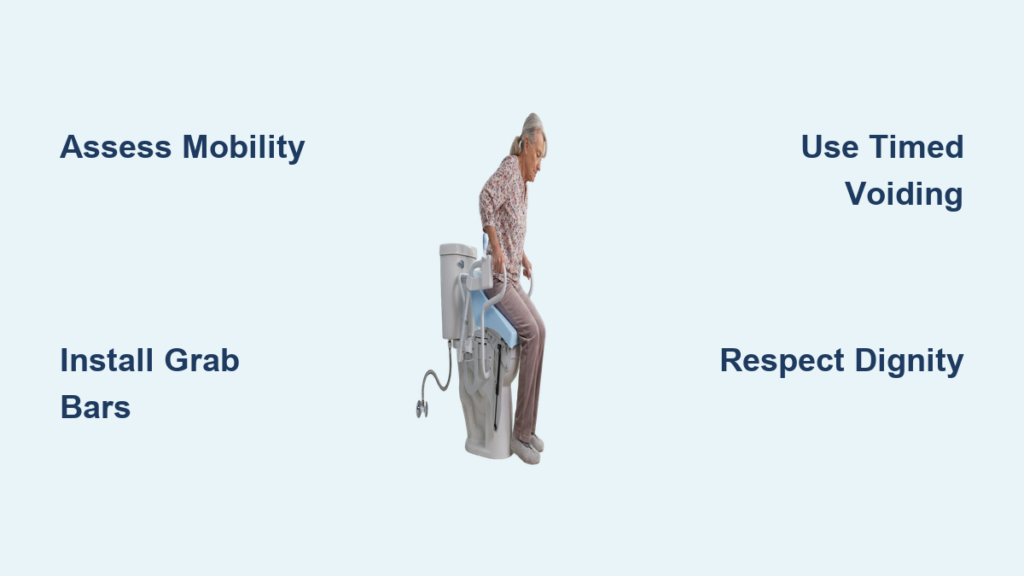
Helping an elderly loved one use the bathroom is one of the most personal responsibilities in caregiving. As mobility decreases and health conditions advance, many older adults need reliable support to stay safe, clean, and confident. Knowing how to assist elderly with toileting properly protects against falls, prevents skin damage, and preserves the person’s sense of dignity. Done incorrectly, this task can cause injury to both the senior and the caregiver, along with emotional distress for everyone involved.
This guide walks you through each stage of toileting support, from assessing individual needs to choosing adaptive equipment and managing incontinence with compassion. You will learn how to set up a hazard-free bathroom, create a reliable routine, use safe transfer techniques, and respond to accidents without embarrassment. Whether you care for a parent, spouse, or client, these practical strategies will help you deliver respectful, effective assistance while protecting your own health.
Assess Mobility and Personal Needs
Before offering hands-on help, take time to understand what the person can and cannot do on their own. A thoughtful assessment prevents unnecessary assistance and keeps the person as independent as possible.
Evaluate Physical Limitations
Watch how the individual walks, stands, bends, and sits. Pay attention to signs of pain, weakness, or poor balance. Chronic conditions like arthritis, Parkinson’s disease, and stroke recovery can drastically reduce bathroom independence. If they struggle to reach the toilet in time, lower themselves slowly, or push back up without help, hands-on support is likely necessary.
Check Cognitive Awareness
Memory loss and confusion affect the ability to recognize the urge to go, locate the bathroom, or use fixtures correctly. Ask yourself whether they forget where the toilet is, have accidents because they cannot communicate the need in time, or seem confused about how to undress. These signals point to the need for scheduled toileting or close supervision.
Identify the Type of Incontinence
Determine whether leakage is occasional or chronic, and identify the type. Common forms include stress leakage during coughing or sneezing, sudden urge to go, overflow from incomplete emptying, and functional incontinence caused by physical or mental barriers. Pinpointing the type helps you choose the right management approach, from timed bathroom visits to protective products.
Modify the Bathroom for Safety

A well-designed bathroom reduces fall risks and makes caregiving smoother for everyone involved.
Install Essential Safety Equipment
Add sturdy grab bars near the toilet and inside the shower area. Place non-slip mats on the floor to prevent slips on wet surfaces. A raised toilet seat or bedside commode makes sitting and standing much easier. Consider a shower chair and handheld showerhead for stable, thorough cleaning.
Ensure Clear and Bright Access
Remove throw rugs, loose cords, or furniture blocking the path between the bed and bathroom. Keep lighting bright during the day and install nightlights or motion-sensor lights for nighttime trips. Always keep the floor clean to reduce slipping hazards.
Keep Supplies Within Easy Reach
Stock the bathroom with toilet paper, moist wipes, clean clothing, and incontinence products. If reaching the bathroom is too difficult, place a bedside commode in the bedroom. Having everything nearby lowers stress and reduces the rush that often leads to accidents.
Establish a Consistent Toileting Routine
A predictable schedule supports bladder health and minimizes accidents, especially for those with memory loss.
Use Timed Voiding
Encourage bathroom visits every 2 to 3 hours, even when the person does not feel urgency. This strategy works well for individuals with dementia or reduced sensation. Set gentle reminders using alarms, phone alerts, or simple caregiver prompts.
Promote Healthy Fluid Balance
Make sure the person drinks enough water throughout the day to stay hydrated. Limit fluids 2 to 3 hours before bedtime to cut down on nighttime accidents. Reduce caffeine and alcohol, which irritate the bladder and increase urgency.
Encourage Independence Whenever Possible
Allow the person to do as much as they safely can, such as unzipping pants, wiping, or flushing. Offer verbal cues or hand-over-hand guidance instead of taking over completely. This preserves dignity, builds confidence, and slows functional decline.
Provide Physical Assistance Safely
When direct help becomes necessary, use proper techniques to prevent injury to both of you.
Use Safe Transfer Techniques
If the person uses a walker or wheelchair, always lock the wheels before any transfer. Stand close, bend your knees, and lift with your legs rather than your back. A transfer belt around their waist gives you a better grip and more control during movement.
Manage Clothing with Ease
Choose clothing designed for simple handling, including elastic waistbands, Velcro fasteners, or side-opening pants. Help lower garments only as far as needed for toileting, then pull them back up promptly to keep the person warm and covered.
Help with Hygiene Afterward
Wipe from front to back to prevent urinary tract infections, especially in women. Moist wipes or a peri bottle provide a more thorough clean. Check for any soiling on hands, legs, or undergarments. Wash your hands together afterward to reinforce good hygiene habits.
Manage Incontinence with Dignity

Incontinence is a common part of aging, but it can be handled in ways that preserve comfort and self-respect.
Choose the Right Products
Select absorbent pads, protective underwear, or adult briefs based on the level of leakage. For heavy incontinence, choose disposable or reusable briefs with snug leg cuffs to prevent leaks. Avoid plastic-lined products that trap moisture unless absolutely necessary, since they can increase skin irritation.
Respond Calmly to Accidents
Never scold, criticize, or show frustration during an accident. Speak in a calm, reassuring tone and use phrases like, “Let’s get you cleaned up.” Change soiled clothing quickly to protect the skin. Treat the moment as a normal part of care, not something shameful.
Prevent Skin Breakdown
Clean the skin gently and pat dry thoroughly after each episode. Apply a moisture barrier cream such as zinc oxide to guard against rashes and pressure sores. Check regularly for redness or sores, especially in skin folds and under pads.
Train Yourself for Safe Lifting and Transfers
Caregiver injuries are common during toileting tasks, so protecting your own body is essential.
Learn Proper Body Mechanics
Always bend your knees, keep your back straight, and lift with your legs. Avoid twisting while supporting the person’s weight. If the person is heavy or uncooperative, never attempt to lift them alone.
Use Mobility Aids and Equipment
A transfer belt, walker with a built-in seat, or ceiling-mounted lift system reduces physical strain on your back and shoulders. These tools make transfers safer and more controlled for both of you.
Know When to Ask for Help
If a lift feels unsafe or causes you pain, seek professional support without delay. Home health aides and physical therapists can train you in safer techniques. A mechanical lift may be the best option in certain situations.
Address Emotional and Social Concerns
Toileting difficulties can take a serious toll on self-esteem and relationships if left unaddressed.
Respect Privacy and Dignity
Always knock before entering the bathroom. Close doors and use a towel or blanket to cover the person during cleaning. Offer simple choices whenever possible, such as which wipes to use or what time to go, to maintain a sense of control.
Talk Openly About Changes
Normalize the conversation around aging and incontinence. Phrases like, “This is common as we get older,” can reduce shame. Listen closely if the person expresses frustration or sadness. Sometimes, simply feeling heard makes a big difference.
Encourage Social Engagement
Do not let toileting issues isolate the person from activities they enjoy. Plan outings with accessible restrooms in mind. Carry portable incontinence supplies and scout restroom locations ahead of time so you are always prepared.
Seek Professional Support When Needed
You do not have to handle every challenge on your own. Outside help can improve safety and lighten your load.
Consult a Doctor
Schedule a medical evaluation for treatable causes such as urinary tract infections, medication side effects, or prostate problems. A physician may recommend medications, pelvic floor therapy, or other targeted treatments.
Work with an Occupational Therapist
An occupational therapist can evaluate the home environment, suggest adaptive equipment, and teach safer transfer methods. They may also recommend bladder training or memory-based strategies for those with dementia.
Hire In-Home Help
If caregiving becomes too demanding, consider hiring part-time aides. They can assist with toileting, bathing, and hygiene, giving you time to rest and recharge. Respite care protects your health and keeps your caregiving sustainable over the long term.
Frequently Asked Questions About Assisting Elderly with Toileting
How often should an elderly person go to the bathroom?
Most elderly individuals benefit from scheduled bathroom visits every 2 to 3 hours during the day. This approach reduces accidents, supports bladder training, and works especially well for those with memory loss.
What is the best way to help an elderly person wipe?
Help them wipe from front to back to lower the risk of infection. Use moist wipes or a peri bottle for a more thorough clean, and always wash your hands together afterward to reinforce good hygiene.
How do you lift an elderly person onto the toilet safely?
Lock any wheels on the wheelchair or walker first. Stand close, bend your knees, and lift with your legs while keeping your back straight. Use a transfer belt for a secure grip and better control.
What should you say when an elderly person has an accident?
Stay calm and use reassuring language such as, “Let’s get you cleaned up.” Avoid scolding or showing frustration. Respond quickly to prevent skin irritation, and treat the moment as routine rather than embarrassing.
When should a caregiver ask for professional help with toileting?
Ask for professional help if lifting causes pain, if accidents become frequent despite preventive strategies, or if the person has complex medical needs. Home health aides, occupational therapists, and doctors can all provide valuable support.
Can elderly people regain bathroom independence?
In many cases, yes. Physical therapy, adaptive equipment, bladder training, and treatment of underlying conditions can all restore some level of independence. Encourage safe self-care at each step of the process.
Key Takeaways for Caregivers Assisting with Toileting
Assisting an elderly person with toileting requires a balance of practical skill and genuine compassion. Start by assessing the individual’s mobility, cognitive awareness, and type of incontinence so you can tailor your approach. Modify the bathroom with grab bars, raised seats, and good lighting to reduce fall risks. Build a consistent routine using timed voiding, healthy fluid habits, and encouragement of independence wherever possible.
Use safe transfer techniques and the right mobility aids to protect your own body. When accidents happen, respond with calm reassurance and focus on skin care. Most importantly, preserve dignity by respecting privacy, encouraging choice, and keeping the lines of communication open. Your next step is to evaluate your current bathroom setup and daily routine, then make one small improvement this week, whether it is adding a grab bar, setting a reminder for bathroom visits, or scheduling a medical checkup to rule out treatable causes.





