

If you’re 65 or older, a new federal tax deduction introduced through P.L. 119-21 could reduce your taxable income by up to $6,000 per eligible individual. This senior deduction applies to tax years 2025 through 2028 and works whether or not you receive Social Security benefits. For many older Americans, this deduction offers meaningful savings layered on top of existing tax benefits like the standard deduction.
The senior deduction operates separately from how Social Security benefits are taxed. It does not change the formula that determines whether your benefits are taxable, but it lowers the tax you owe on your total income. This distinction matters because it means even retirees with taxable Social Security income can still see their overall tax bill shrink.
In this guide, you’ll learn how the senior deduction works, who qualifies, how the phaseout rules apply, and what it means for your tax situation whether you’re collecting Social Security or not.
Eligibility Requirements for the Senior Deduction
To claim the senior deduction, you must satisfy three specific requirements. Each one must be met for the tax year in question.
Age 65 or Older by Year End
You qualify only if you reach age 65 by the end of the tax year. The IRS does not allow partial credit for turning 65 mid-year. If your 65th birthday falls on January 1 of the following year, you do not qualify for the current tax year. Your birthdate is verified through Social Security records, so accuracy matters.
Work-Authorized Social Security Number
You must have a Social Security number valid for employment. This requirement excludes individuals with SSNs marked “not valid for employment” and those using Individual Taxpayer Identification Numbers (ITINs), even if they are lawful residents. The SSN must be issued before the due date of your return, including extensions.
Joint Filing if Married
Married taxpayers must file a joint return to claim the senior deduction. Those who file married filing separately are ineligible, even if they lived apart all year. This rule applies regardless of whether one or both spouses are 65 or older, making filing status a critical decision for couples.
How the Senior Deduction Reduces Your Taxable Income
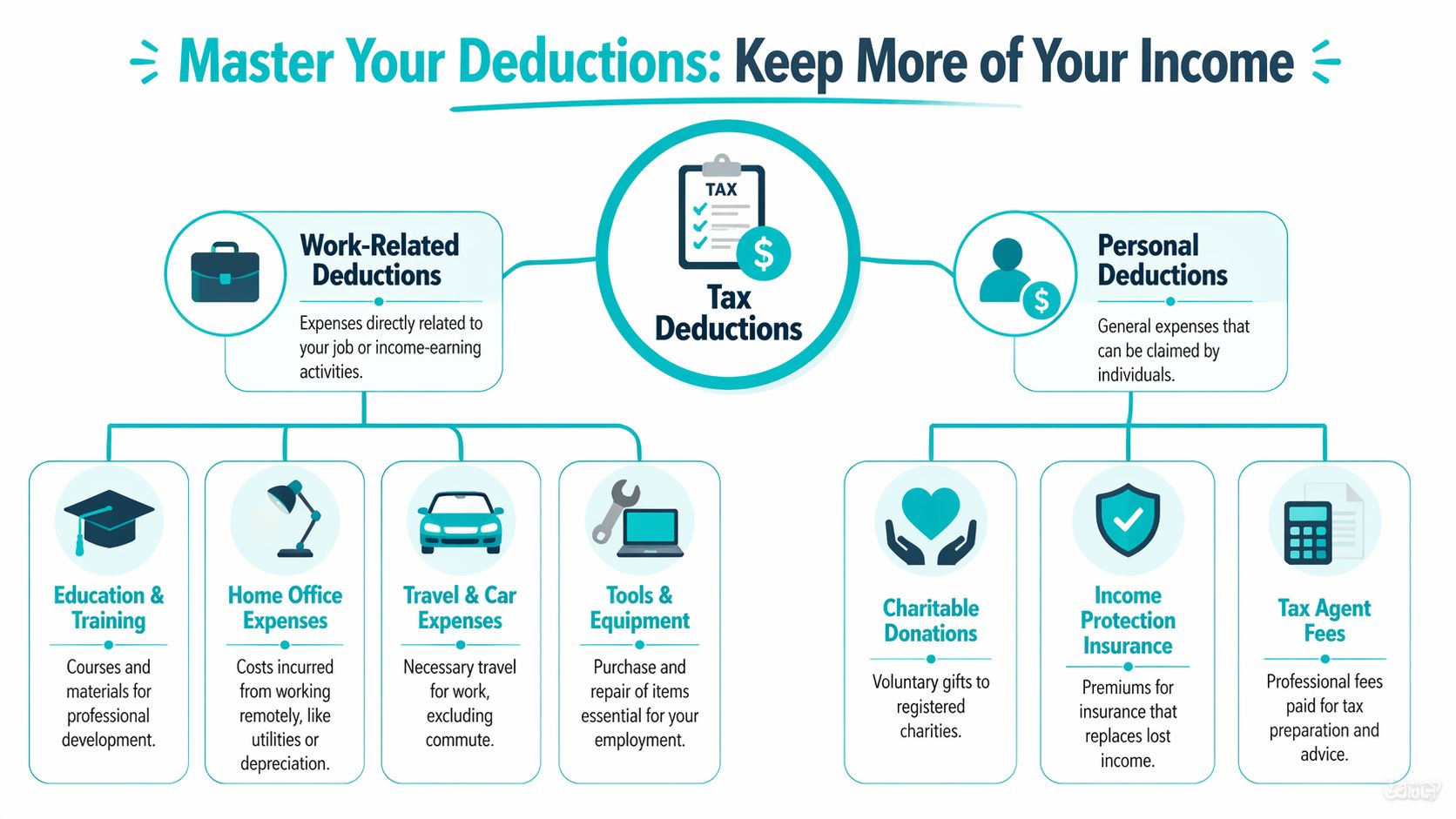
The senior deduction functions as an above-the-line deduction, meaning it reduces your taxable income after your adjusted gross income (AGI) is calculated. This placement ensures the deduction benefits both standard and itemized filers.
Deduction Amount Up to $6,000 Per Person
Each eligible taxpayer can deduct up to $6,000 from their taxable income. For a married couple where both spouses are 65 or older and file jointly, the combined deduction reaches $12,000. The deduction can reduce taxable income to zero but will not generate a refund beyond that point.
Quick examples:
– Single filer with $40,000 in income and no other deductions: taxable income drops from $40,000 to $34,000
– Married couple with $80,000 joint income and both spouses 65+: taxable income drops by $12,000
Phaseout Rules Based on Income
The full $6,000 deduction phases out for higher-income taxpayers. The phaseout begins when modified adjusted gross income (MAGI) exceeds:
– $75,000 for single filers
– $150,000 for married couples filing jointly
For every dollar above these thresholds, the deduction decreases by 6 cents (6%). Once MAGI reaches high enough levels, the deduction disappears entirely. These thresholds are not adjusted for inflation, so more taxpayers may find their deduction reduced as wages rise over time.
Phaseout example (single filer):
– MAGI: $90,000
– Excess over $75,000: $15,000
– Reduction: 6% × $15,000 = $900
– Allowed deduction: $5,100
Senior Deduction vs. Additional Standard Deduction
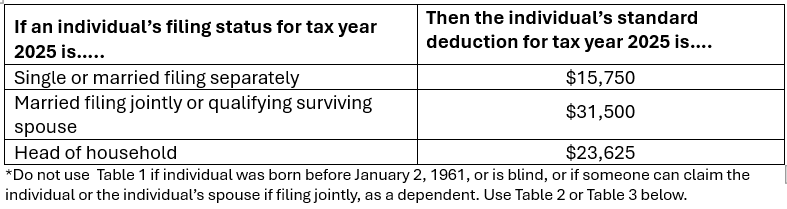
The senior deduction is separate from the additional standard deduction that seniors already receive. You may be able to claim both if you qualify.
Additional Standard Deduction for Seniors Still Applies
For 2025, the additional standard deduction for being 65 or older is:
– $2,000 for unmarried taxpayers (single, head of household, or qualifying widow/widower)
– $1,600 for married couples when one spouse is 65+
– $3,200 for married couples when both spouses are 65+
This extra amount is available only to taxpayers who take the standard deduction, not to those who itemize.
Senior Deduction Works Whether You Itemize or Not
Unlike the additional standard deduction, the senior deduction from P.L. 119-21 is available regardless of whether you itemize. This makes it valuable for taxpayers with significant medical expenses, charitable contributions, or mortgage interest who choose to itemize.
Combined example (single filer, age 67, $50,000 income):
| Deduction Type | Amount |
|—————-|——–|
| Standard deduction (2025) | $15,750 |
| Additional standard deduction (age 65+) | $2,000 |
| Senior deduction | $6,000 |
| Total deductions | $23,750 |
| Taxable income | $26,250 |
Without the senior deduction, taxable income would be $32,250, a difference of $6,000.
Impact on Social Security Taxation

A common misconception is that the senior deduction changes how Social Security benefits are taxed. It does not. The formula for determining taxable benefits remains governed by Section 86 of the Internal Revenue Code and is unaffected by the new deduction.
Taxable Benefits Are Calculated First
Whether your Social Security benefits are taxable depends on your provisional income, which includes:
– Your adjusted gross income (AGI)
– Nontaxable interest (such as municipal bond interest)
– 50% of your Social Security benefits
If provisional income exceeds these thresholds, up to 85% of benefits may be taxable:
– $25,000 for single, head of household, or qualifying widow/widower filers
– $32,000 for married filing jointly
– $0 for married filing separately if spouses lived together at any point
The senior deduction is applied after this calculation, so it doesn’t reduce the portion of benefits counted as income, but it does lower the tax owed on that income.
How the Deduction Lowers Your Tax Bill Anyway
Consider a single filer, age 68, with average Social Security benefits and other retirement income:
– Social Security: $22,293 per year
– Other income: $28,150
– Provisional income: $39,297
– Taxable Social Security: $7,148.50
With the senior deduction applied:
– AGI: $35,298.50
– Total deductions: $23,750
– Taxable income: $11,548.50
The deduction keeps the tax bill low even with over $7,000 in taxable Social Security benefits, potentially reducing it to zero depending on your tax bracket.
Senior Deduction for Non-Social Security Recipients
You do not need to receive Social Security benefits to qualify for the senior deduction. Any taxpayer age 65 or older with a work-authorized SSN and the correct filing status can claim it.
Why Some Seniors Don’t Receive Social Security
According to Census data, about 17% of Americans 65 or older with income did not receive Social Security benefits in 2023. Reasons include:
– Delaying benefits to increase future payment amounts
– Working in jobs not covered by Social Security, such as some clergy or government positions
– Not earning enough work credits to qualify
– Being a recent immigrant with limited U.S. work history
These individuals still pay income tax on pensions, retirement accounts, or wages and can now use the senior deduction to lower that tax.
Example: Working Retiree Without Social Security
A 67-year-old consultant earning $62,810 annually but not yet claiming Social Security:
– AGI: $62,810
– Standard deduction: $15,750
– Additional standard deduction: $2,000
– Senior deduction: $6,000
– Taxable income: $39,060
Without the senior deduction, taxable income would be $45,810, a $6,750 higher base for taxation.
How the Deduction Affects Married Couples

Married couples see amplified benefits when both spouses are 65 or older, but only if they file jointly.
Both Spouses Eligible Means $12,000 Total
When both spouses are 65+ and file jointly, the total senior deduction is $12,000 ($6,000 × 2). This can dramatically reduce tax liability for dual-income retirees.
Example: Married couple, both 68, one receives average Social Security, other earns average wages:
– Social Security: $22,293
– Other income: $62,810
– Taxable Social Security: $18,949
– AGI: $81,759
– Total deductions: $46,700
– Taxable income: $35,059
Without the senior deduction, taxable income would be $48,559, a difference of $13,500.
No Benefit for Married Filing Separately
Couples who file separately cannot claim the senior deduction, even if both spouses are over 65. This rule creates a significant tax penalty for splitting returns, which is sometimes used in estate planning or for specific income situations.
Effects on Social Security and Medicare Trust Funds
While the senior deduction helps individual taxpayers, it may reduce revenue flowing into the trust funds that support Social Security and Medicare.
How Trust Funds Benefit from Taxed Benefits
Under current law, revenue from taxing Social Security benefits is split:
– 50% of first-tier taxed benefits goes to Social Security trust funds (OASI and DI)
– 85% of second-tier taxed benefits funds Medicare’s Hospital Insurance (HI) trust fund
In 2024, this meant:
– $55.1 billion to Social Security trust funds (3.9% of total income)
– $39.8 billion to Medicare HI (8.8% of total income)
Potential Reduction in Trust Fund Revenue
By lowering taxable income, the senior deduction could reduce taxes paid on Social Security benefits. The Treasury Department’s Individual Income Tax Model (ITM) estimates tax liability by comparing scenarios with and without benefits included in income. If the deduction pushes taxpayers into lower brackets or eliminates their tax liability entirely, less revenue is credited to the trust funds.
However, offsetting effects exist. Seniors might work more due to lower effective tax rates, increasing payroll tax contributions, or they might work less, reducing payroll tax revenue. The net impact over 2025–2028 is expected to be modest.
Frequently Asked Questions About the Senior Deduction
Do I need to receive Social Security to claim the senior deduction?
No. The senior deduction is available to any taxpayer age 65 or older with a work-authorized SSN and the correct filing status, regardless of whether they receive Social Security benefits.
Can I claim the senior deduction if I itemize my deductions?
Yes. Unlike the additional standard deduction for seniors, the senior deduction from P.L. 119-21 is available whether you take the standard deduction or itemize.
How does the phaseout work for higher-income taxpayers?
The deduction decreases by 6% of the amount your modified adjusted gross income (MAGI) exceeds $75,000 (single) or $150,000 (married filing jointly). At high enough income levels, the deduction phases out completely.
Does the senior deduction change how Social Security benefits are taxed?
No. The formula for determining taxable Social Security benefits under Section 86 of the Internal Revenue Code is unchanged. The senior deduction reduces your overall tax liability but does not affect how much of your benefits count as taxable income.
Are married couples required to file jointly to claim the deduction?
Yes. Married taxpayers filing separately are not eligible for the senior deduction, even if both spouses are 65 or older and living apart.
When does the senior deduction expire?
The senior deduction applies to tax years 2025 through 2028 unless Congress extends it. Watch for future legislation that could make it permanent or adjust the income thresholds for inflation.
Key Takeaways for Claiming the Senior Deduction
The senior deduction offers meaningful tax savings for Americans 65 and older, but claiming it strategically can maximize your benefits. Here are the most important points to remember.
Confirm Your Eligibility Before Filing
- File jointly if you’re married; separate filers cannot claim the deduction
- Verify both spouses have work-authorized SSNs
- Track your MAGI to avoid the phaseout zone ($75,000 single, $150,000 joint)
Coordinate With Your Retirement Income Strategy
The deduction doesn’t change when to claim Social Security, but it improves your after-tax income in retirement. Consider Roth conversions in lower-income years to manage future MAGI and preserve eligibility for the full deduction.
Monitor Future Changes
The deduction expires after 2028 unless extended. Watch for proposals to make it permanent, adjust thresholds for inflation, or expand eligibility to include taxpayers with ITINs. Planning ahead allows you to adapt as the rules evolve.
Next step: Run a tax projection for 2025 with and without the senior deduction to see exactly how much you’ll save. A tax professional can help you model different income and filing scenarios to optimize your retirement tax strategy.