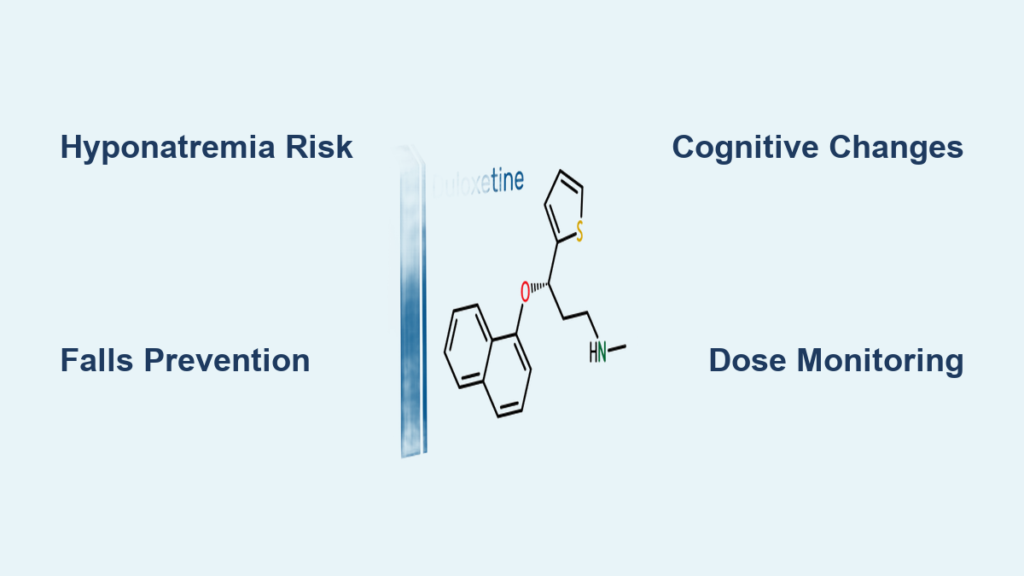
You notice your parent becoming dizzy after standing up, or perhaps a loved one seems more confused since starting a new antidepressant. These subtle changes often point to duloxetine side effects in elderly patients, a growing concern as more seniors receive prescriptions for depression, anxiety, and chronic pain. Age-related changes in how the body processes medication can turn a standard dose into a serious risk.
This guide breaks down the most dangerous duloxetine side effects in elderly patients, explains safe dosing strategies, and offers practical steps for caregivers and clinicians. You will learn how to spot warning signs early, prevent falls, manage withdrawal, and protect your loved one from avoidable harm.
Critical Geriatric Risks Linked to Duloxetine

Older adults process medications more slowly because liver and kidney function naturally decline with age. This means duloxetine stays in the bloodstream longer, amplifying both benefits and adverse reactions. The following risks deserve your immediate attention.
Hyponatremia: The Silent Sodium Threat
Low blood sodium ranks among the most serious duloxetine side effects in elderly users. The drug interferes with antidiuretic hormone regulation, causing sodium levels to drop dangerously low.
-
Warning signs to monitor:
- Confusion or memory lapses
- Headache and nausea
- Unusual fatigue or weakness
- Swelling in the face, hands, or ankles
- Seizures or reduced urination in severe cases
-
When it strikes: Hyponatremia can appear at any time, even after months of stable use.
- Action step: Request periodic sodium blood tests, especially during the first few months or after any dose increase. Seek immediate medical care if symptoms develop.
Falls and Fractures from Orthostatic Hypotension
Duloxetine significantly raises fall risk in seniors through several overlapping mechanisms. A single fall can lead to broken hips, head injuries, or long hospital stays.
-
Main contributors:
- Sudden blood pressure drops when standing
- Dizziness and drowsiness during dose adjustments
- Muscle weakness or balance problems
- Blurred vision that affects spatial awareness
-
Prevention tip: Teach your loved one to rise slowly from chairs or beds. Schedule regular blood pressure checks, including measurements taken while lying down and standing up.
Cognitive Changes That Mimic Dementia
Duloxetine can trigger or worsen confusion, memory problems, and agitation in older adults. These symptoms sometimes look identical to early dementia, leading to misdiagnosis.
-
Common presentations:
- Trouble concentrating
- Memory gaps
- Irritability or restlessness
- Sudden behavioral changes
-
Clinical insight: Always rule out hyponatremia or other metabolic causes before assuming cognitive decline is permanent or age-related.
Safe Starting Doses for Adults Over 65
The “start low, go slow” principle protects seniors from harsh early reactions. Rushing the titration process often backfires with severe dizziness or nausea.
Begin at 30 mg for Two Weeks
For elderly patients with anxiety or depression, the recommended starting dose is 30 mg once daily for 2 weeks.
- This slower ramp gives the body time to adapt.
- Younger adults may start at 60 mg, but seniors benefit from gentler introduction.
- After two weeks, if tolerated well, the dose can increase to 60 mg daily.
Cap the Dose at 60 mg in Most Cases
While duloxetine can technically reach 120 mg per day, most elderly patients should stay at or below 60 mg daily.
- Higher doses increase side effects without proven added benefit.
- Only consider escalation if symptoms persist and the patient remains stable.
- Always weigh benefits against risks in frail or multimorbid seniors.
Administer Capsules Correctly
Delayed-release capsules must be swallowed whole to work properly. Crushing or chewing them causes dose dumping and stomach irritation.
- Standard rule: Swallow capsules intact with water.
- For swallowing difficulties: Use Drizalma Sprinkle and mix contents with one tablespoon of applesauce, then consume immediately.
- For feeding tubes: Suspend contents in 50 mL of water, flush through the tube, and follow with 15 mL of water.
- Timing: Take with or without food based on patient preference.
Missed Dose and Overdose Rules
Memory lapses happen, but knowing the right response prevents dangerous complications.
Never Double Up on Duloxetine
If a dose is forgotten, take it as soon as remembered unless the next scheduled dose is near.
- Skip the missed dose if timing is too close.
- Resume the normal schedule afterward.
- Never take two doses at once, as this raises the risk of serotonin syndrome and acute toxicity.
Spot Overdose Warning Signs
Overdose can become life-threatening, especially in seniors with heart or kidney conditions.
-
Emergency symptoms include:
- Agitation or severe confusion
- Rapid heartbeat
- High fever
- Severe dizziness
- Vomiting or diarrhea
-
Immediate action: Call emergency services and bring the medication bottle to assist treatment.
Dangerous Drug Interactions to Avoid
Polypharmacy is the norm in geriatric care, making interaction checks essential before starting duloxetine.
Never Combine with MAO Inhibitors
Mixing duloxetine with monoamine oxidase inhibitors (MAOIs) can trigger fatal serotonin syndrome.
- Prohibited drugs: Isocarboxazid, phenelzine, selegiline, tranylcypromine, linezolid, methylene blue.
- Timing rule: Wait 14 days after stopping an MAOI before starting duloxetine. Wait 5 days after stopping duloxetine before starting an MAOI.
Monitor High-Risk Combinations Closely
Several common medications amplify bleeding or serotonin risks when paired with duloxetine.
-
Bleeding risk increases with:
- Warfarin, aspirin, NSAIDs like ibuprofen or naproxen
- Watch for unusual bruising or black stools
-
Serotonin syndrome risk increases with:
- Tramadol, fentanyl, lithium
- Triptans for migraines
- St. John’s Wort, tryptophan supplements
- Amphetamines, buspirone
-
Other concerns:
- Alcohol raises drowsiness and liver toxicity risk
- Tobacco may alter drug metabolism
Rare but Serious Side Effects Requiring Emergency Care
Some reactions are uncommon but demand immediate medical intervention.
Serotonin Syndrome: A Medical Emergency
Excess serotonin activity can become life-threatening within hours.
-
Hallmark symptoms:
- High fever with heavy sweating
- Rapid heartbeat and high blood pressure
- Muscle stiffness, twitching, or loss of coordination
- Agitation, hallucinations, nausea, or diarrhea
-
Response: Stop all serotonergic medications and seek emergency care immediately.
Liver Damage and Hepatotoxicity
Duloxetine can harm the liver, especially in patients with existing conditions.
-
Warning signs:
- Yellow skin or eyes (jaundice)
- Dark urine or pale stools
- Upper abdominal pain with nausea
- Loss of appetite
-
Monitoring tip: Check liver enzymes before starting treatment and repeat if symptoms appear.
Severe Skin Reactions
Rare conditions like Stevens-Johnson syndrome require instant action.
-
Critical symptoms:
- Blistering or peeling skin
- Red or purple target-shaped lesions
- Mouth sores or eye irritation
- Fever combined with body aches
-
Action: Discontinue duloxetine and head to the emergency room right away.
Managing Withdrawal and Discontinuation Safely
Stopping duloxetine abruptly can backfire, especially after long-term use.
Withdrawal Affects Nearly Half of All Users
Studies show that 44% of patients experience withdrawal symptoms, which can feel worse than the original condition.
-
Common symptoms include:
- Dizziness, nausea, headaches
- Irritability, anxiety, insomnia
- “Brain zaps” or electric shock sensations
- Tingling or numbness in extremities
-
Duration: Symptoms may linger for days or weeks depending on taper speed.
Taper Slowly Under Medical Guidance
A gradual reduction prevents severe withdrawal reactions.
- Standard taper: Reduce by 30 mg every 2 to 4 weeks.
- For very elderly patients (age 90+): Extend intervals to 6 weeks or longer between reductions.
- Never stop suddenly, even after years of stable use.
Consider the Risks Before Switching
Switching to a different antidepressant may reduce fall risk but introduces new withdrawal challenges.
- Key questions to discuss with the doctor:
- Will the new medication manage pain or depression effectively?
- Can the patient tolerate withdrawal symptoms?
- Could non-drug therapies like physical therapy or CBT help?
Essential Clinical Monitoring for Seniors

Routine checks catch problems before they escalate into emergencies.
Track Blood Pressure and Sodium Regularly
Baseline and ongoing measurements are non-negotiable for elderly patients.
- Blood pressure: Check lying and standing to catch orthostatic drops.
- Sodium: Test at baseline, after dose changes, and if confusion appears.
- Frequency: Every 3 to 6 months, or more often with risk factors.
Monitor Liver Function and Blood Sugar
Additional labs support early detection of complications.
- Liver enzymes: Test before treatment and if toxicity symptoms arise.
- Blood glucose: Diabetic patients need closer monitoring since duloxetine affects sugar control.
- Mental status: Screen for worsening depression or suicidal thoughts at each visit.
Fall Prevention Strategies for Duloxetine Users

Simple lifestyle changes dramatically reduce injury risk.
Move Slowly and Use Support Tools
Teach your loved one safe movement habits from day one.
- Sit on the edge of the bed for 30 seconds before standing.
- Install grab bars in bathrooms and improve nighttime lighting.
- Avoid driving until the patient’s response to the drug is clear.
Refer to Physical Therapy When Needed
Balance training strengthens stability and confidence.
- Focus on strength, coordination, and fall prevention techniques.
- Pair therapy with medication reviews to identify contributing factors.
Proper Storage and Disposal Practices
Safe handling prevents accidental ingestion and maintains drug effectiveness.
- Storage: Keep at room temperature, away from moisture and direct light.
- Safety: Store out of reach of children and pets.
- Disposal: Use pharmacy take-back programs or consult healthcare providers. Do not flush capsules.
Frequently Asked Questions About Duloxetine Side Effects in Elderly
What is the most dangerous side effect of duloxetine in older adults?
Hyponatremia, or dangerously low blood sodium, ranks as the most serious duloxetine side effect in elderly patients. It can cause confusion, seizures, and even death if untreated. Regular sodium monitoring during the first few months of treatment helps catch this problem early.
Can duloxetine cause dementia-like symptoms in seniors?
Yes, duloxetine can trigger confusion, memory problems, and agitation that mimic dementia. These cognitive changes are often reversible once the medication is adjusted or stopped. Doctors should always rule out hyponatremia before diagnosing neurodegenerative conditions.
How long does duloxetine withdrawal last in the elderly?
Withdrawal symptoms typically last from several days to several weeks, depending on the taper speed and individual factors. Slow dose reductions every 2 to 4 weeks help minimize severity. Very elderly patients may need extended tapers of 6 weeks or longer between reductions.
Is 30 mg of duloxetine enough for elderly depression?
For most seniors, 30 mg serves as the starting dose for two weeks before increasing to 60 mg. Many elderly patients achieve adequate symptom relief at 60 mg daily. Higher doses up to 120 mg are rarely needed and increase side effect risks.
What medications should not be taken with duloxetine?
MAO inhibitors pose the greatest danger and must be avoided within 14 days of duloxetine use. Blood thinners, NSAIDs, tramadol, fentanyl, triptans, and St. John’s Wort also create serious interaction risks. Always review the full medication list with a pharmacist before starting duloxetine.
How can caregivers prevent falls in seniors taking duloxetine?
Encourage slow position changes, install bathroom grab bars, and ensure good lighting throughout the home. Schedule regular blood pressure checks including orthostatic measurements. Physical therapy referrals can also improve balance and reduce fall risk over time.
Key Takeaways for Managing Duloxetine Side Effects in Elderly Patients
Duloxetine offers real benefits for depression, anxiety, and chronic pain in seniors, but only when used with careful oversight. The most critical duloxetine side effects in elderly patients include hyponatremia, falls, cognitive changes, and dangerous drug interactions. Starting at 30 mg, capping doses at 60 mg, and monitoring sodium and blood pressure regularly form the foundation of safe treatment.
Your next step should be scheduling a comprehensive medication review with the prescribing doctor. Bring a complete list of all current medications, supplements, and recent symptoms to the appointment. Ask about sodium baseline testing, orthostatic blood pressure checks, and a personalized taper plan if discontinuation becomes necessary. Proactive monitoring today prevents life-threatening complications tomorrow.