
Do you or a loved one feel dizzy when rolling over in bed or looking up at a shelf? For many older adults, vertigo exercises for elderly individuals offer real, lasting relief without medication. Vertigo is a symptom, not a disease, often triggered by inner ear problems like benign paroxysmal positional vertigo (BPPV). Left untreated, it raises fall risk, limits mobility, and chips away at independence over time.
This guide covers safe, effective vertigo exercises for elderly adults that can be performed at home. You will learn step-by-step instructions for the most proven techniques, including the Epley maneuver, Brandt-Daroff, and gaze stabilization. Whether you are managing mild dizziness or recovering from a recent episode, these routines can help restore stability and confidence.
Essential Safety Precautions Before Starting Vertigo Exercises
Before beginning any routine, safety must come first, especially for seniors with mobility issues or a history of falls.
Clear the Exercise Area
Remove rugs, cords, or furniture that could cause trips. Perform exercises near a sturdy chair or bed so you can sit quickly if dizziness worsens. Never attempt these movements on slippery floors or alone if you feel unsteady.
Use Support When Needed
Keep a walker, cane, or wall within reach during standing drills. For seated or lying exercises, have someone nearby during the first few sessions. This ensures you can recover safely if balance is compromised mid-routine.
Stop If Symptoms Worsen
Mild dizziness during exercises is normal, but if nausea, blurred vision, chest pain, or severe imbalance appears, stop immediately. Persistent symptoms may signal a more serious condition requiring medical evaluation.
Diagnose the Type of Vertigo First
Not all dizziness is the same. Effective treatment depends on identifying the underlying cause.
BPPV: The Most Common Cause
Benign paroxysmal positional vertigo occurs when tiny calcium crystals in the inner ear dislodge and irritate balance sensors. It triggers brief spinning spells when you move your head, such as rolling over in bed or looking upward. BPPV responds exceptionally well to repositioning maneuvers like the Epley.
Central vs. Peripheral Vertigo
Peripheral vertigo (inner ear origin) is more common and highly treatable with exercises. Central vertigo (brain-related, such as from stroke or multiple sclerosis) requires urgent medical care. If dizziness is constant, accompanied by slurred speech, weakness, or coordination problems, seek emergency help.
Confirm With a Doctor
Always consult a healthcare provider before starting vertigo exercises. A physical therapist or ENT specialist can confirm BPPV using tests like the Dix-Hallpike maneuver and recommend the right treatment path for your situation.
Perform the Epley Maneuver Correctly
The Epley maneuver is the gold standard for treating BPPV in the posterior semicircular canal, which is the most common form.
Step-by-Step: Right Ear Affected
- Sit on a bed and turn your head 45 degrees to the right.
- Quickly lie back, keeping your head turned and slightly reclined (place a pillow under your shoulders).
- Wait 30 seconds or until dizziness stops.
- Turn your head 90 degrees to the left without lifting it.
- Wait another 30 seconds.
- Rotate your entire body and head another 90 degrees to the left, so you are facing the floor.
- Wait 30 seconds, then slowly sit up.
Repeat this sequence three times per session, once daily for up to two weeks.
Left Ear Procedure
Follow the same steps, but start with your head turned 45 degrees to the left.
Tips for Success
Perform the maneuver slowly and deliberately. Avoid rushing, because timing each position is crucial. Do it in the morning to prevent lingering dizziness later in the day. If unsuccessful after 14 days, consult a vestibular therapist.
Try the Brandt-Daroff Exercise
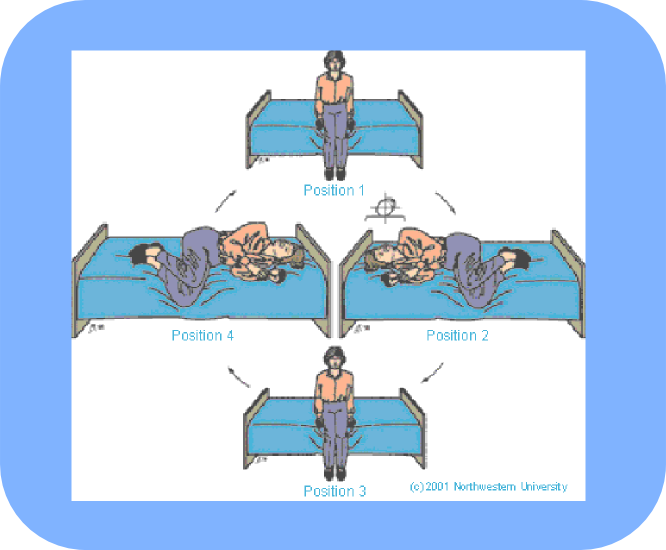
When the Epley is not effective or cannot be performed safely, Brandt-Daroff offers a gentler alternative.
How to Do the Exercise
- Sit on the edge of a bed.
- Lie down on your left side and turn your head 45 degrees upward toward the ceiling.
- Stay for 30 seconds or until dizziness fades.
- Return to sitting.
- Repeat on the right side.
This counts as one repetition. Complete five sets twice a day for up to two weeks.
Why It Works
The Brandt-Daroff exercise helps the brain adapt to abnormal balance signals by repeatedly exposing it to dizziness in a controlled way. It is less effective than Epley for crystal repositioning but useful for symptom habituation.
Common Mistakes to Avoid
Turning the head too little or too much reduces effectiveness. Rushing through repetitions can increase nausea. Performing the routine at night may disrupt sleep due to residual dizziness.
Improve Balance With Gaze Stabilization

Dizziness often worsens when the eyes and inner ear do not coordinate properly. Gaze stabilization trains your eyes to stay focused despite head movement.
X-Target Exercise
- Hold a small letter “X” on a card at eye level, about three feet away.
- Keep your eyes locked on the “X.”
- Slowly turn your head side to side (15 to 20 times).
- Then, nod your head up and down (15 to 20 times).
Start with two sets daily and increase as tolerated.
Progression Tips
Increase speed gradually as symptoms improve. Perform the drill in front of a mirror to monitor form. Do it seated if balance is poor or fatigue is a concern.
Who Benefits Most
This exercise is especially helpful for seniors with vestibular neuritis or age-related balance decline. It reduces blurry vision during movement and improves confidence when walking or driving.
Practice Standing Balance Drills

Once vertigo symptoms decrease, strengthen balance to prevent future falls.
Single-Leg Stance
- Stand behind a chair, holding the backrest.
- Lift one foot off the ground.
- Hold for 20 to 30 seconds.
- Switch legs.
Repeat three times per leg, twice daily.
Tandem Stand
- Place one foot directly in front of the other, heel to toe.
- Hold for 30 seconds.
- Switch foot position.
Use a wall or counter for support if needed.
Progress to Eyes Closed
Once stable, try both exercises with eyes closed to challenge the vestibular system further, but only if safe and supervised.
Sit-to-Stand for Functional Strength
Weak legs contribute to instability. This simple drill builds lower-body strength and coordination.
How to Perform
- Sit in a firm chair, feet flat on the floor.
- Cross arms over your chest.
- Stand up without using your hands.
- Slowly sit back down.
Complete 10 repetitions, two times per day.
Make It Safer
Use a higher chair if needed. Place the chair against a wall to prevent sliding. Have someone spot you until you feel confident in your form.
Long-Term Benefits
Improved leg strength supports better balance and makes daily activities, like getting out of a car or using the toilet, safer and easier.
When to See a Professional
While home exercises help many seniors, some cases need expert care.
Signs You Need Help
No improvement after two to three weeks of consistent exercises is a warning sign. Frequent falls or near-falls also warrant a visit. Hearing loss, ringing in the ears, or persistent headaches should be evaluated. Dizziness that does not improve with position changes needs professional assessment.
Vestibular Rehabilitation Therapy (VRT)
A physical therapist trained in vestibular rehab can create a personalized exercise plan, perform advanced maneuvers, and track progress. VRT is highly effective for chronic or complex vertigo.
Medical Red Flags
Seek immediate care if vertigo is accompanied by slurred speech, double vision, limb weakness, or loss of consciousness. These may signal a stroke or other neurological emergency.
Prevent Recurrence With Daily Habits
Even after symptoms fade, prevention is key to long-term stability.
Stay Active Daily
Regular walking, tai chi, or light stretching keeps the balance system sharp. Seniors who exercise consistently report fewer vertigo episodes over time.
Avoid Sudden Head Movements
Move slowly when getting up from bed, looking over your shoulder, or reaching overhead. Use two pillows at night to keep your head slightly elevated.
Stay Hydrated and Monitor Blood Pressure
Dehydration and blood pressure drops can mimic or worsen vertigo. Drink water throughout the day and rise slowly from sitting or lying positions to avoid sudden dizziness.
Frequently Asked Questions About Vertigo Exercises for Elderly
What is the safest vertigo exercise for seniors with poor balance?
Seated gaze stabilization and the Brandt-Daroff exercise are the safest options. Both keep the body supported while still training the vestibular system. Always have a chair or bed nearby for added security.
How long does it take for vertigo exercises to work?
Many seniors notice improvement within one to two weeks of consistent practice. For BPPV treated with the Epley maneuver, relief often comes after just a few sessions. Chronic cases may take longer and require professional vestibular rehabilitation.
Can vertigo exercises make symptoms worse before they get better?
Yes, mild dizziness during exercises is normal and expected. However, severe nausea, vomiting, or sharp pain is not. If symptoms intensify significantly, stop and consult a healthcare provider.
Are vertigo exercises safe to do without a doctor’s diagnosis?
It is best to get a diagnosis first, especially to rule out central vertigo or other serious conditions. A doctor can confirm BPPV and recommend the most effective routine for your specific type of vertigo.
How often should elderly individuals perform vertigo exercises each day?
Most routines call for one to two sessions daily. The Epley maneuver is typically done once per day, while Brandt-Daroff and gaze stabilization are done twice daily. Consistency matters more than intensity.
Can vertigo return after successful treatment?
Yes, recurrence is possible, especially with age-related inner ear changes. Continuing daily balance drills, staying hydrated, and moving slowly during position changes can reduce the risk of future episodes.
Key Takeaways for Managing Vertigo in Older Adults
Vertigo exercises for elderly individuals are a proven, drug-free way to restore balance and reduce dizziness. The most effective routines include the Epley maneuver for BPPV, Brandt-Daroff for habituation, and gaze stabilization for eye-head coordination. Standing balance drills and sit-to-stand exercises add functional strength for long-term fall prevention.
Start with one or two exercises that match your comfort level and safety needs. Perform them consistently, track your symptoms, and consult a doctor if no improvement appears within two to three weeks. With patience and the right routine, most seniors can regain stability, confidence, and independence in daily life.