
If you’re an older adult looking to move with more ease, reduce stiffness, and feel more balanced each day, simple stretching exercises for elderly individuals can make a powerful difference. These gentle movements improve flexibility, enhance circulation, support better posture, and help you perform everyday tasks like tying shoes or reaching for a shelf without strain. The best part is that you don’t need special equipment or a gym membership.
All you need is a sturdy chair and about 10 minutes a day to start feeling more open, relaxed, and grounded. Regular stretching isn’t about touching your toes or doing advanced poses. It’s about maintaining mobility, releasing tension, and staying independent as you age. This guide delivers a complete, safe, and effective routine tailored specifically for older adults and beginner exercisers.
Breathing Basics for Seniors
Inhale Up, Exhale Down
Every stretch begins with breath. The pattern “inhale up, exhale down” calms your nervous system and prepares your body for movement. Start seated or standing tall with your hands at your sides. As you inhale, slowly lift your arms overhead. As you exhale, lower them back down. Repeat this three times before any session.
This rhythm keeps your movements smooth and prevents strain. It also helps you stay mindful, since focusing on your breath ensures you’re not pushing too hard. Use this same pattern during stretches: inhale to lengthen or prepare, exhale to deepen the movement.
Breathe Into the Stretch
Hold each stretch for three deep breaths. Inhale fully to create space in your body, then exhale slowly to release tension. If your breath becomes shallow or you feel pain, ease off immediately. Smooth, steady breathing is your guide, so never stretch so deeply that you can’t breathe comfortably.
Neck and Shoulder Relief

Gentle Neck Tilts and Turns
Tight neck muscles are common with age and long periods of sitting. These simple movements improve blood flow and reduce stiffness throughout the upper body.
- Side Tilt: Gently tilt your head toward your right shoulder. Feel the stretch along the left side of your neck. Hold for one breath, then return to center. Repeat on the left side.
- Head Turn: Slowly turn your head to the right, looking over your shoulder. Breathe, then return to center. Repeat on the left.
- Chin to Chest: Lower your chin toward your chest. Let the weight of your head deepen the stretch. Hold for three breaths.
Keep movements small and controlled with no forcing. If you have neck issues, move even more gently.
Shoulder Rolls and Releases
Stiff shoulders affect posture and arm movement. Rolling and stretching them opens your chest and helps you stand taller.
- Shoulder Rolls: Roll shoulders backward in slow circles four times. Then reverse and roll forward four times. Keep arms relaxed.
- Chest Release: Stand or sit tall, bend your knees slightly, and place hands on thighs. Round your spine, tuck your belly, and roll shoulders up and back. Finish with a deep shoulder roll to open the chest.
This sequence helps counteract slouching and improves breathing capacity.
Cross-Body Arm Stretch
Tight shoulders and triceps can make reaching and lifting difficult. This stretch targets those areas gently and effectively.
- Extend your right arm straight out to the side.
- Bring it across your chest.
- Use your left hand to gently pull your right arm closer to your body.
- Keep your shoulders relaxed and down.
- Hold for three breaths, then switch sides.
Focus on the sensation in the back of your shoulder and arm, not how far you can pull. Never force the stretch.
Spine and Core Mobility
Standing Cat-Cow Stretch
This modified version protects balance while improving spinal flexibility. Stand beside a sturdy chair with hands lightly resting on the backrest.
- Inhale (Cow): Lift your chin, arch your back slightly, and shift hips back.
- Exhale (Cat): Round your spine, tuck your chin to chest, and gaze at your navel.
- Move slowly between positions for 5–6 breaths.
Let your breath guide the motion. This stretch warms up the spine and relieves lower back tension.
Roll Down and Roll Up
Release tightness in your entire back with a slow spinal roll. Stand with feet hip-width apart and knees slightly bent.
- Place hands on thighs.
- As you exhale, slowly roll down vertebra by vertebra, letting your head and arms hang.
- Relax your neck and sway gently side to side to loosen the lower back.
- To rise, roll up slowly, stacking each vertebra until you’re standing tall.
- Finish with one deep inhale and full exhale.
If standing is difficult, perform a seated version: sit tall, roll forward over your legs, then roll back up.
Side Body Stretch
Improve lateral flexibility and support spinal health with this simple movement.
- Reach your right arm overhead and gently lean to the left.
- Keep hips stable and avoid twisting.
- Breathe into the right side of your body.
- Hold for three breaths, return to center, then repeat on the other side.
Add a second repetition per side for deeper release.
Hip and Lower Body Flexibility

Hip Circles and Figure-Four Stretch
Loose hips improve walking, balance, and comfort when sitting or standing. Stand or sit with hands behind your back or on a chair for support.
- Hip Circles: Circle hips slowly: forward, side, back, side. Repeat 4 times in each direction.
- Standing Figure-Four: Bring feet together. Cross your right ankle over your left thigh above the knee. Sit hips back slightly like sitting into a chair. Gently wiggle to deepen the stretch in the right hip. Switch sides.
If balance is a concern, use the seated version: cross one ankle over the opposite knee while sitting, then gently bend forward.
Calf and Hip Flexor Stretch
Tight calves and hip flexors contribute to stiffness and imbalance. This dual-action stretch addresses both areas.
- Step your right leg back, keeping the heel down and knee straight.
- Slightly bend your left knee.
- Tuck your pelvis to feel a stretch in the right calf.
- Then stand tall to feel the stretch in the front of the left hip.
- Hold for 3–5 breaths, then switch sides.
This movement supports better posture and walking mechanics.
Standing Hamstring Stretch
Keep the back of your legs flexible to prevent strain and improve mobility.
- Extend your right leg straight with toes pointing up.
- Bend your left knee slightly for balance.
- Hold onto a chair if needed.
- Hinge forward at the hips, reaching toward your right toes.
- Keep your back flat and avoid rounding.
- Feel a mild tug in the back of your thigh.
- Hold for three breaths, then switch legs.
Never force your hands down. The stretch should never be painful.
Ankle and Foot Health
Point, Flex, and Circle Ankles
Strong, mobile ankles improve balance and reduce fall risk. Stand with a chair nearby for support.
- Lift your right foot slightly.
- Point toes away, then flex them back toward your shin.
- Repeat 4 times.
- Circle your ankle 4 times clockwise, then 4 times counterclockwise.
- Switch legs.
This simple routine boosts circulation and joint lubrication.
Heel Raises for Stability
Strengthen calves and improve foot control with these effective movements.
- Static Heel Raises: Rise onto your toes, lifting heels high. Hold for one breath, lower slowly. Repeat 4 times.
- Dynamic Heel Raises: Rise and lower quickly, 8 times total. Swing arms gently for rhythm.
These build strength needed for walking and climbing stairs.
Forward Folds for Lower Back
Standing Forward Fold
Release tension along the spine and hamstrings with this calming stretch.
- Stand with feet hip-width apart, knees slightly bent.
- Place hands on thighs.
- As you exhale, follow your hands down your legs as far as comfortable.
- Let your upper body hang loosely like a rag doll.
- Relax your neck and breathe.
- To rise, roll up slowly, one vertebra at a time.
This stretch calms the mind and eases lower back tightness.
Seated Forward Fold
A safe alternative for those with balance concerns.
- Sit on a chair with legs extended.
- Place hands on thighs.
- Inhale to sit tall, exhale to hinge forward.
- Roll down slowly, letting your hands follow your legs.
- Hang and breathe for 3–5 breaths.
- Roll back up with control.
Keep a slight bend in the knees to protect the hamstrings.
Daily Routine Structure
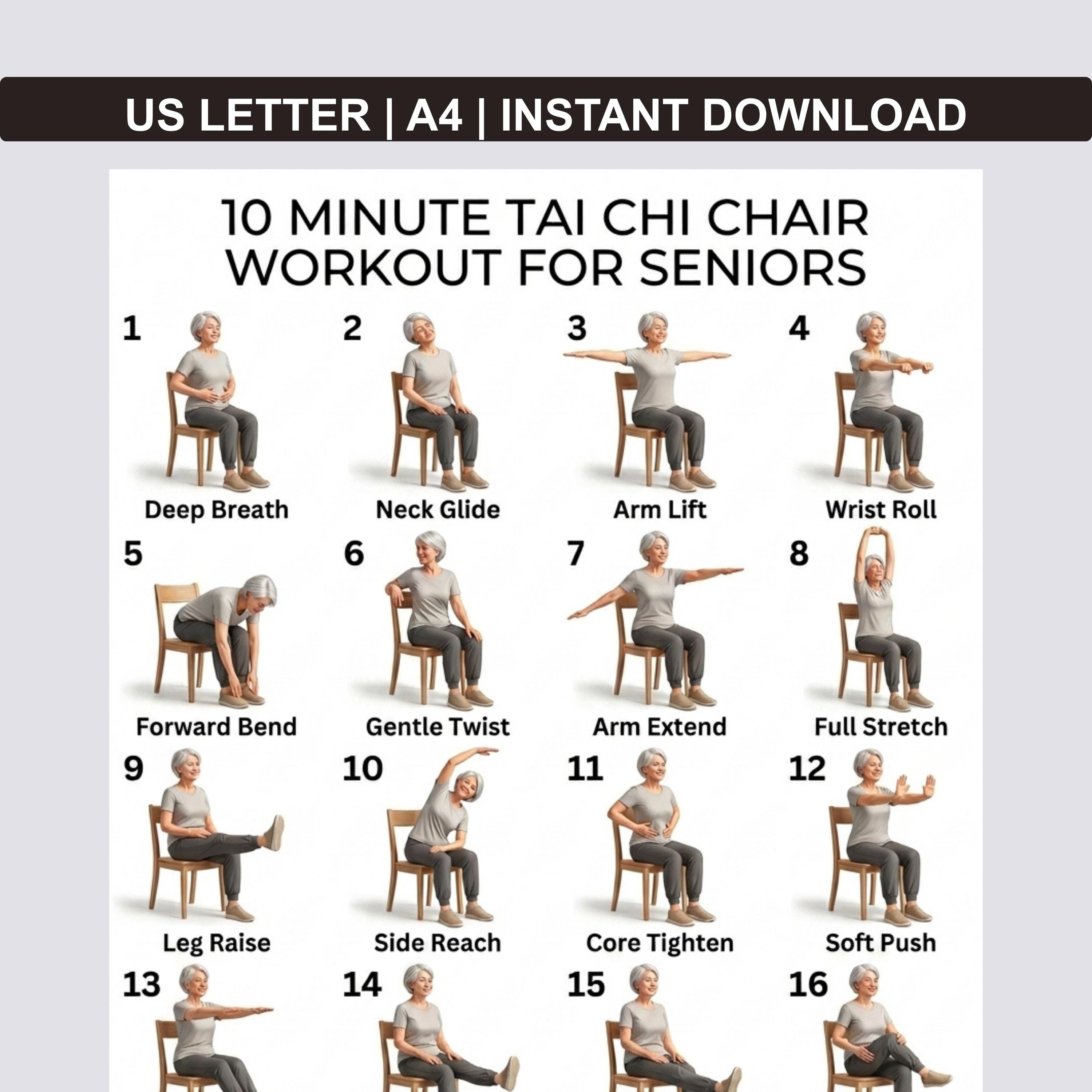
10-Minute Full-Body Sequence
Complete this routine daily for lasting results.
- Center with Breath (1 min): 3 cycles of “inhale up, exhale down.”
- Neck and Shoulders (2 min): Tilts, turns, shoulder rolls, cross-body stretch.
- Spine and Core (2 min): Cat-cow, side stretch, roll down and up.
- Hips and Legs (3 min): Hip circles, figure-four, hamstring stretch, calf and hip flexor stretch.
- Ankles and Feet (1 min): Point and flex, circles, heel raises.
- Cool Down (1 min): Forward fold, either standing or seated.
Perform each stretch with control and breath. Total time is about 10 minutes.
Safety and Progress Tips
Never Push Into Pain
The golden rule is to stretch only to a mild tug, never to pain. If you feel sharp or shooting sensations, stop immediately. Flexibility improves over time, not in a single session. Respect your body’s limits today so you can stretch safely tomorrow.
Use a Chair for Support
A sturdy chair is your best tool. Use it for balance during standing stretches or as a seat for modifications. Never stretch in an unstable environment. Keep the chair within arm’s reach at all times.
Track Your Progress
Measure improvement by focusing on function rather than depth.
- Range of motion: Can you reach farther in a forward fold?
- Ease of movement: Is standing up from a chair easier?
- Posture: Do you feel taller or more aligned?
- Daily comfort: Less stiffness in the morning?
Progress isn’t about depth. It’s about consistency and function.
When to Stretch
Morning: Wake Up the Body
Do the routine first thing to loosen stiffness and energize your system. It prepares your joints and muscles for the day ahead.
Post-Workout: Cool Down
After walking or light exercise, stretching reduces soreness and speeds recovery. Focus on areas you used, like calves or hips.
Before Bed: Relax the Mind
Evening stretching calms the nervous system. The breath-focused movements help you unwind and sleep deeper.
Desk Breaks: Reset from Sitting
If you sit for long periods, take a 3-minute stretch break. Target the neck, shoulders, and spine to prevent stiffness.
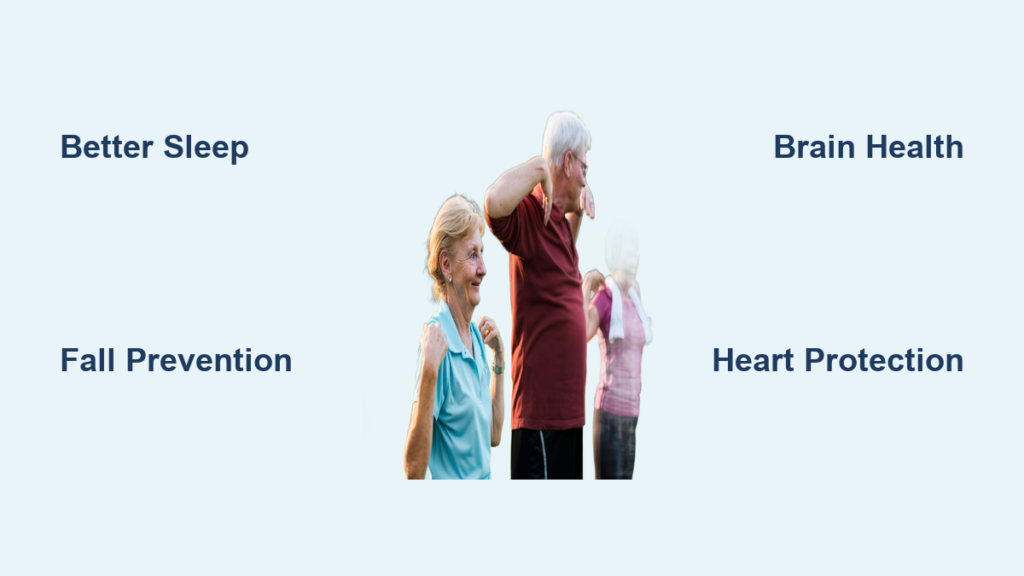
Long-Term Benefits
Prevent Falls and Stay Independent
Improved ankle mobility, calf strength, and balance reduce fall risk. Controlled movements train your body to respond better to shifts in balance.
Fight Age-Related Stiffness
Daily stretching maintains joint lubrication and muscle elasticity. This combats the natural decline in flexibility that comes with aging.
Improve Posture and Breathing
Opening the chest and aligning the spine counteracts slouching. Better posture means easier breathing and less back strain.
Boost Mental Calmness
Mindful stretching with breath reduces stress and anxiety. Many users report feeling more grounded and mentally clear after just one session.
Frequently Asked Questions About Stretching Exercises for Elderly
How Often Should Seniors Do Stretching Exercises?
Daily practice is recommended for the best results. You can stretch in the morning to wake up the body, after light exercise to cool down, or before bed to relax. Consistency matters more than duration. Even 10 minutes a day produces lasting benefits over time.
Can Elderly People Stretch Every Day?
Yes, daily stretching is safe and beneficial for most older adults. The routine is designed to be gentle and low impact. Listen to your body and avoid any stretch that causes sharp pain. If you have specific health concerns, consult your doctor before starting.
What Is the Best Stretching Exercise for Seniors?
There is no single best stretch, but a balanced routine covering the whole body works best. Combining neck, shoulder, spine, hip, and ankle movements addresses the most common areas of stiffness. The 10-minute sequence in this guide offers a complete approach.
Do Seniors Need a Chair for Stretching?
A sturdy chair is highly recommended for safety and support. It helps with balance during standing stretches and provides a seat for modifications. Almost every exercise in this routine has a seated alternative, making the chair an essential tool.
How Long Should Each Stretch Be Held?
Hold each stretch for 3 to 5 deep breaths. This allows time for the muscle to release tension safely. Breathing fully during the hold helps deepen the stretch naturally without forcing. If you can’t breathe smoothly, you’ve gone too far.
Will Stretching Help Reduce Fall Risk?
Yes, regular stretching improves ankle mobility, calf strength, and balance. These factors directly affect your ability to recover from shifts in balance. Combined with the controlled movements in this routine, stretching supports fall prevention and helps maintain independence.
Key Takeaways for Building a Safe Stretching Routine
The most important points to remember are simple. First, breathe into every movement using the “inhale up, exhale down” pattern. Second, stretch only to a mild tug and never push into pain. Third, use a chair for support and choose seated versions whenever balance feels uncertain.
Start with just a few minutes each day and build up to the full 10-minute sequence. Track your progress by noticing how daily tasks feel easier over time. With consistency, you’ll likely feel more open, relaxed, and grounded, and you may even feel like you’ve grown taller.
Pick a time today, morning or evening, and try just three stretches from this guide. Your future self will thank you for taking this small step toward lasting mobility and independence.