
If you’re an older adult looking to stay strong and independent, stretch band exercises for elderly individuals offer a simple yet powerful solution. Resistance bands are lightweight, affordable, and gentle on aging joints, making them ideal for anyone managing arthritis, limited mobility, or balance concerns. These routines help fight age-related muscle loss, improve posture, and build the stability needed to prevent falls.
You don’t need a gym membership or heavy equipment to get started. Just one resistance band and a sturdy chair are enough for a complete workout. Whether seated or standing, the routines below are low-impact, safe, and designed for 2 to 3 weekly sessions. Each movement focuses on control, proper breathing, and form rather than speed. In just 5 to 20 minutes, you can activate every major muscle group and build lasting strength.
Essential Safety & Setup
Choose the Right Band and Chair
Start with a light or medium resistance band, typically yellow or red for beginners. Always inspect the band for cracks or tears before each session. A sturdy chair with armrests is essential for seated movements. Make sure it won’t slide or tip during use.
Sit on the front edge of the seat with your feet flat on the floor. Keep your back straight and your core gently engaged. Wear comfortable clothing that allows full movement and keep water nearby throughout your session.
Master Proper Breathing
Proper breathing powers every movement and prevents dizziness. Exhale during the exertion phase when you’re pulling, pressing, or lifting against the band. Inhale during the release phase as you return to the starting position.
Never hold your breath while exercising. Controlled breathing supports core stability and keeps your blood pressure steady. A natural rhythm works best, so don’t overthink the count.
Know Pain vs. Discomfort
Some muscle fatigue is normal and expected during resistance work. Sharp pain, joint pinching, or sudden discomfort is not. Stop any movement immediately if you feel these sensations.
Always prioritize form over resistance or repetitions. If a movement causes strain, modify it or skip it entirely. Quality movement builds strength safely, while poor form invites injury.
Warm Up First (3 to 5 Minutes)
Skipping a warm-up increases your injury risk and reduces workout effectiveness. This short sequence increases blood flow, loosens stiff joints, and prepares your muscles for resistance work.
Activate Circulation and Mobility
Heel Touches Forward: Sit tall and lift your heels. Tap your toes forward while opening your chest with each tap. Complete 10 repetitions.
Step Outs: Step one foot out to the side, then bring it back. Repeat with the other foot. Keep your back straight throughout. Do 6 repetitions per side.
March in Place: Lift your knees gently while seated or standing. Engage your core and march for 30 seconds.
Gentle Pullbacks: Clasp your hands behind your back. Squeeze your shoulder blades together and hold for 3 seconds. Repeat 8 times.
Loosen Shoulders and Wrists
Arm Reach and Neck Stretch: Extend your arms out to your sides. Tilt your head right, return to center, then tilt left. Repeat 3 times per side.
Shoulder Rolls: Roll your shoulders forward 5 times, then backward 5 times to release tension.
Hand and Wrist Mobility: Open and close your fists several times. Move your wrists up and down, then make small circles in both directions. Shake your hands out for 10 seconds to finish.
Upper Body Strength Exercises
Chest Pull (Front Row)

Sit tall with the band held at chest level and arms extended. Pull the band toward your chest by bending your elbows and squeezing your shoulder blades together. Keep your shoulders relaxed and down rather than shrugged toward your ears.
Exhale on the pull and inhale on the release. Aim for 3 sets of 10 repetitions or 45 seconds of continuous movement. Imagine pinching a pencil between your shoulder blades at the top of each rep.
Chest Press
Loop the band behind your back, just under your armpits. Press your hands forward until your arms are fully extended. Control the return phase and don’t let the band snap back toward you.
Exhale as you press forward and inhale as you return. Complete 3 sets of 10 reps or 30 seconds. Keep your elbows slightly below shoulder level to protect your joints.
Back Rows
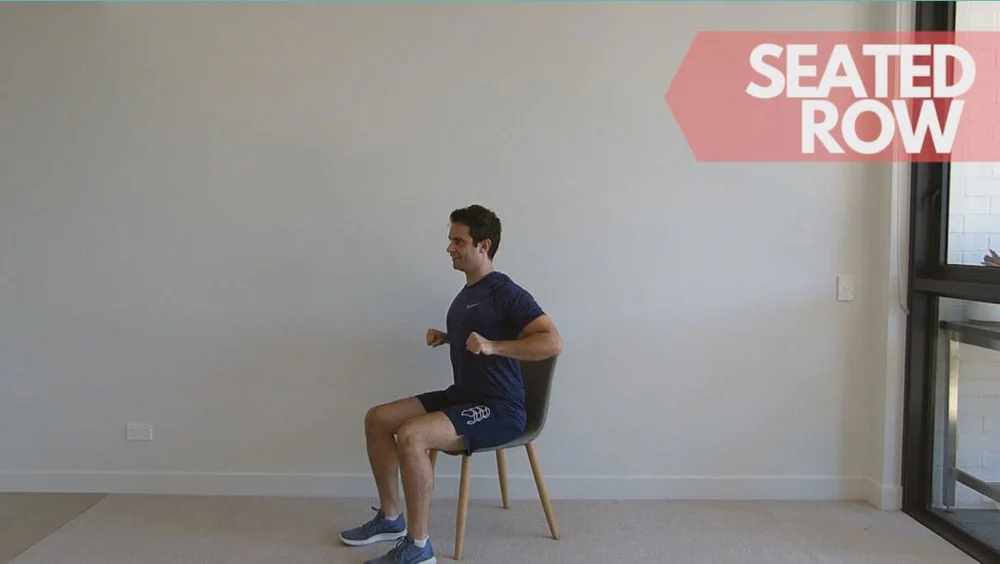
Hold the band in front of your body with hands at shoulder width. Pull your elbows back while squeezing your upper back. Keep your spine long and your posture proud throughout the movement.
Exhale on the pull and inhale on the release. Do 3 sets of 10 reps or 30 seconds. Engage your core to prevent your lower back from arching.
Rotator Cuff Activation
Bend your elbows to 90 degrees and keep them glued to your sides. Hold the band with palms facing inward. Exhale as you open your hands outward for external rotation, then inhale as you return.
Only your forearms should move while your elbows stay still. Complete 3 sets of 10 repetitions. This small movement targets the stabilizing muscles around your shoulder joint and helps prevent injuries.
Bicep Curls
Step on the band with both feet or hold it at belly center. Grip the ends with palms facing up. Curl your hands toward your shoulders while keeping your elbows close to your body.
Exhale on the curl and inhale on the release. Do 3 sets of 10 reps per arm. Avoid swinging your arms and keep your upper arms still throughout.
Triceps Press (Kickbacks)
Hold the band with your arms bent at 90 degrees behind you and palms facing up. Press your arms straight back while squeezing your triceps. Keep your back straight and avoid leaning forward.
Exhale on the press and inhale on the release. Complete 3 sets of 10 repetitions. Focus on slow, controlled motion rather than speed.
Overhead Press
Hold the band at the center of your belly. Press your arms overhead until fully extended, then lower slowly with control. Engage your core throughout the entire movement.
Exhale as you press up and inhale as you lower down. Aim for 30 seconds of continuous movement. Reduce your range of motion if shoulder mobility feels limited.
Lower Body and Hip Strengthening
Hip Abduction (Outer Thigh Press)
Place the band around your thighs just above your knees. Sit tall with feet together and core engaged. Press your legs outward against the resistance using your outer hips and glutes.
Exhale on the press and inhale on the release. Do 3 sets of 10 reps or 30 seconds. Push from your hips rather than your knees and prevent inward knee collapse.
Side Leg Lifts
Keep the band around your thighs. Stand or sit while slowly lifting one leg out to the side. Keep your hips level and return to center with control. Repeat on both sides.
Exhale on the lift and inhale on the return. Complete 3 sets of 10 reps per leg. Hold onto a chair for balance support if needed.
Heel Lifts (Calf Raises)
Step on the band with feet together. Lift your heels off the floor while squeezing your calves. Lower slowly with control rather than dropping back down.
Exhale on the lift and inhale on the release. Do 3 sets of 10 reps or 30 seconds. Progress by performing this exercise standing for added challenge.
Hip Hinge (Glute and Hamstring)

Place the band under your feet. Hinge at your hips by lowering your chest toward your knees while keeping your back straight. Return to the starting position with control.
Exhale as you return to standing and inhale as you descend. Complete 3 sets of 10 reps. Never round your back during this movement to protect your spine.
Marching with Resistance
Keep the band around your thighs. March in place by lifting one knee at a time. Engage your core and quadriceps while keeping your back straight.
Exhale on each lift and inhale as you lower. Aim for 30 seconds of continuous movement. This exercise improves walking strength and overall coordination.
Core and Balance Exercises
Seated Core Pull

Hold the band taut with your arms extended out to your sides. Lean back slightly in your chair while keeping your spine long. Engage your core by pulling your belly button toward your spine.
Exhale on the pull and inhale as you return upright. Do 3 sets of 10 reps. This builds deep core strength without straining your back.
Seated Twists
Hold the band in front of your body. Exhale as you twist to the right, then inhale back to center. Repeat the motion to the left side. Keep your legs still throughout.
Complete 3 reps per side. This movement enhances spinal mobility and improves coordination for daily activities.
Cross-Body Punches
Hold the band at hip level. Punch one arm across your body while engaging your chest and core. Switch sides and alternate punches with control.
Exhale on each punch and inhale as you return. Do 3 reps per side. This exercise challenges your balance and reaction time while strengthening your core.
Cool Down and Stretch (4 to 5 Minutes)
Stretching after your workout reduces soreness and improves long-term flexibility. Hold each stretch gently without bouncing or forcing the movement.
Shoulder and Chest Release
Interlace your fingers behind your back. Gently lean forward to open your chest and stretch your shoulders. Hold this position for 20 seconds.
Overhead Cross-Body Stretch
Reach one arm overhead and pull it across your body with your other hand. Hold for 15 to 20 seconds before switching sides. Feel the stretch along your upper arm and shoulder.
Upper Arm Stretch
Reach one arm up and bend the elbow. Gently pull the bent arm across your body to stretch the front of your shoulder. Hold for 15 seconds and switch sides.
Spinal Mobility Stretch
Place your hands in front of you. Round your upper back into a cat position, then arch slightly into a cow position. Move through your full spine for 5 repetitions.
Lower Body Stretch
Stand with feet wider than hip-width. Hinge at your hips and reach toward the floor. Feel the stretch through your glutes, hips, and hamstrings. Hold for 20 seconds.
Final Breathing Release
Sit tall in your chair. Inhale while reaching your arms overhead. Exhale while releasing your arms down. Repeat 3 times and end with one deep exhale to release all tension.
Progress Safely and Consistently

Start Low, Progress Slow
Begin with light resistance and just 2 sessions per week. Master your form before adding any challenge. Once you complete all reps with ease, progress by increasing repetitions, adding another set, or switching to a higher resistance band in the next color up.
Never rush your progression. Consistency over the long term produces better results than occasional intense sessions.
Track Your Success
Keep a simple workout log with the date, exercises completed, band color used, and how you felt during the session. Note any pain, ease, or challenge levels.
This tracking helps you spot patterns, avoid overexertion, and celebrate steady improvements over time.
Common Mistakes to Avoid
Letting the Band Snap Back
Always control the return phase of every movement. A snapping band can hit your face or cause joint strain. Maintain tension throughout the entire rep.
Shrugging Your Shoulders
Keep your shoulders relaxed and down during rows and presses. Shrugging reduces upper back engagement and can lead to neck tension or strain.
Holding Your Breath
Breathing powers your movement and keeps your blood pressure stable. Inhale on the release and exhale on the effort. Never hold your breath during resistance work.
Rushing Your Reps
Slow, controlled motion builds strength and protects your joints. Speed sacrifices form and increases injury risk. Quality always beats quantity.
Benefits Beyond Strength
Prevent Falls
Hip abductions, leg lifts, and balance drills strengthen the stabilizing muscles that keep you upright. Strong hips and ankles are critical for fall prevention in older adults.
Improve Posture
Rows, shoulder squeezes, and chest stretches reverse the forward-hunch posture common with aging. Better posture reduces back pain and improves breathing capacity.
Support Daily Living
Stronger arms, legs, and core make everyday tasks much easier. Stretch band exercises for elderly adults help with standing from a chair, carrying groceries, climbing stairs, and reaching overhead items.
Aid Joint Health
Low-impact band training is ideal for arthritis sufferers. It lubricates stiff joints and builds supportive muscle without the pounding stress of higher-impact exercise.
Frequently Asked Questions About Stretch Band Exercises for Elderly
How often should seniors do resistance band exercises?
Most seniors benefit from 2 to 3 sessions per week. This frequency allows muscles to recover between workouts while building consistent strength gains over time.
What resistance band color should beginners start with?
Beginners should start with light or medium resistance bands, typically yellow or red. These provide enough challenge to build strength without overwhelming muscles or joints.
Can stretch band exercises help with arthritis pain?
Yes, stretch band exercises for elderly individuals are low-impact and help lubricate joints while building supportive muscle. Many people with arthritis find band work more comfortable than lifting weights.
Is it safe to do these exercises while seated?
Absolutely. Seated variations are ideal for seniors with balance concerns or limited mobility. A sturdy chair with armrests provides stability and safety throughout the workout.
How long until seniors see strength improvements?
Most seniors notice improvements in strength and daily function within 4 to 6 weeks of consistent practice. Progress comes from steady work rather than rapid intensity increases.
Do resistance bands really build muscle in older adults?
Yes. Research shows resistance training is a primary counter-measure to sarcopenia, the age-related muscle loss that affects seniors. Bands provide effective muscle activation for stabilization and growth.
Final Takeaways for Stretch Band Exercises for Elderly
Stretch band exercises for elderly adults offer far more than basic strength training. They provide a pathway to independence, confidence, and a better quality of life. With just a few minutes a day, you can maintain muscle mass, improve balance, and move with greater ease.
Start with the basics, stay consistent, and listen to your body. Over time, you’ll notice stronger arms, steadier steps, and more energy for the activities you love. Grab a band, sit tall in your chair, and begin today. Your future self will thank you for the investment you make right now.