

Sharp, shooting pain that travels from your lower back down through your hip and leg can make even simple tasks feel impossible. If you’re an older adult dealing with this kind of nerve discomfort, you are far from alone. Sciatica affects millions of seniors and often interferes with walking, sitting, sleeping, and enjoying daily life. The encouraging truth is that gentle, targeted sciatica stretches for elderly individuals can ease nerve pressure, restore flexibility, and reduce pain without medication or invasive procedures.
This guide walks you through the safest, most effective stretches recommended by physical therapists for older adults. You will learn proper form, common mistakes to avoid, and how to build a simple daily routine. Every movement described here is low-impact, easy to do at home, and designed for seniors with limited flexibility or sensitive joints. Let’s get started on the path to better mobility and less pain.
Why Sciatica Pain Worsens With Age and How Stretching Helps
Sciatica happens when the sciatic nerve, the longest nerve in your body, becomes compressed or irritated. In older adults, this usually results from age-related changes like herniated discs, spinal stenosis, or degenerative disc disease. These conditions narrow the spaces around the nerve and create that familiar burning, tingling, or shooting sensation.
Tight surrounding muscles make the problem worse. The piriformis in your buttocks and the hamstrings along the back of your thighs often tighten with age and pull on the pelvis, which increases pressure on the sciatic nerve. Stretching these muscles gently loosens the tension and gives the nerve room to function properly. Consistency matters more than intensity, especially when starting out.
Essential Safety Steps Before Starting Any Stretch
Protecting your body comes first, particularly if you have existing health conditions or chronic pain.
Talk to Your Healthcare Provider First
Always check with your doctor or physical therapist before beginning a new stretching program. This step is especially important if you have osteoporosis, arthritis, heart problems, or a history of back surgery. A professional can tell you which movements are safe and which to skip.
Warm Up Before You Stretch
Never stretch cold muscles. Spend 5 to 10 minutes doing light movement like seated marching, gentle ankle circles, or slow arm swings. Warming up increases blood flow and prepares your tissues for deeper work.
Know the Difference Between Discomfort and Pain
A mild pulling sensation during a stretch is normal and even helpful. Sharp, shooting, or radiating pain is a warning sign to stop right away. Pushing through nerve pain can worsen inflammation and delay healing. Stretch only to the point of gentle tension.
Move Slowly and Breathe Deeply
Use slow, controlled motions without any bouncing or jerking. Hold each stretch for 20 to 30 seconds while breathing in through your nose and out through your mouth. Deep breathing helps muscles release tension more completely.
Seated Piriformis Stretch for Deep Buttock Relief
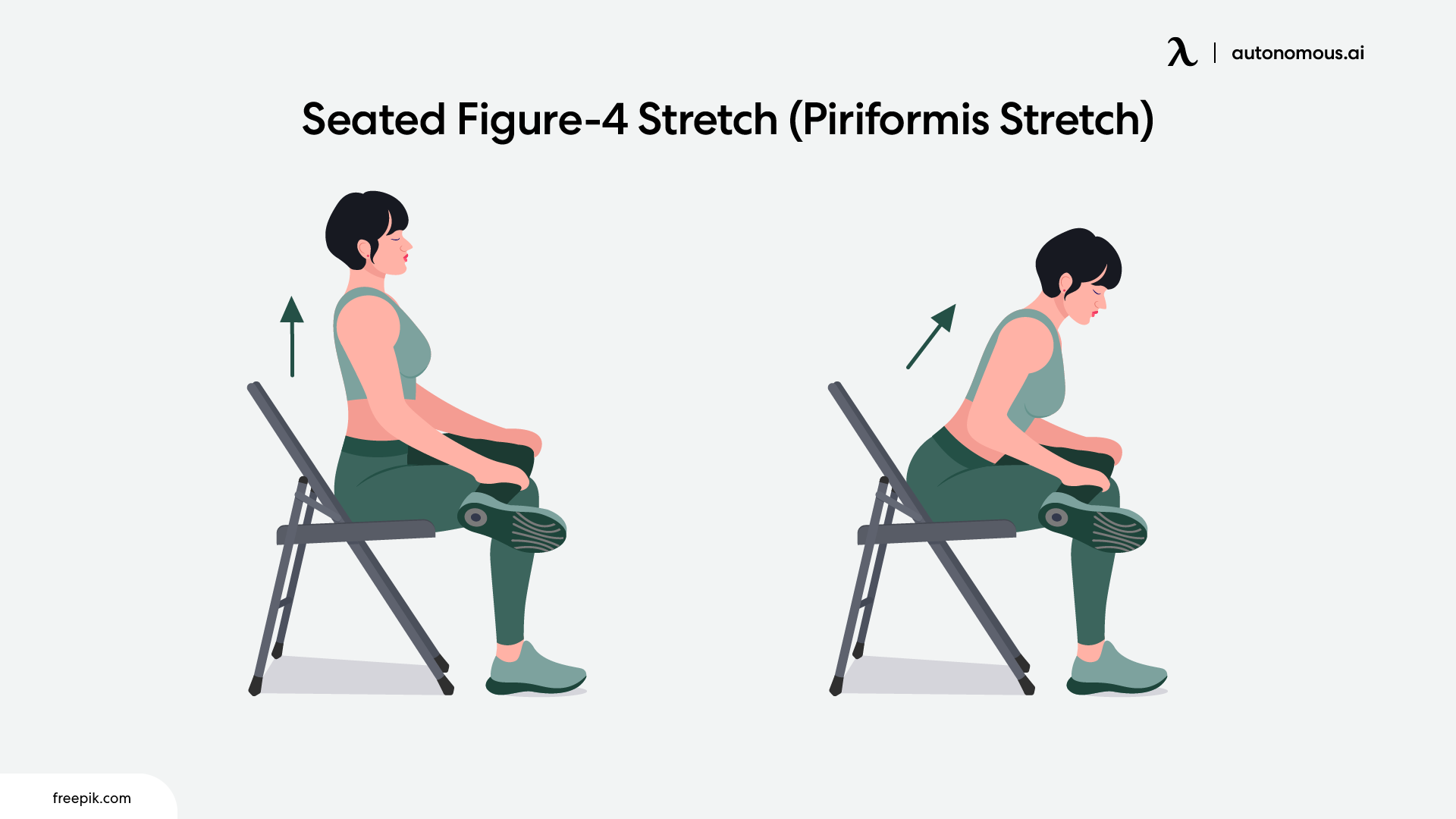
The piriformis muscle sits deep in your buttocks and is one of the most common troublemakers for sciatic nerve pain. This seated version is perfect for seniors who prefer not to get down on the floor.
How to Perform the Seated Piriformis Stretch
- Sit on a sturdy chair with both feet flat on the floor.
- Cross your right ankle over your left knee and let the right knee fall outward naturally.
- Sit tall, gently engage your core muscles, and lean forward slightly from your hips.
- Stop when you feel a stretch in your right buttock area.
- Hold for 25 seconds, then switch to the other side.
Place a small cushion under your hip if you need extra support or padding.
Mistakes to Avoid During This Stretch
• Rounding your back forward instead of keeping your spine tall
• Leaning too far and straining the lower back
• Holding your breath instead of staying relaxed
Imagine a string pulling the top of your head toward the ceiling to keep your posture aligned.
Knee-to-Chest Stretch for Lower Back Pressure

This classic move gently opens the lower back and relieves pressure along the sciatic nerve pathway.
Single Knee-to-Chest Instructions
- Lie flat on your back on a firm surface with a thin mat underneath.
- Bend both knees and keep your feet flat on the floor.
- Bring one knee slowly toward your chest.
- Clasp your hands behind your thigh, never on the knee itself.
- Hold for 25 seconds, then lower the leg and repeat on the other side.
Double Knee-to-Chest Variation
Only try this version if your spine is healthy and your doctor approves:
- Bring both knees toward your chest at the same time.
- Keep your head resting on the floor and your shoulders relaxed.
- Hold for 20 seconds, then release slowly.
Skip this move if you feel any pinching or sharp sensation in your lower back.
Pelvic Tilts to Strengthen Your Core and Support Your Spine
A strong core acts like a natural brace for your lower back. Pelvic tilts are one of the safest ways to begin building that support.
How to Do Pelvic Tilts on the Floor
- Lie on your back with knees bent and feet flat on the floor.
- Gently tighten your abdominal muscles and press your lower back into the floor.
- Hold the position for 5 seconds, then release.
- Repeat 10 times in a slow, steady rhythm.
Picture your belly button gently pulling toward your spine to engage the right muscles.
Seated Pelvic Tilt Alternative
For days when getting on the floor feels difficult:
- Sit tall in a sturdy chair with both feet flat.
- Slowly tilt your pelvis forward and then backward.
- Perform 10 repetitions to improve posture and reduce nerve pressure.
Seated Forward Bend for Tight Hamstrings
Tight hamstrings pull on the pelvis and tug the lower back out of alignment. Releasing them often brings surprising sciatica relief.
Safe Steps for the Seated Forward Bend
- Sit on the edge of a sturdy chair with legs extended straight in front of you.
- Flex your feet so your toes point upward and protect your knees.
- Inhale and lengthen your spine upward.
- Exhale and hinge forward from your hips, reaching gently toward your toes.
- Stop at the point of comfortable tension and hold for 20 to 30 seconds.
Bend your knees slightly if your hamstrings feel especially tight.
Why This Stretch Works So Well
Tight hamstrings tug the pelvis into a tilted position that strains the lower back and increases pressure on the sciatic nerve. This stretch gently counteracts that pull and restores healthier alignment.
Alternative Piriformis Stretch for Balance or Mobility Challenges
If getting up and down from the floor is difficult, this chair-based version offers the same benefits with extra stability.
Step-by-Step Guide
- Sit upright in a stable chair with a firm seat.
- Cross your right leg over your left thigh, resting the ankle just above the knee.
- Keep your right foot flexed to protect the ankle.
- Press gently downward on your right knee with one hand.
- Lean forward slightly until you feel a deep stretch in your buttock.
- Hold for 25 seconds, then switch sides.
You should feel the stretch deep in the glute, not in your knee or lower back.
Best Situations for This Version
• Limited floor mobility or joint pain
• Recovery from hip or knee replacement surgery
• Need for steady, reliable support during stretching
Modified Cat-Cow Stretch for Spinal Flexibility
The cat-cow movement gently mobilizes the spine and helps relieve compression around the sciatic nerve.
Hands-and-Knees Version (Only If Safe)
- Position yourself on hands and knees with wrists under shoulders and knees under hips.
- Inhale and drop your belly toward the floor while lifting your head and tailbone.
- Exhale and round your spine upward while tucking your chin and pelvis.
- Continue slowly for about 1 minute.
Seated Cat-Cow Alternative
A safer option for most seniors:
- Sit tall in a chair with hands resting on your knees.
- Inhale and gently arch your back while opening your chest.
- Exhale and round your spine while tucking your chin toward your chest.
- Move slowly with your breath for 1 minute.
This version improves spinal motion without putting weight on your hands and knees.
Nerve Gliding Exercises to Free Up the Sciatic Nerve
Sometimes called neural flossing, these gentle movements help the sciatic nerve slide smoothly through surrounding tissues.
Supine Sciatic Nerve Glide
- Lie on your back with both legs straight.
- Bend one knee and lift the leg to about a 90-degree angle.
- Slowly point your toes away, then flex them back toward your shin.
- As you flex the foot, gently bring the leg closer to your head.
- As you point the foot, lower the leg slightly.
- Repeat 10 times per leg with smooth, pain-free motion.
Seated Nerve Glide for Added Stability
- Sit in a chair and extend one leg straight out.
- Flex and point your foot while slowly tilting your head forward and back.
- Coordinate the movements: flex the foot as the head tilts forward, point the foot as the head tilts back.
- Repeat 10 times per leg.
Stop immediately if any movement causes pain to shoot down your leg.
A Simple Daily Routine for Consistent Sciatica Relief

Consistency delivers far better results than occasional intense sessions. Here is a beginner-friendly plan you can build into your day.
Quick Morning Routine (About 5 Minutes)
• Pelvic tilts, 10 repetitions
• Seated piriformis stretch, 25 seconds per side
• Seated cat-cow, 1 minute total
Relaxing Evening Routine (About 7 Minutes)
• Knee-to-chest stretch, 25 seconds per side
• Seated forward bend, 30 seconds
• Nerve gliding exercises, 10 repetitions per leg
Try using gentle heat before stretching and a cold pack afterward if the area feels inflamed.
When to Skip Stretching and Seek Medical Help
Not every type of back pain responds well to stretching. Knowing the warning signs protects your health.
Red Flags That Require Immediate Attention
• Sudden leg weakness or increasing numbness
• Loss of bladder or bowel control (seek emergency care right away)
• Fever combined with back pain
• Unexplained weight loss alongside back pain
Conditions That Need Medical Clearance First
• Spinal fractures of any kind
• Severe osteoporosis
• Recent spinal surgery
• Cauda equina syndrome
Stretching the wrong area can worsen symptoms if the underlying cause is not muscular. Always get a proper diagnosis before starting any new routine.
Daily Habits That Help Prevent Sciatica Flare-Ups
Long-term relief depends on the small choices you make throughout the day, not just the time you spend stretching.
Maintain Supportive Posture All Day
• Sit with your back fully supported and feet flat on the floor
• Avoid slouching or crossing your legs for long periods
• Place a small lumbar roll behind your lower back when sitting
Keep Moving With Gentle Activity
• Walk for 20 to 30 minutes most days
• Stand up and stretch every 30 minutes during long sitting sessions
• Try water aerobics, tai chi, or other low-impact activities
Build Core Strength Over Time
• Practice pelvic tilts every day
• Add gentle bridges by lifting your hips off the floor while lying down
• Avoid traditional sit-ups, which strain the lower back
Frequently Asked Questions About Sciatica Stretches for Elderly
Are sciatica stretches safe for seniors with osteoporosis?
Most gentle stretches are safe, but seniors with osteoporosis should always get medical clearance first. Certain movements that involve spinal flexion or twisting may need to be avoided to protect fragile vertebrae. A physical therapist can recommend specific safe alternatives.
How long does it take for sciatica stretches to relieve pain?
Many seniors notice some improvement within 2 to 4 weeks of consistent daily stretching. Significant, lasting relief usually requires 6 to 8 weeks of regular practice. Results depend on the cause of the sciatica and how consistently you perform the stretches.
Can elderly people do sciatica stretches every day?
Yes, daily stretching is safe and often recommended for seniors with sciatica. Gentle movements performed consistently work better than occasional intense sessions. Just listen to your body and skip any stretch that causes sharp or radiating pain.
What is the best sciatica stretch for elderly adults who cannot get on the floor?
The seated piriformis stretch and seated forward bend are excellent options for seniors with limited floor mobility. Both target the muscles that commonly irritate the sciatic nerve while keeping you safely supported in a chair.
Should I use heat or ice before and after sciatica stretches?
Heat before stretching helps loosen tight muscles and improve flexibility. Ice afterward can reduce any inflammation that develops during exercise. Use whichever option feels more comfortable and provides better relief for your specific symptoms.
When should an elderly person see a doctor instead of stretching at home?
See a doctor if pain lasts longer than a few weeks, gets worse despite stretching, or comes with numbness, weakness, or bladder or bowel changes. These signs can point to more serious conditions that need medical treatment beyond stretching.
Key Takeaways for Lasting Sciatica Relief in Older Adults
Sciatica does not have to control your daily life. The right combination of gentle sciatica stretches for elderly adults, performed consistently and correctly, can reduce nerve pain, improve flexibility, and restore your ability to enjoy everyday activities. Focus on slow, careful movements and never push through sharp pain.
Start with just one or two stretches from this guide and gradually build up to a full routine. Pair your stretching with good posture, regular gentle activity, and ongoing communication with your healthcare provider. Small daily efforts add up to meaningful, lasting relief. Begin today and give your body the support it deserves.





