

If you’re a senior searching for a workout that protects your joints while building strength and stamina, the rowing machine deserves your attention. Unlike running or jumping exercises that jar aging knees and hips, rowing delivers a full-body workout with zero impact. It strengthens your heart, tones muscles, and improves endurance without punishing your joints.
The challenge? Many older adults feel intimidated by the machine or worry about doing it wrong. This guide removes that fear. You’ll learn exactly how to use a rowing machine for seniors, from proper form and warm-ups to building a sustainable routine that fits your life.
Prepare Your Body Before Rowing
Jumping onto a rowing machine without preparation is a recipe for strain. Years of sitting tighten hips, stiffen shoulders, and limit spinal movement. A few minutes of daily mobility work changes everything.
Build Joint Mobility That Lasts
Mobility is the foundation of safe rowing. Focus on three key areas:
- Shoulders: Arm circles (forward and backward), band pull-aparts, and doorway stretches
- Hips: Cat-cow stretches, glute bridges, and seated hip openers
- Spine: Seated spinal twists and gentle forward folds
Spend 10 to 15 minutes each day moving these joints through their full range. A foam roller works wonders on tight lower backs and hips. This daily habit improves posture, prevents falls, and makes daily tasks easier.
Warm Up Before Every Rowing Session
Never start rowing cold. A proper warm-up increases blood flow and prepares your nervous system for movement.
Follow this sequence:
- 5 minutes of dynamic movement: Leg swings, arm swings, and torso rotations
- Foam roll tight areas: Focus on upper back, glutes, and hamstrings
- 3–5 minutes of light rowing: At 40–50% effort, concentrating on smooth strokes
This routine primes your body and mind, reducing injury risk and improving performance.
Master the Four Phases of the Rowing Stroke
The rowing stroke consists of four phases: catch, drive, finish, and recovery. Learning each one slowly builds confidence and protects your body.
Catch: Set Up With Strong Posture
The catch is your starting position. A poor setup leads to poor form throughout the stroke.
Get into position correctly:
- Secure feet in straps with the ball of your foot, not your heel
- Keep shins vertical and knees bent
- Extend arms forward with shoulders relaxed
- Brace your core gently, as if preparing for a light hug
Avoid rounding your back or hunching your shoulders. This position sets the tone for the entire stroke.
Drive: Power Starts With Your Legs
The drive phase generates most of your power. Your legs do the heavy lifting, not your arms.
Execute the drive in this order:
- Push through your heels to extend your legs
- Lean back slightly only after your legs are nearly straight
- Pull the handle to your lower ribs using your back muscles
Remember the sequence: legs, then back, then arms. This protects your lower back and engages your strongest muscles.
Finish: Complete the Stroke With Control
The finish position should feel balanced and stable, not forced.
Check these key points:
- Legs fully extended but not locked
- Slight backward lean, not collapsed posture
- Handle touching just below your ribcage
- Elbows close to your body, not flared outward
Resist the urge to yank the handle or arch your back. Control matters more than force.
Recovery: Reset Smoothly
The recovery phase returns you to the catch position. Move deliberately to build rhythm.
Follow these steps:
- Extend your arms forward
- Lean your torso forward from the hips, hinging rather than rounding
- Bend your knees and slide the seat forward
Keep the recovery slow and smooth. A rushed return throws off your timing and balance.
Avoid These Common Rowing Mistakes
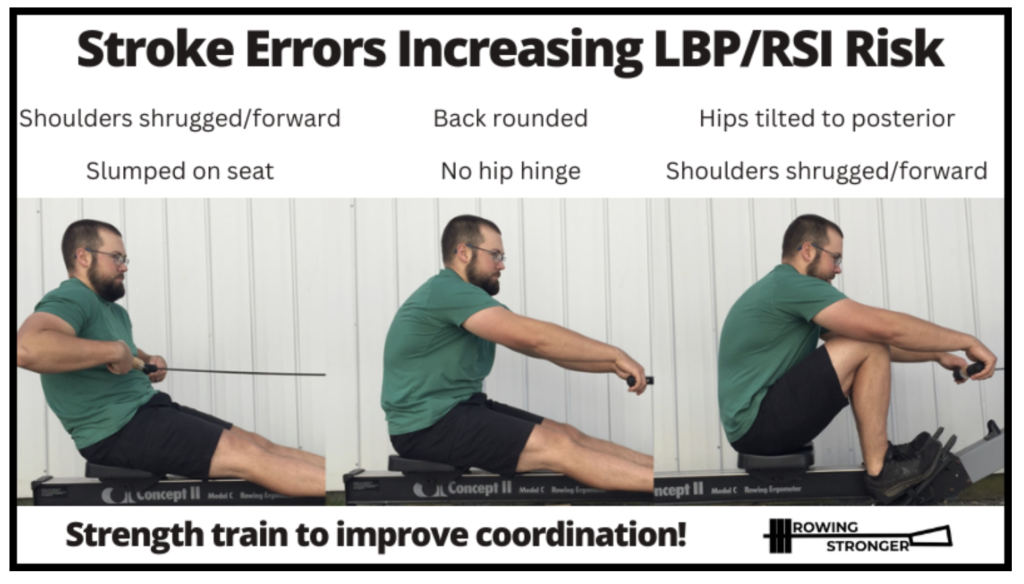
Small errors create big problems over time. Watch for these red flags and fix them immediately.
Don’t Round Your Lower Back
A rounded spine puts dangerous pressure on your discs, especially as you age.
Fix it:
– Sit tall before each stroke
– Engage your core lightly throughout the movement
– Use a mirror or ask a friend to check your form
– Shorten your stroke if you cannot maintain a neutral spine
Don’t Pull With Your Arms First
Using arms to start the pull shifts work to small muscles and strains your shoulders.
Fix it:
– Think of the motion as a back row at the gym
– Initiate power with your legs, not your arms
– Keep your elbows close to your body throughout the pull
Your arms should finish the motion, never start it.
Don’t Rush the Recovery
Fast, jerky returns create momentum that throws off balance and wastes energy.
Fix it:
– Make recovery twice as long as the drive phase
– Move smoothly, like gliding rather than snapping
– Focus on rhythm over speed
Start With a Safe, Sustainable Routine
Begin with short sessions and build gradually. Consistency beats intensity every time.
Begin With Two Weekly Sessions
Start with just two 15 to 20 minute workouts per week. This gives your body time to adapt without overwhelming it.
Try this beginner structure:
- 5 minutes warm-up row at 40–50% effort
- 10 minutes steady rowing at moderate pace, focusing on form
- 5 minutes cool-down row at easy pace
Add 1 to 2 minutes each week as your strength and endurance improve.
Choose the Right Resistance Setting
Most rowing machines have a damper setting from 1 to 10. Higher resistance is not better.
Set your damper between 3 and 5 for a smooth, water-like feel. This allows proper stroke mechanics without straining your muscles. Think of rowing through water rather than pushing against a wall.
Track Time Instead of Distance
In your first weeks, focus on how long you can row with good form, not how far you travel.
A simple progression looks like this:
- Week 1: 15 minutes total
- Week 3: 20 minutes total
- Week 6: 25–30 minutes total
Good form always outweighs speed and distance.
Add Strength Training to Your Week

Rowing builds endurance, but resistance training builds the resilience seniors need. Strong muscles protect joints, improve balance, and support bone density.
Do Two Strength Sessions Per Week
Pair your rowing with simple exercises:
- Bodyweight squats using a chair for support
- Wall push-ups to build chest and arm strength
- Standing calf raises to improve balance and ankle stability
- Kettlebell deadlifts starting light and focusing on hip hinge form
Just 15 to 20 minutes, twice per week, creates noticeable improvements in strength and stability.
Cool Down and Recover Properly
Recovery is part of training, not optional. Proper cool-downs reduce soreness and keep you moving well.
Stretch After Every Session
Spend 5 to 10 minutes stretching these key areas:
- Hamstrings: Sit and reach toward your toes with a straight back
- Quads: Stand on one leg and pull the other foot toward your glutes
- Chest: Press your hands against a doorframe at 90 degrees
- Shoulders: Pull one arm across your chest and hold
Hydrate and Refuel
Drink water before, during, and after every workout. Afterward, eat a small snack containing protein and carbohydrates, such as yogurt with fruit or peanut butter on toast. This supports muscle recovery and prevents fatigue.
Make Exercise Enjoyable and Sustainable
Workouts should feel rewarding, not punishing. Enjoyable routines become lifelong habits.
Add Play to Your Daily Movement
Play is a secret weapon for healthy aging. It rewires your brain, improves coordination, and boosts mood.
Try these simple ideas:
- Balance on one leg while brushing your teeth
- Dance during your warm-up
- Play “follow the leader” with grandchildren
- Laugh during your workout, because joy is part of fitness
Track Your Progress Simply
Use a notebook or smartphone app to record:
- Workout duration
- How you felt (energy, comfort, form quality)
- Improvements, such as rowing 20 minutes without stopping
Celebrate small wins. Progress builds confidence and motivation.
Know When to Stop or Modify
Your body sends clear signals. Learn to listen.
Stop Immediately If You Experience:
- Sharp pain in your back, knees, or shoulders
- Chest tightness or unusual shortness of breath
- Dizziness or nausea
Rest and consult your doctor if symptoms continue.
Modify the Workout When Needed
Smart adjustments keep you training safely:
- Shorten your stroke if full motion causes discomfort
- Lower the resistance to a damper setting of 2 or 3
- Sit longer between strokes to build rhythm slowly
Modifying your workout is not weakness. It is wisdom.
Frequently Asked Questions About Rowing for Seniors
Is a rowing machine safe for seniors with joint pain?
Yes, rowing is one of the safest cardio options for joint pain. The seated, low-impact motion eliminates stress on knees and hips while building strength around those joints. Start with low resistance and short sessions to allow your body to adapt.
How often should seniors use a rowing machine?
Begin with two sessions per week, each lasting 15 to 20 minutes. As your fitness improves, gradually increase to three to five sessions weekly. Listen to your body and prioritize consistency over frequency.
What is the best resistance setting for seniors on a rowing machine?
A damper setting between 3 and 5 works best for most seniors. This range mimics water resistance and allows smooth, controlled strokes. Higher settings create unnecessary strain without added benefit for beginners.
Can seniors use a rowing machine every day?
Daily rowing is possible once you’ve built a solid fitness base, typically after several weeks of consistent training. Start with two or three days per week and add sessions slowly. Rest days help your muscles recover and grow stronger.
What should seniors do before using a rowing machine?
Always warm up with 5 minutes of dynamic movement like arm swings and leg swings, followed by foam rolling tight areas. Finish your warm-up with 3 to 5 minutes of light rowing at 40–50% effort before increasing intensity.
How long does it take to see results from rowing as a senior?
Most seniors notice improvements in endurance and energy within 2 to 3 weeks of consistent training. Measurable strength gains typically appear after 4 to 6 weeks. Stick with your routine and track small wins to stay motivated.
Final Thoughts on Rowing Machine Workouts for Seniors
Rowing is one of the best investments you can make in your long-term health. It strengthens your heart, builds muscle, protects your joints, and supports independence. Unlike high-impact exercises, rowing lets you move with purpose without punishing your body.
The keys to success are simple. Start slowly, master your form, and stay consistent. You do not need to row fast or far. You only need to show up, move well, and care for your body along the way.
Sit tall. Push with your legs. Breathe deeply. Row with intention. The best workout is not about speed or distance. It is about living fully, with strength and joy, for years to come.





