
Sciatica in older adults is not simply a back problem; it is a nerve issue shaped by decades of wear on the spine. For those over 60, the most common triggers are spinal stenosis, degenerative disc disease, and facet joint arthritis. These age-related changes narrow the spaces where nerves travel, especially at the L4-L5 and L5-S1 levels. Unlike a 40-year-old whose pain often starts with a sudden herniated disc, seniors face a slow, structural compression that demands a different approach.
The encouraging reality is that most elderly patients can achieve meaningful relief through gentle lumbar flexion exercises, smart positioning, and consistent daily habits. Forward bending opens the nerve pathways, while aggressive extension narrows them. With the right routine, older adults can reduce leg pain, restore mobility, and maintain independence. This guide delivers a clear, safe plan for treating sciatica in elderly individuals based on what truly works for aging spines.
Why Sciatica in Seniors Requires a Different Approach
Spinal Stenosis: The Leading Cause
Spinal stenosis is the narrowing of the spinal canal, and it is the primary reason seniors develop sciatica. As discs lose water content with age, they collapse and shrink. Facet joints also deteriorate, forming bone spurs that crowd the nerves. The result is pain that worsens with standing or walking and improves when you sit or lean forward. This is a progressive condition requiring ongoing management, not a one-time fix.
Degenerative Disc Disease and Nerve Compression
Discs serve as shock absorbers between vertebrae. Over time, they dry out, thin, and lose height. This collapse increases pressure on surrounding joints and narrows the neural foramina, the small openings where nerves exit the spine. While discs cannot regenerate, symptoms can be controlled by improving spinal mechanics and reducing nerve irritation through targeted movement.
Osteoarthritis and Facet Joint Involvement
Facet joints guide spinal motion and keep vertebrae aligned. Cartilage breakdown leads to inflammation, stiffness, and bony overgrowth. These arthritic changes further narrow the spinal canal and can refer pain down the leg, mimicking true sciatica. Effective treatment must address both joint health and the resulting nerve compression.
Safe Exercises for Elderly Sciatica Relief
Knee Rolls for Morning Mobility
Lie on your back with knees bent and feet flat. Slowly roll both knees to one side while keeping both shoulders on the floor. Return to center and repeat on the opposite side. Perform 15 repetitions per side, several times daily. This gentle rocking lubricates the spinal joints and reduces morning stiffness without stressing the lower back.
Single Leg Knee Hug for Nerve Tension
Lie on your back with knees bent. Gently pull one knee toward your chest using your hands under the thigh. Allow your pelvis to tilt slightly under you without straining. Hold briefly, then release. Repeat 15 times per leg. This mild flexion eases tension on the sciatic nerve. If comfortable, progress to pulling both knees in at once while keeping your shoulders relaxed.
Side-Lying Glute Activation for Pelvic Support
Lie on your side with legs stacked and feet together. Lift the top knee slightly, just enough to feel the glute muscle engage. Keep your hips stacked and avoid rolling backward. Do 10 to 15 reps, then switch sides. Strong glutes stabilize the pelvis and reduce strain on the lower back, which helps calm sciatic irritation over time.
Chair Forward Fold to Open the Spine
Sit on a firm chair with feet flat on the floor and hands resting on your knees. Gently roll forward from the upper spine, letting your torso hang toward your feet. Hold for 2 to 3 seconds, then return upright slowly. Perform 2 to 5 reps, 2 to 3 times daily. This movement opens the spinal canal and is especially helpful if walking makes your pain worse. Stop immediately if you feel any sharp pain.
The Z-Position for Immediate Pressure Relief
Lie on your back and place your feet on a chair, couch, or stool so your knees are bent above your hips, forming a “Z” shape. Let your lower back flatten naturally and relax completely. Hold for 5 to 20 minutes, multiple times per day. This position decompresses the lumbar spine, reduces nerve pressure, and improves blood flow to the legs. Adding a heat pack to the lower back can deepen the relief.
Repeated Lumbar Flexion to Create Space
Sit on a chair with feet slightly wider than shoulder-width. Place your hands on your thighs and slowly slide them down your legs as you bend forward from the hips. Hold for 5 seconds, then return slowly. Repeat 10 times. This opens the neural foramina, the exit points for spinal nerves. A key sign of success is centralization, when pain begins moving up the leg toward the back, indicating reduced nerve pressure.
Core Activation for Long-Term Stability
Lie on your back with knees bent and feet flat. Place your hands on your thighs. Pull your belly button gently toward your spine to engage the deep core. Exhale and lift your shoulder blades off the floor, using your abdominal muscles rather than your neck. Hold briefly, then lower on the inhale. Perform 2 sets of 15 reps. A strong core acts as a natural brace for the spine and helps prevent future flare-ups.
Common Mistakes That Worsen Elderly Sciatica

Avoid Extension-Based Exercises
Back extensions, supermans, and full bridges narrow the spinal canal and intensify stenosis symptoms. These moves may help younger patients with disc herniations, but they harm seniors. Replace them with flexion-based alternatives like the Z-position or chair forward folds.
Skip High-Impact and Twisting Movements
Running, jumping, and rotational sports like golf increase joint stress and speed up degeneration. Avoid twisting at the waist, especially while lifting. Choose low-impact options like seated pedaling or walking with frequent rest breaks.
Never Push Through Shooting Leg Pain
Sharp, shooting pain down the leg is a warning sign of nerve irritation. Stop the activity immediately. Focus only on movements that feel pain-free, and progress gradually as symptoms improve.
Do Not Assume All Sciatica Exercises Are Safe
Many online routines target younger adults with acute disc issues and include extensions or twists that can damage an aging spine. Always match exercises to your diagnosis. Flexion is the priority for stenosis, not extension.
Stop Forcing “Perfect” Posture
Standing with a rigid, arched back increases pressure on the lumbar spine. Instead, relax your lower back. Use recliners over straight-backed chairs, and let your spine rest in a neutral, comfortable curve.
Limit Walking Without Rest Breaks
Walking is an extension-based activity. For stenosis sufferers, even 5 to 10 minutes of continuous walking can trigger pain. Break walks into short segments, sitting to perform a forward fold every few minutes. A stationary bike or pedal exerciser offers a safer way to stay active.
Use Mobility Aids Without Hesitation
Canes, walkers, and rollators reduce spinal load and support better posture. A four-wheel walker with a seat lets you rest and stretch whenever needed. Use a shopping cart to support your back in stores. These tools protect your independence rather than diminish it.
Recognizing Emergency Warning Signs
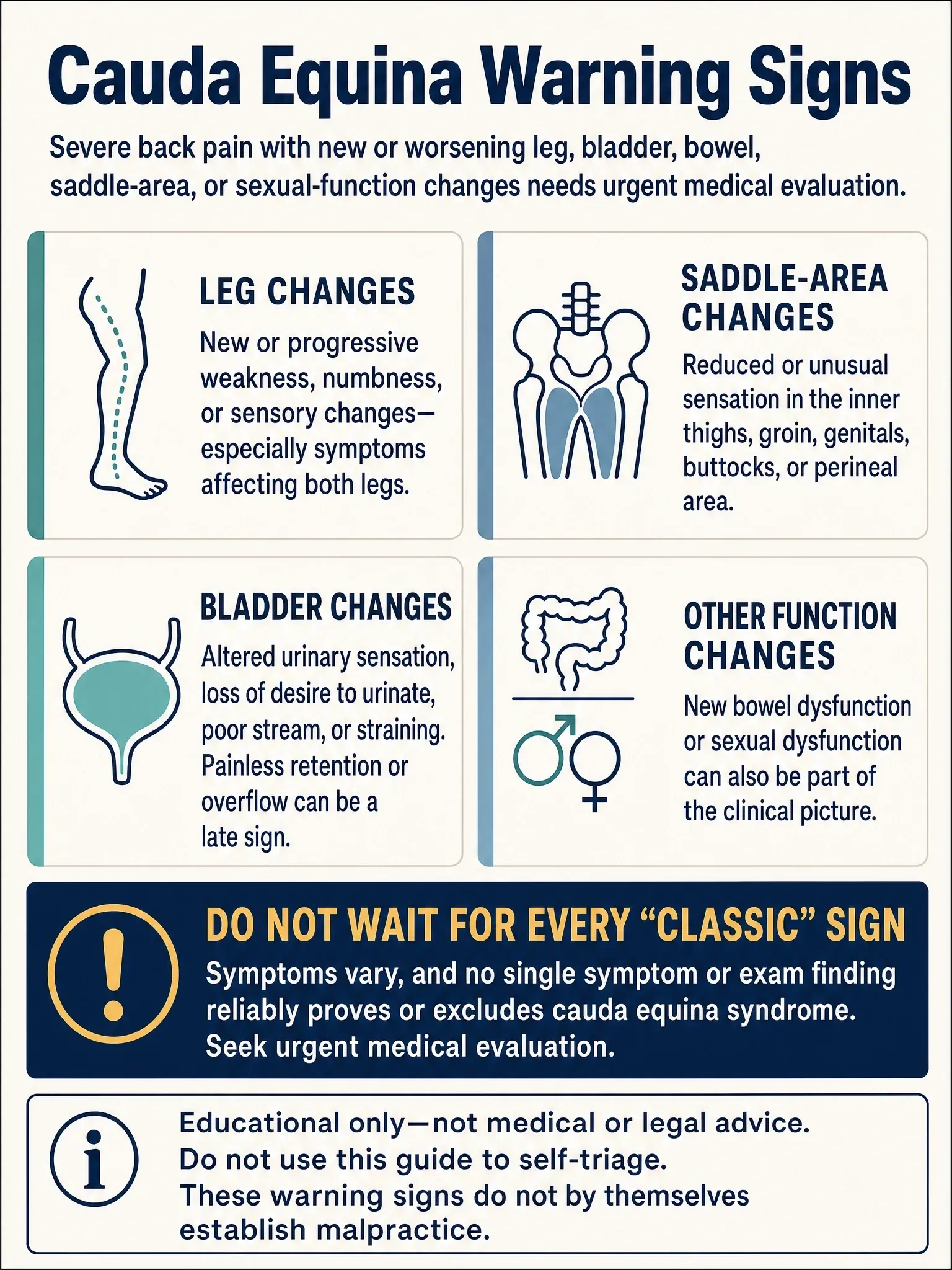
Cauda Equina Red Flags
Seek emergency medical care immediately if you develop:
– New numbness in the groin area
– Loss of bladder or bowel control
– Saddle anesthesia, which is numbness where you would sit on a saddle
These symptoms may indicate cauda equina syndrome, a rare but serious condition that often requires urgent surgery.
When to Consult a Specialist
Schedule a visit with a physical therapist or spine doctor if:
– Pain persists beyond 2 to 4 weeks
– You notice new leg weakness or numbness
– You are unsure of your diagnosis
A professional assessment can confirm whether stenosis, arthritis, or another condition is driving your symptoms and guide a personalized plan.
Building a Daily Relief Routine
Morning Mobility Sequence
Start each day with these three steps:
1. Knee rolls – 15 per side
2. Single leg knee hug – 15 per leg
3. Z-position – 5 to 10 minutes
This sequence reduces overnight stiffness, boosts circulation, and sets a pain-free tone for the day.
Walking with Built-In Protection
If walking triggers your symptoms, use a walk-rest-stretch cycle:
– Walk for 3 to 5 minutes
– Sit and perform 2 to 3 forward folds
– Resume walking
Repeat as needed. This approach prevents flare-ups while keeping you mobile.
Evening Wind-Down Protocol
Finish your day with:
1. Z-position – 10 to 20 minutes
2. Knees-to-chest – 3 reps, holding for 20 seconds each
3. Ankle pumps – 20 reps to boost circulation
Adding a heat pack to the lower back can enhance relaxation before sleep.
Smart Habits That Support Healing
Use Heat Therapy for Muscle Relief
Apply a heat pack to the lower back for 15 to 20 minutes after exercise or during flare-ups. Heat relaxes tight muscles and increases blood flow. Combining heat with the Z-position offers even greater relief.
Modify Your Daily Activities
- Replace long walks with seated pedaling when possible
- Use a recliner instead of a straight chair
- Avoid standing in one place for more than 5 minutes
- Sit while dressing, cooking, or doing other tasks
Optimize Your Posture All Day
- Keep your knees slightly higher than your hips when sitting (use a footstool)
- Avoid crossing your legs
- Keep your lower back relaxed, never rigidly arched
- Change positions every 20 to 30 minutes
Tracking Progress and Making Adjustments
Look for Centralization
A clear sign of improvement is pain moving up the leg toward the lower back. This centralization indicates that nerve pressure is decreasing. When you notice this shift, it means your routine is working.
Adjust Based on Your Response
If pain improves:
– Maintain your daily exercises
– Gradually extend holds, such as longer Z-position sessions
If pain persists:
– Review your exercise form
– Remove any movement that causes discomfort
– Consult a physical therapist for tailored guidance
Maintaining Long-Term Relief
Consistency Is Essential
Sciatica in seniors requires daily management, not occasional effort. Perform core exercises and the Z-position every day, even when pain is minimal. This consistency prevents flare-ups and protects spinal health.
Keep Strengthening to Prevent Recurrence
Once pain decreases, continue core activation and glute strengthening. These muscles act as a natural support system for your spine. Weakness in these areas often leads to relapse.
Stay Mobile for Independence
Remaining active within safe limits preserves your ability to live independently. Use mobility aids when needed, walk with breaks, and pedal daily. Movement is medicine, but only when done correctly.
Frequently Asked Questions About Sciatica in the Elderly
What Is the Main Cause of Sciatica in Older Adults?
The most common cause is spinal stenosis, the narrowing of the spinal canal due to degenerative disc disease and facet joint arthritis. These age-related changes compress the sciatic nerve, often at the L4-L5 or L5-S1 levels.
Why Does Walking Make Sciatica Worse for Seniors?
Walking is an extension-based activity that narrows the spinal canal further. For elderly patients with stenosis, this can quickly increase nerve pressure and pain. Taking frequent breaks to sit and perform forward folds helps counteract this effect.
Are There Exercises Elderly People Should Avoid with Sciatica?
Yes. Back extensions, supermans, full bridges, high-impact movements, and twisting exercises should be avoided because they narrow the spinal canal and worsen stenosis. Seniors should focus on gentle lumbar flexion exercises instead.
How Long Should You Hold the Z-Position for Sciatica Relief?
Hold the Z-position for 5 to 20 minutes, multiple times per day. Start with shorter holds and gradually extend the time as comfortable. Adding a heat pack to the lower back can enhance the benefits.
When Should an Elderly Person See a Doctor for Sciatica?
Consult a doctor if pain lasts longer than 2 to 4 weeks, if you develop leg weakness or numbness, or if you are unsure of your diagnosis. Seek emergency care immediately for groin numbness, loss of bladder or bowel control, or saddle anesthesia, as these may signal cauda equina syndrome.
Can Sciatica in the Elderly Be Cured Completely?
The structural changes causing sciatica in seniors, such as disc degeneration and arthritis, cannot be reversed. However, symptoms can be effectively managed with consistent flexion-based exercises, proper positioning, and daily habits. Most older adults achieve significant pain reduction and improved mobility with the right approach.
Key Takeaways for Treating Sciatica in Elderly Loved Ones
Treating sciatica in elderly patients is about smart, sustainable habits, not quick fixes. Focus on gentle lumbar flexion to open nerve pathways, avoid extension-based exercises that worsen stenosis, and stay consistent with daily movement. The Z-position, chair forward folds, and core activation form the foundation of a safe, effective routine. Always respect pain signals, recognize emergency warning signs, and seek professional guidance when needed. With the right approach, sciatica does not have to limit life after 60. Start with the Z-position tonight and one gentle exercise tomorrow morning to take the first step toward lasting relief.