
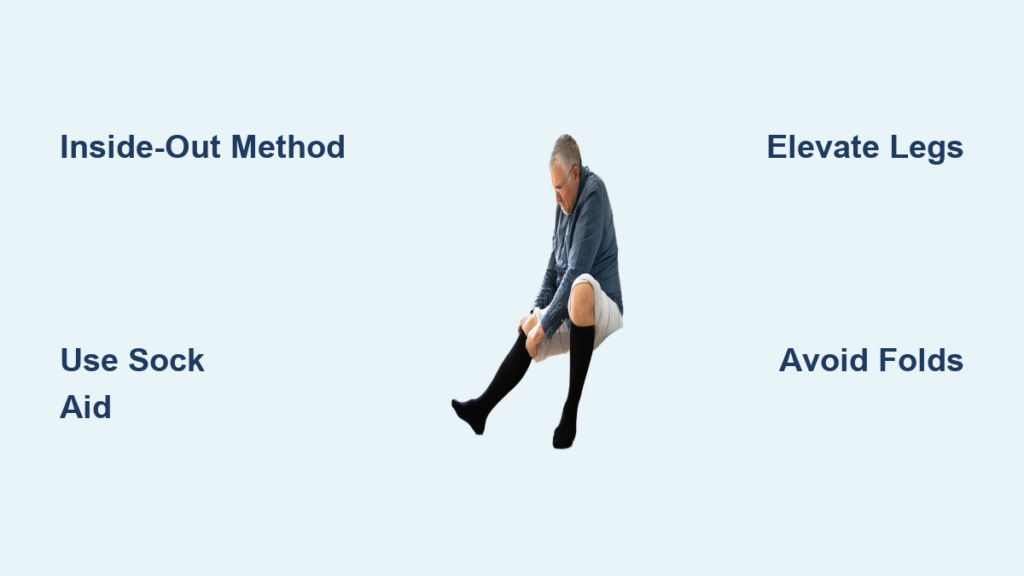
Putting on compression socks can feel like a daily wrestling match for older adults. These specialized garments play a vital role in supporting circulation, reducing leg swelling, and lowering the risk of blood clots. Yet arthritis, stiff joints, and reduced hand strength often turn a simple task into a frustrating ordeal. Without the right technique, the fabric bunches, rolls down, or loses its therapeutic value entirely.
This guide breaks down practical, step-by-step methods on how to put on compression socks for elderly users with confidence and ease. You will learn preparation tips, multiple application techniques, and helpful tools that simplify the process. We will also cover common mistakes, skin safety, and replacement guidelines. With the right strategy, applying compression socks can become a quick, pain-free part of any senior’s daily routine.
Essential Preparation Steps Before Putting On Compression Socks for Elderly
A little preparation goes a long way toward a smoother, safer application, especially for seniors with delicate skin or limited flexibility.
Gather Supplies and Choose the Right Time
Have everything within arm’s reach before you begin. You will need the correct sock size, a sturdy chair, and any assistive tools like donning gloves or a sock aid. Apply compression socks first thing in the morning, before swelling builds in the legs. Swelling makes the fabric harder to slide on and reduces the sock’s effectiveness.
Inspect Skin and Socks Daily
Check the legs carefully for cuts, dryness, redness, or open sores. Never wear compression socks over broken or irritated skin. Also examine the socks themselves for snags, holes, or stretched elastic. Damaged socks cannot provide even pressure and may actually restrict circulation.
Moisturize at the Right Time
Apply lotion the night before or earlier in the day. Avoid moisturizing right before putting on the socks, since lotion reduces grip and causes the tight fabric to slip. Dry skin actually helps the sock slide into place more easily.
Proper Hand and Body Positioning
Good posture prevents strain and gives you better control when handling tight compression fabric.
Sit in a Stable, Supported Chair
Choose a sturdy chair with armrests and keep both feet flat on the floor or a footrest. Never try to put on compression socks while standing or balancing on one leg. This greatly increases the risk of falls and injury.
Keep Your Back Straight and Legs Slightly Elevated
Lean back gently and lift one leg at a time using a small stool or ottoman. Elevating the leg reduces swelling and gives you a better angle for application. Avoid twisting your spine or reaching too far forward.
Use Armrests for Leverage
Press gently against the armrests to stabilize your body while pulling the sock upward. This reduces pressure on the hands and wrists, which matters greatly for anyone living with arthritis.
Step-by-Step Manual Method Without Tools

This approach works well for seniors who still have moderate dexterity and grip strength. It requires patience but no special equipment.
Turn the Sock Inside Out to Mid-Calf
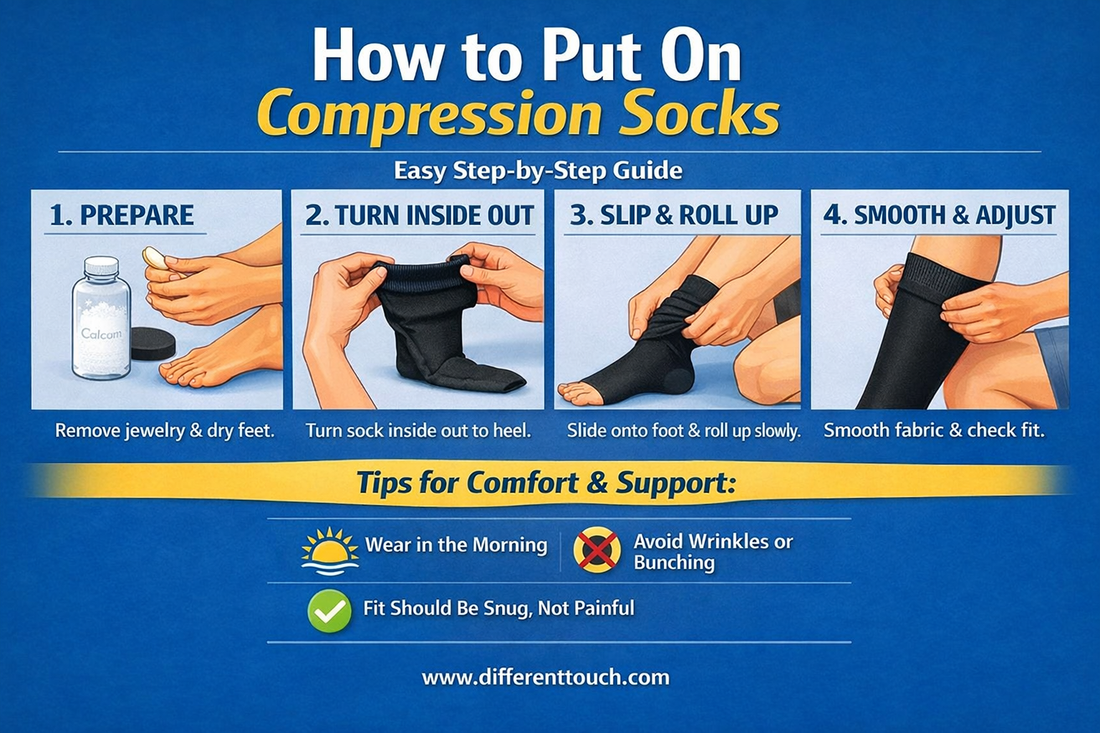
Hold the sock and turn it completely inside out until the heel pocket reaches mid-calf. This creates a funnel shape that lets the foot slide in much more easily.
Insert Your Hand Into the Heel Pocket
Reach inside the turned sock and place your hand into the heel section with fingers pointing toward the toe. Your hand holds the heel in place while guiding the sock over the foot.
Slide Your Foot Into Position
Guide the heel of the sock gently over the heel of your foot, making sure everything aligns properly. The sock’s heel should match the natural curve of your foot for a comfortable fit.
Pull the Sock Up Gradually in Sections
Grasp the outer edge of the sock and pull upward in smooth, overlapping motions, similar to rolling up a sleeve. Smooth out wrinkles as you go to prevent uncomfortable pressure points.
Using a Sock Aid Device for Easier Application
A sock aid can be a true game-changer for elderly users with limited flexibility or weak hands.
Select the Right Sock Aid Type
Common options include:
- Fabric loop systems with wooden or plastic handles
- Rigid frame aids that hold the sock open like a cradle
- Roll-up silicone devices designed for one-handed use
Pick a style that matches your grip ability and the compression level of your socks.
Load the Sock Onto the Aid
Stretch the sock over the aid’s frame or mesh surface. Make sure the heel is positioned correctly and the toe end hangs freely below the device.
Insert Your Foot Through the Device
Sit with your legs extended in front of you. Slide your foot into the sock through the opening of the aid until your heel settles into place.
Pull the Loops or Handles to Raise the Sock
Grasp the attached cords or handles and pull the device slowly upward. The sock will travel up your leg with it. Remove the aid once the sock passes mid-calf, then finish smoothing by hand.
Donning Compression Socks with Caregiver Assistance
When self-application is not possible, a caregiver can step in safely and respectfully.
Communicate and Coordinate Each Movement
Explain every step before doing it and ask permission throughout the process. Check in regularly for any sign of discomfort. Always work at the senior’s pace.
Use a Soft-Grasp Technique
Wear donning gloves or use a thin cloth to improve your grip without pinching the skin. Never pull directly on the sock’s fabric with bare fingers, since this can create painful pressure points.
Apply Even, Controlled Tension
Lift the leg slightly and follow the same inside-out method described earlier. Pull the sock up in gentle stages, smoothing each section to avoid tugging or bunching.
Tips for Seniors with Arthritis and Weak Hands

Hand pain and limited grip require special strategies to manage tight compression fabric.
Wear Silicone Donning Gloves
These gloves boost traction and reduce finger strain during application. Look for gloves with textured palms designed specifically for medical use.
Use a Rubber Jar Opener Pad
Place the rough side of a jar opener pad on a table. Press the sock against it to anchor the fabric while pulling. This gives you extra leverage without demanding strong hand strength.
Opt for Open-Toe or Zippered Styles
Open-toe socks allow easier fitting around sensitive toes. Some brands offer rear zippers or Velcro panels that reduce the stretching demands on hands and fingers.
Common Mistakes to Avoid When Putting On Compression Socks for Elderly
Small errors can reduce effectiveness or even cause harm over time.
Never Roll or Fold the Top
Folding the cuff creates a tourniquet effect that cuts off circulation. Always leave the band flat and uncreased against the skin.
Don’t Scrunch or Yank the Fabric
Pulling too hard can damage the sock’s elasticity and irritate delicate skin. Use slow, steady motion instead.
Avoid Wrinkles and Bunching
Smooth the sock thoroughly as you pull it up. Wrinkles create uneven pressure and may lead to skin sores with repeated wear.
When to Replace Compression Socks

Worn socks lose their compression power and become unsafe for daily use.
Look for Visible Wear Signs
Replace your socks if you notice any of the following:
- Thinning fabric
- Stretched-out cuffs
- Holes or runs in the material
- Loss of elasticity or snugness
Replace Every 3 to 6 Months
Even with daily use and careful washing, compression strength declines over time. Rotating between two pairs helps extend the lifespan of each set.
Wash Gently to Preserve Quality
Hand wash in cool water with mild soap and air dry away from direct heat. Avoid bleach, hot water, and fabric softener, which all break down elastic fibers.
Frequently Asked Questions About Putting On Compression Socks for Elderly
What is the easiest way to put on compression socks for elderly users with weak hands?
A sock aid device combined with silicone donning gloves offers the easiest method. The sock aid holds the fabric open while the gloves provide extra grip. This combination removes most of the strain from the hands and fingers.
How often should elderly individuals wear compression socks?
Most seniors benefit from wearing compression socks daily, especially during waking hours. Remove them before bed unless a doctor advises otherwise. Consistent daily use delivers the best results for circulation and swelling.
Can compression socks be harmful if applied incorrectly?
Yes, incorrect application can cause skin irritation, pressure sores, or restricted blood flow. Rolling the cuff, leaving wrinkles, or wearing the wrong size all create problems. Always follow proper technique and replace worn socks promptly.
Should compression socks be worn over lotion or moisturizer?
No, avoid applying lotion right before putting on compression socks. Moisturizer reduces friction and grip, making the socks harder to manage. Apply lotion the night before or several hours earlier for best results.
Are there compression socks designed specifically for seniors?
Yes, many brands offer open-toe styles, zippered designs, and easier-stretch fabrics made for older adults. These options reduce the strength and flexibility needed for application while still delivering proper compression.
How do caregivers avoid hurting the skin when helping seniors?
Wear donning gloves, use gentle pulling motions, and smooth the fabric frequently. Always communicate with the senior and check for signs of pain or discomfort. A soft, controlled approach protects fragile skin.
Key Takeaways for Putting On Compression Socks for Elderly
Learning how to put on compression socks for elderly users does not have to be a daily struggle. Start with proper preparation, including gathering supplies, inspecting the skin, and choosing the right time of day. Use good posture and stable seating to protect your back and reduce fall risk. The inside-out manual method works well for those with moderate hand strength, while sock aid devices offer a practical solution for anyone with arthritis or limited flexibility.
Caregivers should always communicate clearly, use a soft grasp, and apply gentle, even tension. Avoid common mistakes like folding the cuff, yanking the fabric, or leaving wrinkles behind. Replace socks every 3 to 6 months and wash them gently to preserve their compression power.
Start with the method that best fits your current ability and invest in one or two helpful tools. With consistency and the right technique, applying compression socks becomes a quick, comfortable habit that supports better leg health and long-term mobility.