

Many older adults experience a noticeable drop in hunger as they age, often leading to unintentional weight loss, low energy, and weaker immune defenses. If your loved one is skipping meals or eating far less than usual, you are not alone in this concern. Reduced appetite in seniors is widespread but should never be ignored. Without steady nutrition, older adults face higher risks of falls, slower healing, and loss of independence.
The encouraging news is that there are practical, evidence-based ways to increase appetite in elderly individuals and help them rediscover the pleasure of eating. This guide walks you through targeted strategies, from simple food adjustments to meaningful lifestyle changes. You will learn how to build a supportive eating environment, select foods that naturally spark hunger, and recognize when professional help is needed.
Identify the Root Causes of Low Appetite
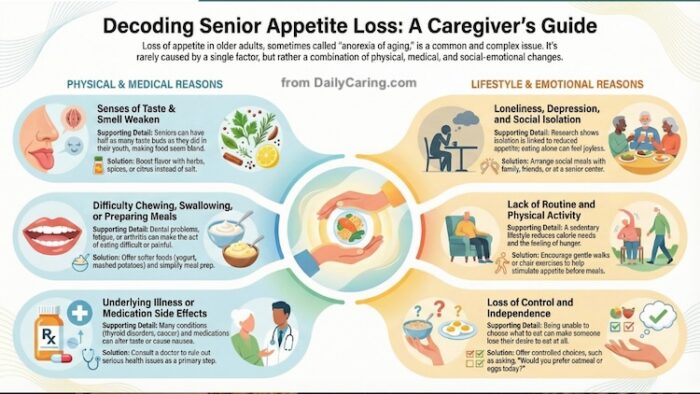
Before attempting to boost food intake, it helps to understand what is suppressing hunger in the first place. Multiple factors contribute to poor eating in older adults, and some are easy to miss.
Rule Out Underlying Medical Conditions
Chronic illnesses such as heart disease, dementia, COPD, or cancer can blunt hunger signals. Digestive problems like gastritis or acid reflux may make eating feel uncomfortable. Infections, particularly urinary tract infections in seniors, frequently show up as appetite loss before other