Every year, one in four adults aged 65 and older experiences a fall. The cause often traces back to declining balance, a process that researchers say can begin as early as age 50. Weak muscles, poor coordination, and changes in vision or inner ear function all contribute to instability during routine movements like standing or walking.
The good news is that balance can be trained at any age. Simple, evidence-backed exercises performed just two to three times per week can strengthen core stability, build leg power, and sharpen coordination. In this guide, you’ll discover the most effective balance exercises for seniors, how to perform them safely, and how to build a routine that keeps you steady and independent.
Why Balance Declines With Age and Why It Matters
Balance depends on a team effort between your muscles, joints, inner ear, eyes, and brain. When even one part weakens, the whole system struggles. Common causes of poor balance include age-related muscle loss, inner ear disorders like vertigo, vision changes, certain medications, nerve damage, arthritis, and low blood pressure.
A single fall doubles your risk of falling again, making prevention critical. Beyond avoiding injury, good balance supports independence, confidence, and the ability to handle daily tasks like climbing stairs or reaching for items on a high shelf.
Build Core Stability First

Strong core muscles stabilize your torso and help you recover when you stumble. These exercises target deep abdominal and back muscles to improve postural control.
Master the Dead Bug
This floor-based move trains coordination while protecting your lower back.
- Lie on your back with arms extended toward the ceiling and knees bent at 90 degrees.
- Engage your core and slowly extend your right arm overhead while straightening your left leg.
- Keep your lower back pressed firmly into the floor.
- Return to start and repeat on the opposite side.
- Complete 10 to 12 reps per side for 2 to 3 sets.
Pro tip: Move slowly. Speed reduces effectiveness and increases strain.
Strengthen With Sit-to-Stand
This exercise mimics daily movements like rising from a chair.
- Sit on a sturdy chair with feet flat and hands on your thighs.
- Lean slightly forward and push through your heels to stand.
- Lower back down with control.
- Complete 10 to 15 reps for 2 to 3 sets.
Visual cue: If you’re using momentum or pushing off with your hands, choose a lower chair to gradually increase difficulty.
Boost Leg Strength and Stability
Weak legs are a major contributor to poor balance. Strengthening these muscle groups improves support and walking confidence.
Try Side Leg Raises
This targets hip abductors, which stabilize your pelvis during walking.
- Hold a chair for support with feet hip-width apart.
- Lift one leg straight out to the side, keeping toes forward.
- Hold for 2 to 3 seconds, then lower slowly.
- Repeat 10 to 15 times per leg for 2 to 3 sets.
Common mistake: Leaning to the opposite side. Keep your torso upright.
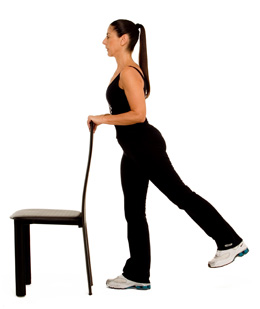
Perform Back Leg Raises
This activates glutes and hamstrings for better posture and gait.
- Hold the chair back and stand tall.
- Slowly lift one leg straight back without arching your spine.
- Hold for 2 to 3 seconds, then lower with control.
- Do 10 to 15 reps per leg for 2 to 3 sets.
Safety note: Keep movements small. Quality matters more than height.
Add Lunges for Coordination
Lunges build unilateral strength and dynamic balance.
- Hold a chair and step one foot forward.
- Lower your hips until both knees form 90-degree angles.
- Push through your front heel to return to standing.
- Complete 8 to 10 reps per leg for 2 to 3 sets.
Modification: Shorten your step if balance feels shaky.
Challenge Static Balance
Static balance means staying steady while standing still. These exercises train your body to maintain position with minimal support.
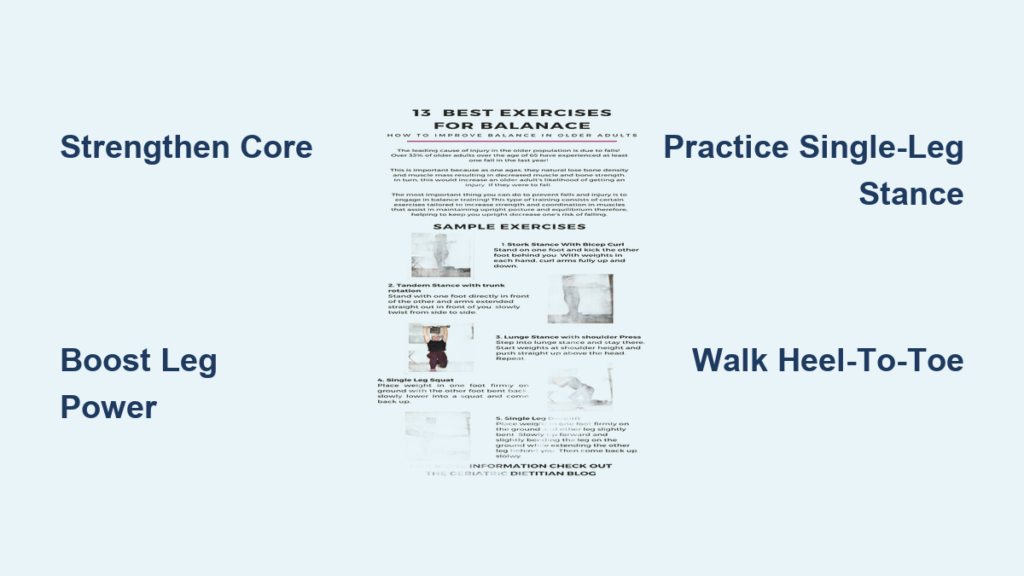
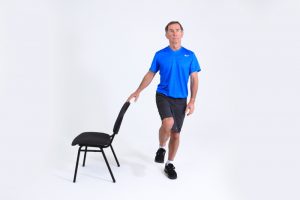
Practice Single-Leg Stance
This simple move tests and trains your stability at the same time.
- Stand behind a chair and hold lightly for support.
- Lift one foot off the ground with your knee straight.
- Hold for 10 to 30 seconds, then switch legs.
- Aim for 2 to 3 sets per side.
Progression: Try closing your eyes once you’ve mastered the basic version, but only in a safe, supervised setting.
Why it works: Single-leg balance has been linked to better cognitive health and longevity.
Perfect Tree Pose
This yoga-inspired pose enhances focus and stability.
- Stand with feet together and shift weight to your left foot.
- Place your right foot on your left inner thigh or calf, never on the knee.
- Bring hands together in prayer position at your chest.
- Hold for 15 to 30 seconds, then switch sides.
Tip: Fix your gaze on a stable point to reduce wobbling.
Improve Dynamic Balance and Gait
Dynamic balance involves staying stable while moving. These exercises mimic real-life actions like walking or stepping sideways.
Walk Heel-to-Toe
This simulates tightrope walking to sharpen coordination.
- Place the heel of one foot directly in front of the toes of the other.
- Take 10 to 20 slow, controlled steps.
- Extend your arms out to your sides for balance.
- Repeat 2 to 3 times.
Where to do it: Practice along a hallway or use tape on the floor as a visual guide.
Benefit: Trains smooth, efficient walking patterns and reduces shuffling.
Try Heel-Toe Raises
This strengthens ankles and shins for better foot clearance.
- Stand with feet shoulder-width apart and hands on a chair.
- Rise onto your toes and hold for 2 to 3 seconds.
- Lower your heels slowly.
- Repeat 10 to 15 times for 2 to 3 sets.
Why it matters: Better foot lift prevents tripping during each step.
Step Sideways With Control
This builds lateral strength and side-to-side stability.
- Face a wall with feet together.
- Step sideways with your right foot, then bring your left foot to meet it.
- Continue for 10 steps, then return to start.
- Repeat 2 to 3 times per side.
Use case: Helps with getting in and out of cars or navigating narrow spaces.
Create a Safe Exercise Routine
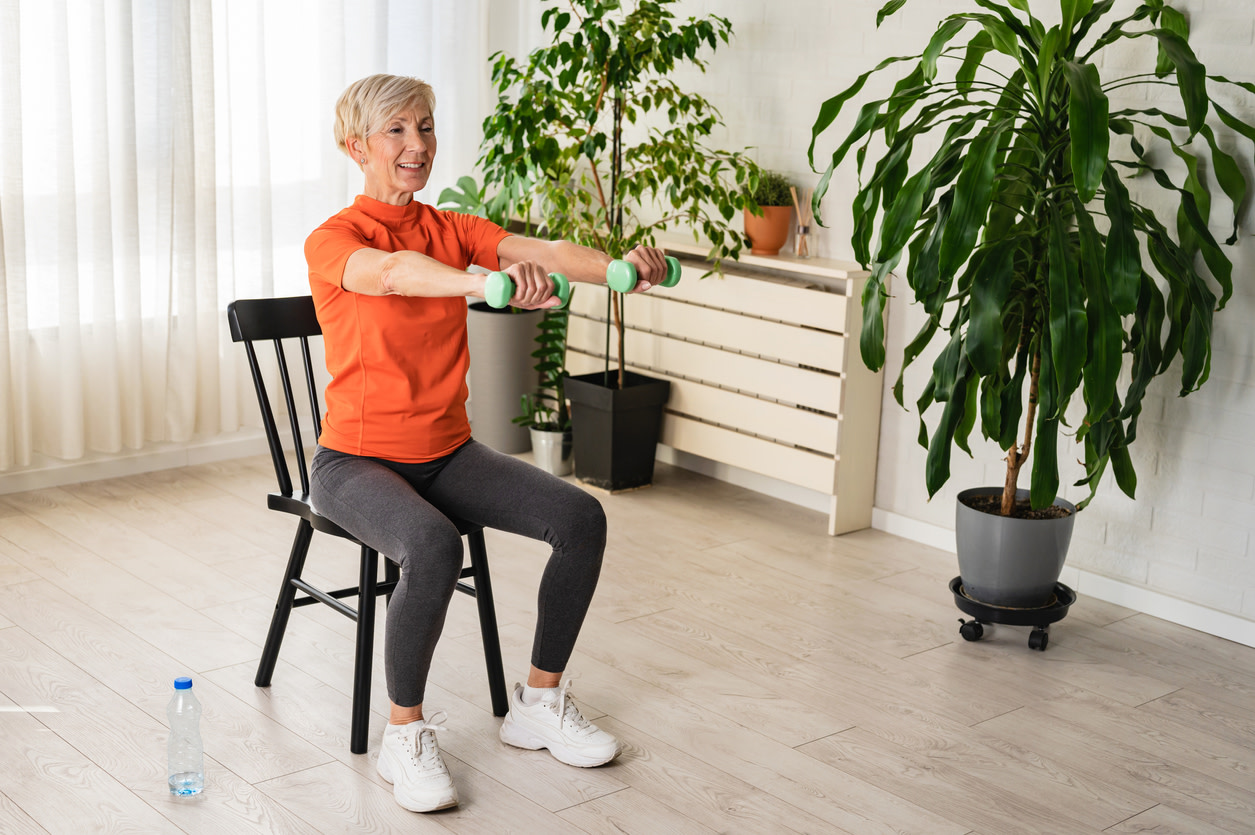
Starting balance training safely is essential, especially if you’re new to exercise or have concerns about falling.
Warm Up Before Every Session
Cold muscles respond poorly to balance demands.
- March in place for 3 to 5 minutes.
- Add arm circles and ankle rolls.
- Goal: Increase blood flow and joint mobility.
Use Support Wisely
Never risk a fall during training.
- Keep a sturdy chair, countertop, or wall nearby.
- Hold on lightly, only enough to feel secure.
- Avoid slippery socks and wear non-slip shoes.
Move Slowly and With Control
Fast movements increase fall risk and reduce muscle activation.
- Focus on form rather than speed.
- Pause at the peak of each movement.
- Breathe steadily and avoid holding your breath.
Know When to Stop
Listen to your body.
- Stop immediately if you feel dizzy, weak, or experience pain.
- Consult a doctor if balance issues persist despite training.
- Consider physical therapy for personalized guidance.
Prevent Falls With Consistency
Balance improves with regular practice. Most seniors notice meaningful gains within 4 to 6 weeks.
How Often to Train
- Frequency: 2 to 3 times per week minimum.
- Duration: 15 to 30 minutes per session.
- Best results: Combine with strength and flexibility training.
Track Your Progress
Use simple markers to stay motivated.
- Can you stand on one leg longer than before?
- Do you feel steadier walking on uneven ground?
- Are daily tasks like climbing stairs easier?
Pro tip: Record a short video monthly to visually track improvements.
Address Underlying Causes of Poor Balance
Exercise helps, but some balance issues stem from medical factors that deserve attention.
Review Medications
Certain drugs, including sedatives, blood pressure medications, and antidepressants, can cause dizziness.
- Ask your doctor whether any current medications could affect balance.
- Never stop prescribed medications without medical advice.
Check Vision and Hearing
Blurry vision or inner ear problems disrupt spatial awareness.
- Schedule annual eye exams.
- Discuss any vertigo or dizziness with your healthcare provider.
Manage Chronic Conditions
Arthritis, neuropathy, or low blood pressure can impair balance.
- Work with your doctor to optimize treatment.
- Modify exercises as needed, such as choosing seated options for joint pain.
Frequently Asked Questions About Balance Exercises for the Elderly
How often should seniors do balance exercises?
Aim for at least 2 to 3 sessions per week, with each session lasting 15 to 30 minutes. Consistency matters more than duration for long-term results.
Can balance exercises really help prevent falls?
Yes. Regular balance training strengthens the muscles and coordination needed to stay steady, which significantly reduces fall risk in older adults.
I’m afraid of falling during exercise. What should I do?
Start with support nearby, such as a sturdy chair or countertop. Move slowly, focus on form, and consider working with a physical therapist for added confidence and safety.
Can I do these exercises if I have arthritis?
Yes, but modify movements to match your comfort level. Consult your doctor or physical therapist for personalized adjustments that protect your joints.
Do balance exercises improve cognitive function?
Research suggests that better balance, particularly single-leg stance ability, is linked to improved cognitive health and even longevity in older adults.
What should I wear for balance training?
Wear supportive, non-slip shoes and avoid loose socks. Train in a clear, open space free of obstacles to minimize fall hazards.
Key Takeaways for Improving Balance in the Elderly
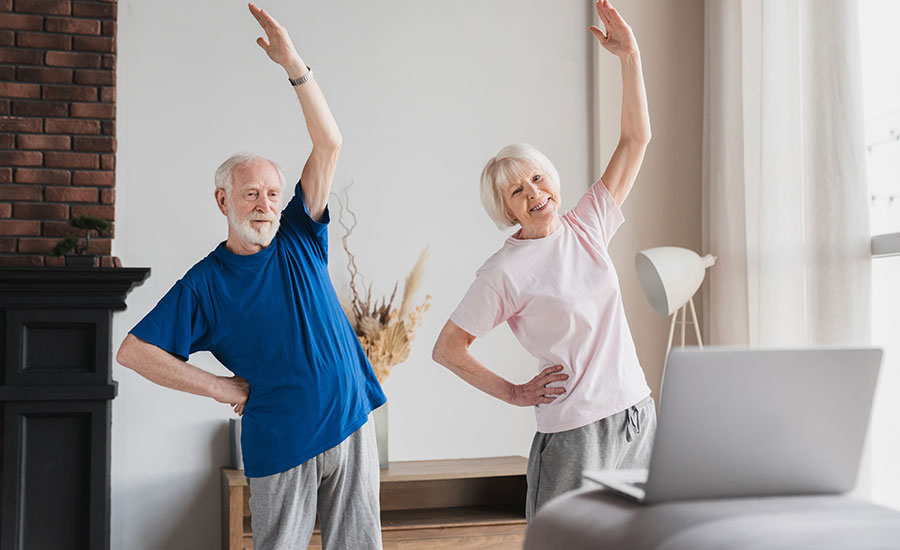
Improving balance is one of the most powerful investments you can make in long-term independence. The ten exercises covered here, including single-leg stance, tree pose, heel-toe raises, heel-to-toe walking, sideways walking, sit-to-stand, side leg raises, back leg raises, lunges, and dead bug, are proven to enhance stability, reduce fall risk, and improve quality of life.
Start with support, progress gradually, and stay consistent. Even small daily efforts, like standing on one leg while brushing your teeth, add up over time. If you have concerns about underlying causes of poor balance, talk to your healthcare provider. With commitment and the right routine, better balance is within reach at any age.