
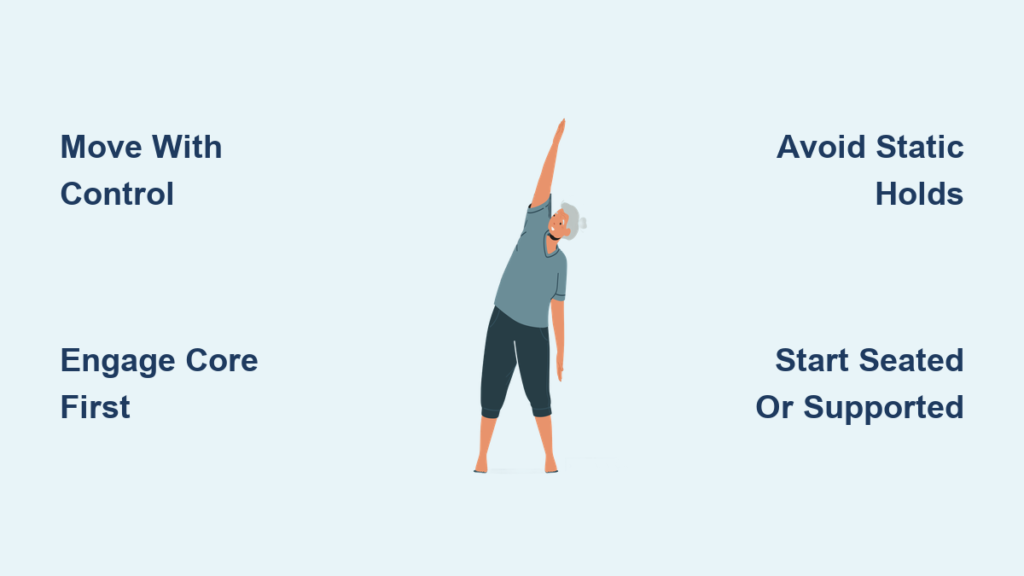
If you’re over 60, traditional crunches and planks might be doing more harm than good. Research shows that core exercises for seniors should focus less on holding still and more on moving with control. The real goal isn’t a six-pack. It’s stability, balance, and the confidence to reach for a high shelf, lift groceries, or stand up from a chair without strain.
Static core workouts like planks don’t mimic how your body actually uses the core in daily life. Movement-based exercises that engage deep abdominal muscles while limbs move are safer, more effective, and better for long-term independence. Two standout routines, Mountain Climbers and the Dead Bug, have been shown to reduce back pain, improve posture, and enhance functional strength in just weeks. Whether you want a simple two-exercise routine or a full 20-move workout, everything can be done at home with no equipment required.
This guide delivers spine-friendly core exercises for seniors, with scalable variations, clear form cues, and real-world benefits designed to keep you strong, stable, and moving freely.
Mountain Climbers: Core Stability in Motion
This dynamic exercise trains your core the way it works every day by stabilizing your torso while your legs move. Unlike planks, mountain climbers build functional strength that translates directly to walking, climbing stairs, and stepping with confidence.
Wall Mountain Climber (Beginner)
- Stand facing a wall, hands placed at shoulder height
- Step back until your body leans slightly forward
- Engage your core by pulling your belly button toward your spine
- Alternate bringing one knee toward your chest, then the other
- Move slowly: one second up, one second down
- Keep hips level and back flat
Form Check: You’re doing it right if your abs tighten noticeably, tight enough to resist a light poke to the stomach.
Pro Tip: This version reduces strain on wrists and shoulders while still activating deep core muscles.
Chair Mountain Climber (Intermediate)
- Place hands on a sturdy chair back or countertop
- Step feet behind you into a gentle incline
- Maintain core engagement throughout
- Alternate lifting knees toward the chest with control
Avoid This Mistake: Don’t let your hips rise or sag. Keep your spine neutral and movement slow.
This variation increases core demand due to the steeper angle, making it ideal for progressing from the wall version.
Floor Mountain Climber (Advanced)
- Start in a modified plank: hands under shoulders, knees on floor or toes on ground
- Keep core braced and back flat
- Drive one knee toward your chest, then return it
- Alternate legs smoothly
Goal: 20 reps per leg, 3 sets, 1-minute rest between sets.
Why It Works: It mimics stair climbing and sudden movements, training your core to stabilize during real-life motion.
Dead Bug: Anti-Movement Core Strength
The Dead Bug is the gold standard for safe, effective core training after 60. It strengthens deep abdominal muscles without compressing the spine, making it ideal for those with back sensitivity.
Double Leg Lift (Beginner)
- Lie on your back, knees bent, feet flat on the floor
- Gently flatten your lower back into the floor (50% core engagement)
- Slowly lift one leg to a 90-degree angle, then the other
- Lower each leg one at a time, keeping your back pressed down
Success Signal: Your lower back stays in contact with the floor throughout.
Modification: Perform this seated if floor access is limited. Simulate the motion by lifting one foot at a time.
Toe Dips (Intermediate)
- Start with both legs lifted at 90 degrees
- Slowly lower one foot until just the toes touch the floor
- Return to start, then repeat on the other side
- Keep movements slow; no rushing
Target: 20 reps per side with perfect form.
Warning: If your back starts to arch, stop. Reduce range of motion until control improves.
This version increases time under tension, building endurance in deep core stabilizers.
Full Dead Bug (Advanced)
- Lie on your back, arms extended toward the ceiling, legs at 90 degrees
- Simultaneously lower one leg and the opposite arm, keeping them straight
- Stop just before your lower back lifts off the floor
- Return to start and switch sides
Functional Benefit: This mimics reaching across your body or twisting to pick something up, common movements that often lead to strain.
Progression Rule: Only advance when you can complete all reps without losing core tension.
Why These Beat Planks After 60
The Problem with Planks
- Static holds don’t train the core during movement
- Can increase spinal pressure, especially with poor form
- Don’t translate well to daily activities like walking or lifting
Mountain Climbers and Dead Bugs Offer a Better Solution
- Train core stability during motion, exactly how it’s used daily
- Low-impact and spine-friendly
- Improve balance, posture, and coordination
- Reduce back pain (documented in clinical cases within 4 weeks)
Real Result: One woman in her 60s avoided core work for years due to chronic back pain. After just four weeks of these two exercises, her pain decreased, posture improved, and she felt stronger getting out of chairs.
Simple 2-Exercise Routine
For maximum efficiency, this minimalist plan delivers powerful results with minimal time investment.
Weekly Schedule
- 3 times per week (e.g., Monday, Wednesday, Friday)
- Can be completed in 10–15 minutes
Workout Structure
| Exercise | Sets | Reps |
|---|---|---|
| Mountain Climber (best variation) | 3 | 20 per leg |
| Dead Bug (best variation) | 3 | 20 per side |
Form First: Only progress when you can complete all reps with perfect control.
Daily Cue: “Belly button to spine.” Engage this before every rep.
Progression Path:
– Start with wall or seated versions
– Move to floor versions as strength improves
– Increase reps only after form is flawless
Full 20-Exercise Core and Back Workout
For those who want variety and full-body conditioning, this 40-minute routine combines core stability with balance, coordination, and back strength.
Warm-Up (5 Minutes)
Prepare your body with gentle activation:
- Side steps with press: Step side, press arms out
- March in place: Lift knees, engage core
- Forward kicks: Light, controlled kicks
- Neck tilts and stretches: Ear to shoulder, look side to side
- Shoulder rolls: Forward and reverse
- Marching with arm swings: Add rhythm
- Walking steps with arm press: Step forward, press arms at end
Breathing Tip: Breathe steadily. Never hold your breath.
Core and Back Rounds (40 Seconds Each)
1. Heel Press
Press heel into floor, gently pull foot back. Alternate legs. Focus on glutes, hamstrings, and core activation.
2. Clap and Step
Clap hands, step side to side slowly. Focus on balance, coordination, and core control.
3. Tai Chi Step and Press
Step forward with opposite arm and leg. Press arm up, spine tall. Focus on spine alignment and balance.
4. Rainbow and Crunch
Arms sweep in an arc, then pull in with a core squeeze. Focus on obliques and upper back.
5. Diagonal Arms
Reach one arm diagonally up and lift the opposite leg slightly. Focus on full-body stability.
6. Overhead Press
Lift arms overhead (as high as comfortable). Engage your tummy at the top. Focus on posture and core.
7. Leg Lift and Hold
Lift one leg, hold 3 seconds, step out and back. Focus on hip stabilizers and balance.
8. Weight Shift
Shift weight side to side with a tall spine. Focus on fall prevention and core stability.
9. Cross-Country Ski Arms
Arms move forward and back like skiing. Focus on core and upper back engagement.
10. Step Back with Arm Up
Step back and raise the opposite arm. Focus on spine control and balance.
Rest: Hydrate, breathe, reset.
11. Elbow to Side
Bring elbow straight into side without twisting. Focus on obliques and core stability.
12. Side Punch
Light boxing motions with torso stable. Focus on core engagement.
13. Bicycle Arms
Arms mimic a cycling motion. Focus on coordination and circulation.
14. Cactus Arm Press
Press arms up and pull down (add resistance band if desired). Focus on shoulders and abs.
15. Arm Kicks
Kick leg while opposite arm reaches forward. Focus on balance and core.
16. Step, Turn, Bring In
Step forward, slight torso turn, return. Focus on full-body control.
17. Swimming Motion
Arms move in a swimming arc. Focus on upper back and posture.
18. Double Fist Side-to-Center
Fists move from side to center. Focus on stability without swinging.
19. Pelvic Circles
Small hip circles forward and back. Focus on lower back and pelvic stability.
20. Archery Pull
One arm forward, other pulls back like drawing a bow. Focus on upper back and isometric strength.
Final Rest: Stretch, hydrate, reflect.
Cool-Down (5 Minutes)
Recover and restore mobility:
- Shoulder rolls: Forward and back
- Chest openers: Hug, then open arms wide
- Arm across body stretch: Hold gently
- Overhead reach side stretch: Breathe deeply
- Back of chair reach: Pull arms back, open chest
- Ear to shoulder stretch: Both sides
- Final shoulder rolls and deep breaths: 3 inhales, 3 exhales
Safety and Form Essentials
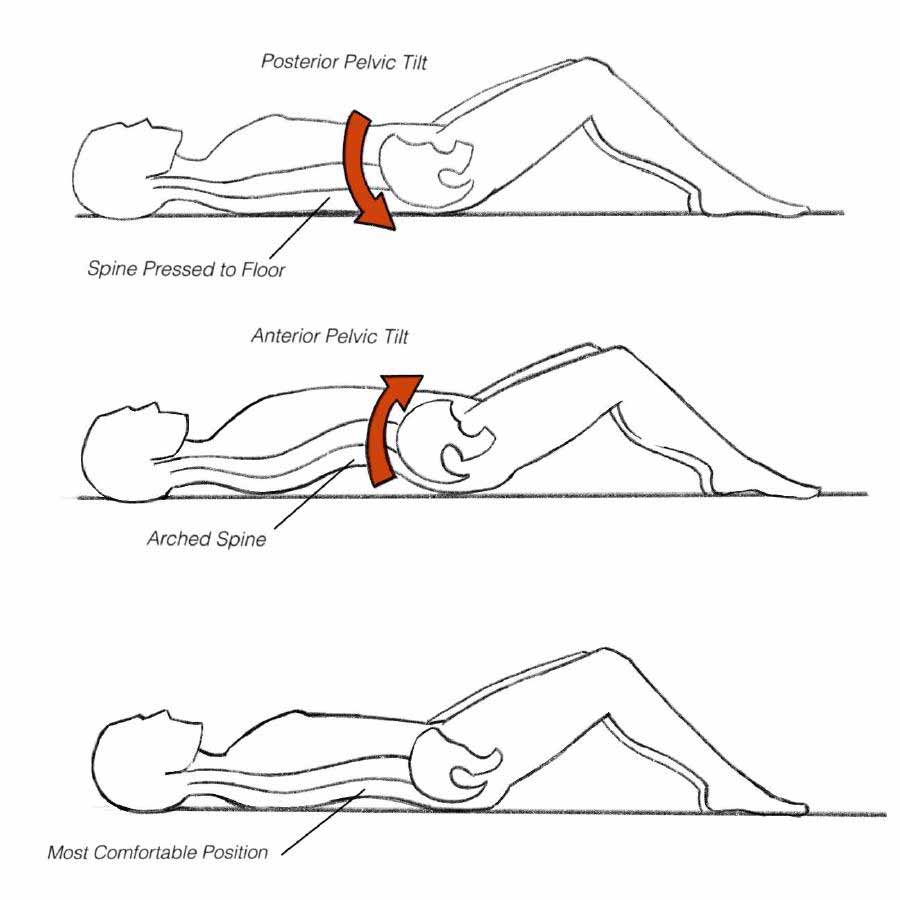
Core Activation Rule
- Always pull belly button toward spine before and during every move
- This engages deep abdominal muscles that stabilize your spine
Spine Protection Tips
- No arching: Keep lower back flat during floor work
- No rounding: Maintain neutral spine in seated or standing moves
- No momentum: Move slowly and with control
Breathing Strategy
- Inhale during preparation
- Exhale during effort (e.g., when lifting a leg or stepping)
- Never hold your breath. This reduces blood flow and increases strain
Progression Guidelines
- Start seated or supported if balance is a concern
- Master beginner variations before advancing
- Progress only when form is perfect, not when it feels easy
Expected Benefits
In 4 Weeks
- Reduced lower back discomfort
- Noticeably improved posture
- Easier standing from chairs
- More confidence in walking and reaching
In 3 Months
- Better balance and fewer stumbles
- Stronger performance in daily tasks
- Reduced fall risk
- Improved spinal stability
Long-Term Gains
- Sustained independence
- Pain-free movement
- Equipment-free strength anywhere
- Resilience against age-related decline
Two Approaches, One Goal
Minimalist Path (2 Exercises)
- Best for: Simplicity, consistency, quick results
- Exercises: Mountain Climber plus Dead Bug
- Frequency: 3x per week
- Mindset: Real strength comes from movement, not stillness.
Comprehensive Path (20 Exercises)
- Best for: Variety, full-body conditioning, motivation
- Structure: 40-second rounds, no repeats
- Frequency: 3–5x per week
- Mindset: No momentum, no rushing. Just deliberate strength.
Shared Principles:
– Slow, controlled movements
– Core engaged throughout
– No equipment needed
– Scalable for all levels
– Focus on functional, daily strength
Frequently Asked Questions About Core Exercises for Seniors
What are the best core exercises for seniors over 60?
Mountain Climbers and Dead Bugs are considered the most effective. Both train the core while moving, which mirrors how the body functions during daily activities like walking, reaching, and lifting.
Are planks safe for seniors?
Planks can be risky for older adults because they are static holds that may increase spinal pressure, especially with poor form. Movement-based exercises offer a safer alternative that better translates to real-life function.
How often should seniors do core exercises?
For a minimalist routine of two exercises, aim for 3 times per week. For a comprehensive 20-exercise workout, 3–5 times per week is ideal for building strength and improving balance.
Can core exercises help with back pain?
Yes. Documented cases show that consistent core training can reduce back pain within 4 weeks. Exercises like the Dead Bug strengthen deep abdominal muscles that support the spine without compressing it.
Do seniors need equipment for core workouts?
No. Bodyweight exercises are sufficient for building functional core strength. All the exercises in this guide can be performed at home using only a wall, chair, or floor.
What if I have limited mobility or balance issues?
Start with seated or wall-supported variations. Every exercise in this guide has beginner options that reduce strain while still activating core muscles effectively.
Final Thoughts on Core Exercises for Seniors
Core exercises for seniors shouldn’t hurt, strain, or require gadgets. The most effective routines are simple, movement-based, and designed for real life. Whether you choose the minimalist two-exercise plan or the full 20-move workout, consistency is your greatest ally.
Start where you are. Focus on form. Move with purpose. In weeks, you’ll stand taller, move easier, and feel stronger, not just in your core but in your confidence.





