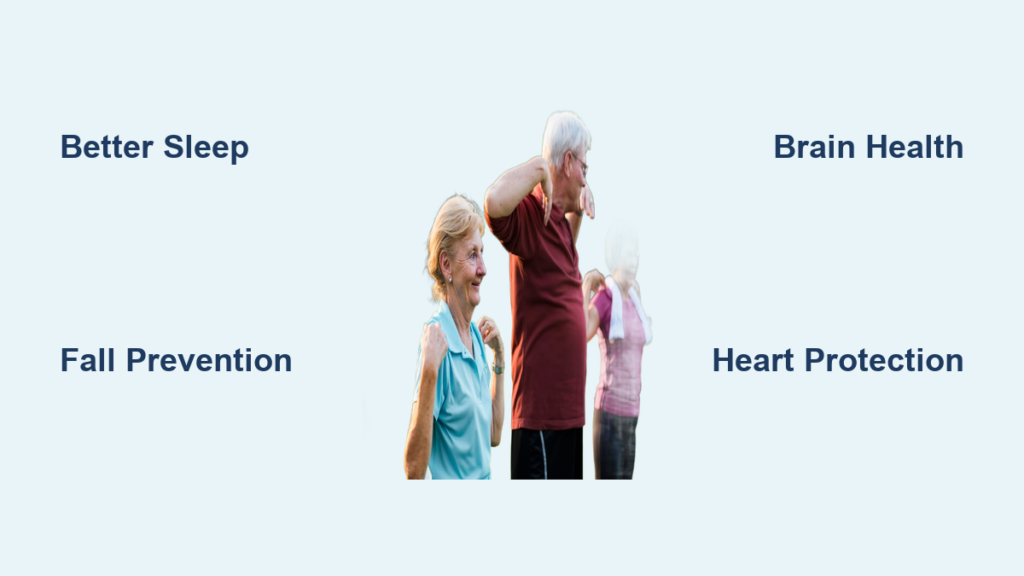
Stiff joints, tight muscles, and limited range of motion can turn simple daily tasks—like bending to tie shoes or reaching for a shelf—into real challenges. For older adults, losing flexibility often leads to poor posture, reduced balance, and a higher risk of falls. The solution doesn’t require a gym membership or fancy equipment. Chair stretches for elderly individuals provide a safe, gentle, and effective way to restore mobility, ease discomfort, and maintain independence from the comfort of a sturdy seat.
This guide walks you through the most effective seated stretches for seniors, how to perform them safely, and how to build a simple routine that fits into any lifestyle. Whether you’re recovering from injury, managing arthritis, or simply want to move with more ease, these moves can help.
Why Chair Stretches Matter for Older Adults
As the body ages, muscles shorten, joints stiffen, and connective tissue loses elasticity. Without regular movement, these changes accelerate, making everyday activities harder and increasing fall risk.
According to the National Institute on Aging and the CDC, older adults who engage in regular flexibility and balance exercises are more likely to maintain independence and avoid disability. Chair-based stretching removes common barriers like fear of falling, joint pain, or lack of balance, making it one of the most accessible forms of exercise for seniors.
A consistent routine of chair stretches for elderly adults can:
- Improve joint range of motion
- Reduce muscle stiffness and back pain
- Enhance posture and breathing
- Build balance and coordination
- Lower the risk of falls
- Support greater independence in daily life
Warm-Up Movements to Prepare the Body
Jumping straight into deep stretches can cause strain, especially in stiff or arthritic joints. A short warm-up increases blood flow and lubricates the joints, making stretching safer and more effective.
Wrist Circles and Fist Pumps
Extend your arms forward and rotate your wrists slowly in both directions for about 15 seconds. Then gently clench and release your fists several times.
Why it helps: Wakes up circulation in the hands and forearms, which is especially helpful for those with arthritis.
Ankle ABCs
Lift one foot slightly off the floor and “write” the letters of the alphabet with your toes. Switch to the other foot.
Tip: For added challenge, try spelling simple words backward or writing your name in cursive.
Benefit: Improves ankle mobility, which supports better balance and walking stability.
Seated Marching
While sitting tall, lift one knee at a time in a slow, controlled marching motion. Continue for 30 to 60 seconds.
Why it matters: This move activates hip flexors and warms up the legs before deeper stretching begins.
Neck and Shoulder Stretches for Tension Relief

Tension in the neck and shoulders is common among older adults, often caused by poor posture, prolonged sitting, or age-related muscle changes.
Neck Side Stretch
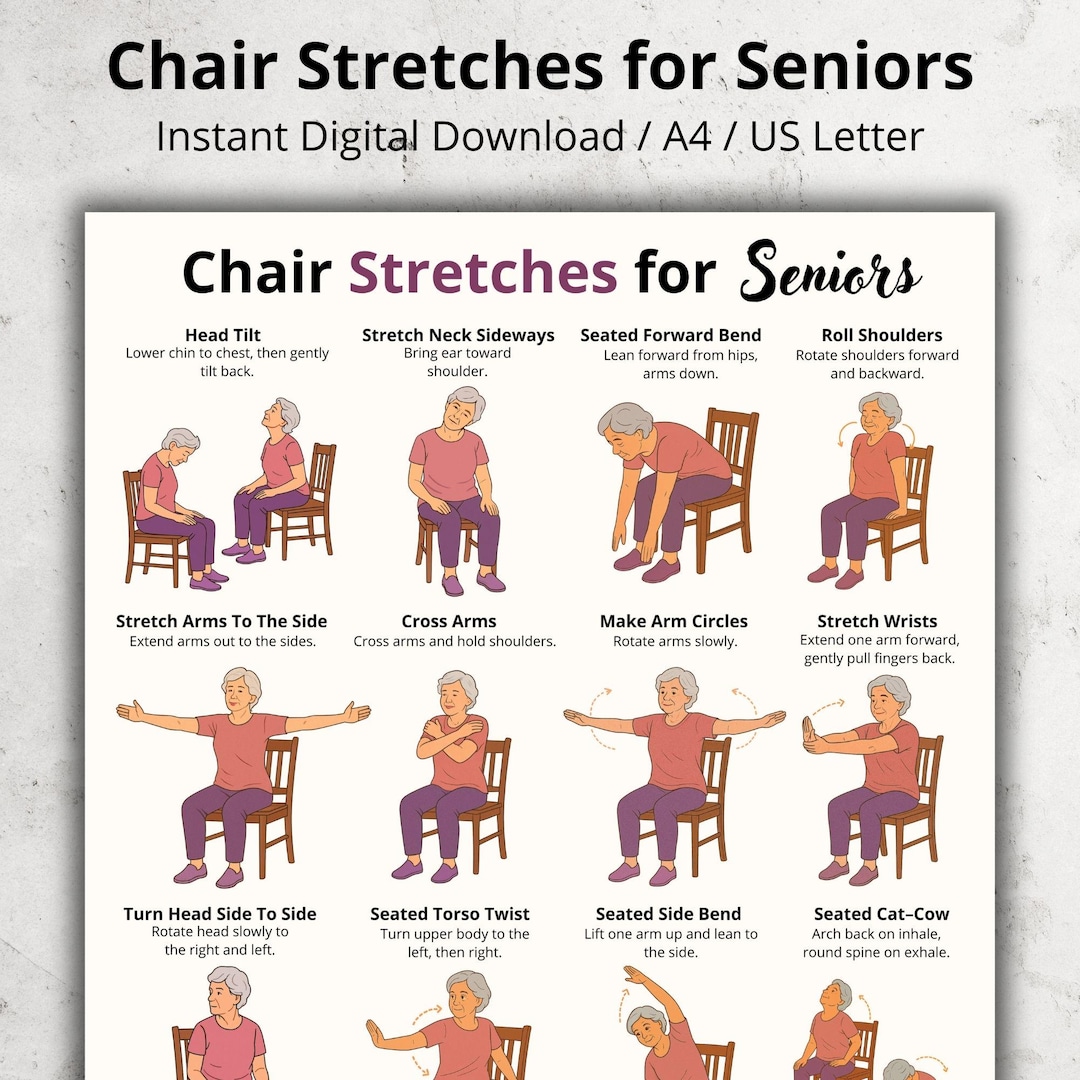
Sit tall and slowly tilt your right ear toward your right shoulder. Hold for 15 to 20 seconds, then repeat on the left side.
Keep both shoulders relaxed and down.
Avoid tilting your head forward or backward.
Modification: Place your opposite hand gently on the side of your head for light assistance, but never pull forcefully.
Shoulder Rolls and Shrugs
Roll your shoulders backward in slow circles for 10 repetitions, then forward for 10 more. Follow with shoulder shrugs—lift shoulders toward your ears, hold for 3 seconds, then release.
Benefit: Loosens upper back tension and encourages better posture.
Chest and Upper Back Stretches to Counteract Slouching
Hours of sitting can pull the shoulders forward, leading to a hunched posture and shallow breathing. These stretches open up the chest and mobilize the spine.
Seated Chest Stretch
Sit tall and extend both arms behind you. Clasp your hands together and gently press your palms downward while keeping your chin slightly tucked.
Hold for 15 to 30 seconds.
Why it works: Opens tight chest muscles, making it easier to take deep, full breaths.
Seated Cat-Cow Stretch
Place your hands on your knees. As you inhale, arch your back gently and lift your chest (cow position). As you exhale, round your spine forward and tuck your chin toward your chest (cat position).
Repeat 8 to 10 times, moving slowly with each breath.
Visual cue: Imagine a string pulling the top of your head upward during the cow stretch, and picture your spine curving over a ball during the cat stretch.
Benefit: Increases spinal flexibility and relieves mid-back stiffness.
Hip and Lower Body Stretches for Better Movement
Tight hips affect walking, balance, and even sitting comfort. These seated stretches target the hips, glutes, and lower back.
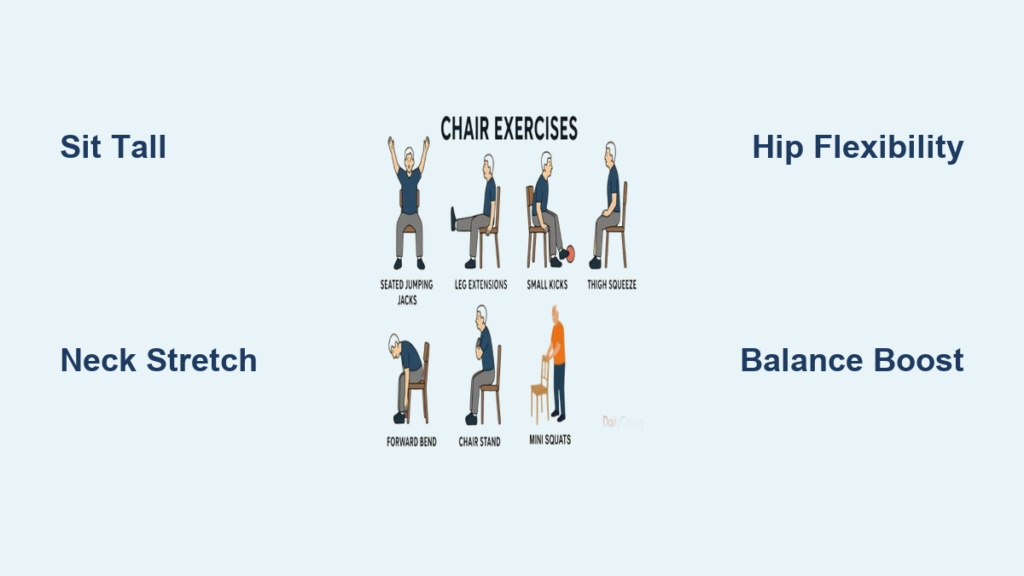
Seated Forward Bend
Sit on the edge of your chair with both feet flat on the floor. Hinge forward at the hips and reach your hands toward your toes.
Keep your back straight and avoid rounding the spine.
Stop when you feel a gentle stretch in your hamstrings or lower back.
Hold for 20 to 30 seconds.
Modification: Loop a towel or strap around your feet if you cannot reach them comfortably.
Pro tip: This stretch supports easier bending and helps reduce lower back strain.
Seated Figure-Four Stretch
Cross your right ankle over your left knee. Gently press down on your right knee while sitting tall.
Do not lean forward.
Hold for 20 to 30 seconds, then switch sides.
Target: Glutes and hip rotators, which are key for stable walking and climbing stairs.
Avoid this stretch if you have had a hip replacement—consult your doctor first.
Hamstring and Calf Stretches to Reduce Fall Risk
Tight hamstrings and calves limit leg mobility and increase the risk of stumbling. These stretches keep the back of the legs flexible and supportive.
Seated Leg Extension
Extend one leg straight out in front of you with your heel on the floor and toes pointing up. Hinge forward slightly at the hips until you feel a stretch.
Keep your back straight.
Hold for 20 seconds, then switch legs.
Benefit: Loosens the hamstrings and helps prevent cramping.
Seated Calf Stretch
With one leg extended and your heel pressed into the floor, gently pull your toes back toward your body. Use a towel or strap around your foot if needed.
Hold for 20 seconds per leg.
Why it matters: Improves ankle flexibility, which is crucial for balance and safe walking.
Spinal and Torso Stretches for Posture and Digestion
A flexible spine supports better posture, easier movement, and even healthy digestion.
Seated Spinal Twist
Sit tall and place your right hand on your left knee. Place your left hand on the back of the chair or chair seat. Gently twist your upper body to the left.
Keep your hips facing forward.
Hold for 15 to 20 seconds, then switch sides.
Visual cue: Imagine rotating from your belly button upward.
Benefit: Enhances spinal mobility and supports digestive function.
Seated Side Bend
Reach your right arm overhead and lean gently to the left while keeping both hips grounded.
Hold for 15 seconds, then repeat on the other side.
Target: Obliques and intercostal muscles, which support deeper breathing and trunk movement.
Functional Stretches for Everyday Independence
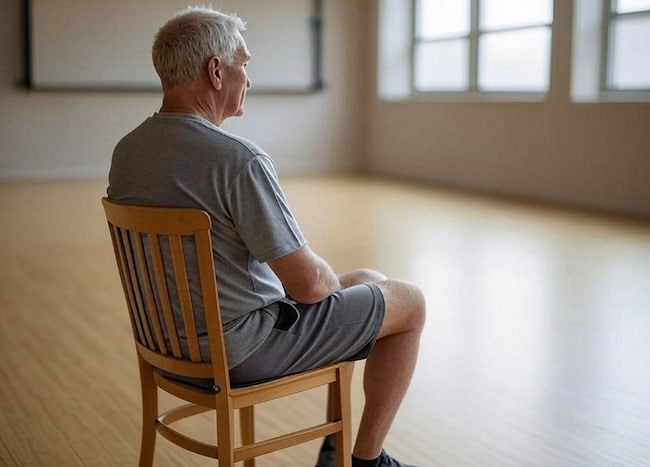
Some of the most valuable stretches mimic real-life movements, making daily tasks easier and safer.
Sit-to-Stand Practice
Sit on a sturdy chair with your feet flat. Lean slightly forward and stand up without using your hands. Slowly lower yourself back down with control.
Repeat 5 to 10 times.
Why it’s effective: Strengthens the legs, improves balance, and builds confidence for activities like getting out of a car or using the toilet.
Modification: Use the armrests for support if needed.
Seated March with Reach
Lift your right knee while reaching your right hand toward it. Lower and repeat on the left side.
Continue alternating for 10 repetitions.
Keep your core engaged throughout the movement.
Benefit: Combines coordination, balance, and hip mobility in one move.
Cool-Down Stretches to End the Session
Finishing your routine with calming movements helps relax the muscles and bring your heart rate down.
Deep Breathing with Arm Sweep
Inhale slowly while sweeping both arms up overhead. Exhale as you lower your arms back down.
Repeat 5 to 8 times.
Focus on long, slow breaths to maximize relaxation.
Benefit: Reduces stress and enhances oxygen flow throughout the body.
Seated Prayer Stretch
Sit tall and bring your palms together in front of your chest. Gently press your hands forward while rounding your upper back slightly.
Hold for 20 seconds, then relax.
This stretch is ideal for releasing upper back tension after a session.
Essential Safety Tips for Chair Stretching
Even gentle stretches can cause injury if done incorrectly. Follow these guidelines to stay safe.
Choose the Right Chair
Use a sturdy, armless chair without wheels. Your feet should rest flat on the floor with your knees at a 90-degree angle. Avoid soft sofas, recliners, or chairs that could tip or slide.
Maintain Proper Posture
Sit tall with your shoulders relaxed and your core gently engaged. Avoid slouching or locking your joints during any movement.
Know Your Limits
- Never stretch into pain—mild tension is enough
- Move slowly and smoothly
- Stop immediately if you feel dizzy, short of breath, or discomfort
Warning: If you have osteoporosis, avoid forward rounding or deep twists. Modify movements or consult a healthcare provider for personalized guidance.
How Often to Do Chair Stretches
For best results, aim for 3 to 5 sessions per week, with each session lasting 15 to 25 minutes. You can break sessions into shorter segments throughout the day if needed.
Consider these timing options:
- Morning: Loosen stiffness that builds up overnight
- After sitting: Reset posture after long periods of inactivity
- Evening: Promote relaxation and better sleep
Consistency matters more than intensity. Gentle daily movement yields better long-term results than occasional long sessions.
Adapting Stretches for Specific Needs
Chair stretches can be modified for nearly any fitness level or health condition.
For Arthritis or Joint Pain
- Reduce the range of motion
- Use smaller, lighter movements
- Apply a warm compress before stretching to loosen joints
For Post-Stroke or One-Sided Weakness
- Focus on symmetrical movements when possible
- Use the stronger side to gently guide the weaker side
- Work with a physical therapist for personalized modifications
For Wheelchair Users
Most seated stretches can be performed in a wheelchair. Make sure the brakes are locked and your feet are supported on the floor or footrests.
Frequently Asked Questions About Chair Stretches for Elderly
What Are the Best Chair Stretches for Seniors With Limited Mobility?
Gentle movements like wrist circles, ankle ABCs, seated marches, neck side stretches, and shoulder rolls are excellent starting points. These require minimal effort while still improving circulation and flexibility.
How Often Should Elderly Individuals Do Chair Stretches?
Aim for 3 to 5 sessions per week, with each session lasting 15 to 25 minutes. Daily short sessions are often more beneficial than occasional longer ones.
Can Chair Stretches Help Prevent Falls?
Yes. By improving flexibility, balance, and coordination, regular chair stretching reduces fall risk. Moves like seated marches, ankle ABCs, and sit-to-stand practice are especially helpful for stability.
Are Chair Stretches Safe for People With Arthritis?
Generally, yes. Chair stretches are low-impact and can be modified to avoid painful movements. Always move within a pain-free range and consider applying heat before stretching to ease stiffness.
Do Seniors Need Any Special Equipment for Chair Stretches?
No special equipment is required. A sturdy chair without wheels is the only essential item. Optional tools like resistance bands, light weights, or towels can add variety but are not necessary for basic stretching.
When Should Seniors Avoid Chair Stretches?
Seniors should avoid or modify stretches if they experience acute pain, recent injury, or have been advised by a doctor to limit movement. Conditions like severe osteoporosis or recent surgery may require professional guidance.
Final Thoughts on Building a Sustainable Stretching Habit
Chair stretches for elderly adults are one of the simplest and most powerful tools for maintaining mobility, reducing pain, and staying independent. The key to success is consistency, not intensity. Even 10 to 15 minutes a day can lead to noticeable improvements in flexibility, posture, and confidence over time.
Start with just two or three stretches from this guide and gradually add more as your comfort grows. Pair your routine with a daily habit—like stretching while watching the morning news or after a meal—to make it stick. Track your progress in a simple notebook and celebrate small wins along the way.
Most importantly, listen to your body. Move gently, breathe deeply, and remember that every bit of movement counts toward a healthier, more independent life.