

Selecting the right walker for an elderly loved one shapes daily safety, independence, and confidence. With options ranging from basic frames to advanced rollators with seats and canopies, the choices can feel overwhelming. Matching the device to the user’s physical needs, environment, and lifestyle is essential to choose a walker for elderly users effectively.
A poorly fitted walker leads to discomfort, poor posture, and fall risk. The right one reduces joint strain, supports proper alignment, and encourages active movement. This guide walks through walker types, weight limits, wheel sizes, braking systems, and safety features so you can make a confident, informed decision.
Match Walker Type to Daily Mobility Needs
Identify Where the Walker Will Be Used Most
The first step in choosing a walker is determining the primary environment. A walker that works perfectly indoors often fails outdoors.
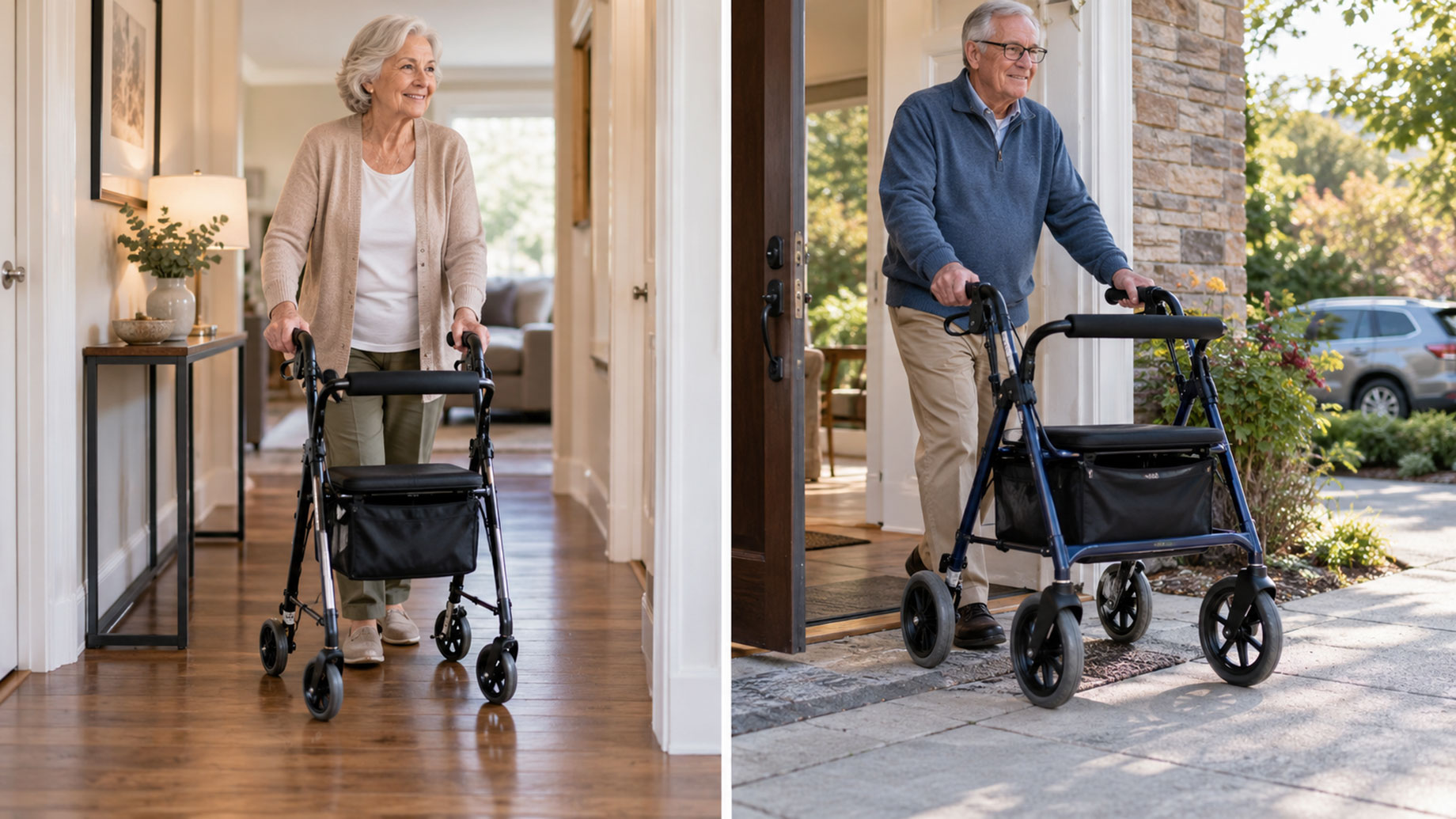
- Indoors (home, doctor’s office, mall): Choose a lightweight, maneuverable walker with 4–5 inch wheels for tight spaces.
- Outdoors on sidewalks or paved paths: Pick a rollator with 7-inch or larger wheels to handle cracks and curbs.
- Grass, gravel, or uneven terrain: Choose a heavy-duty rollator with air-filled (pneumatic) tires for shock absorption.
Using a small-wheeled walker on rough ground increases resistance and fall risk. Always match the wheels to the user’s most common walking surface.
Choose Between a Rollator and a Standard Walker
Two main walker categories serve different needs:
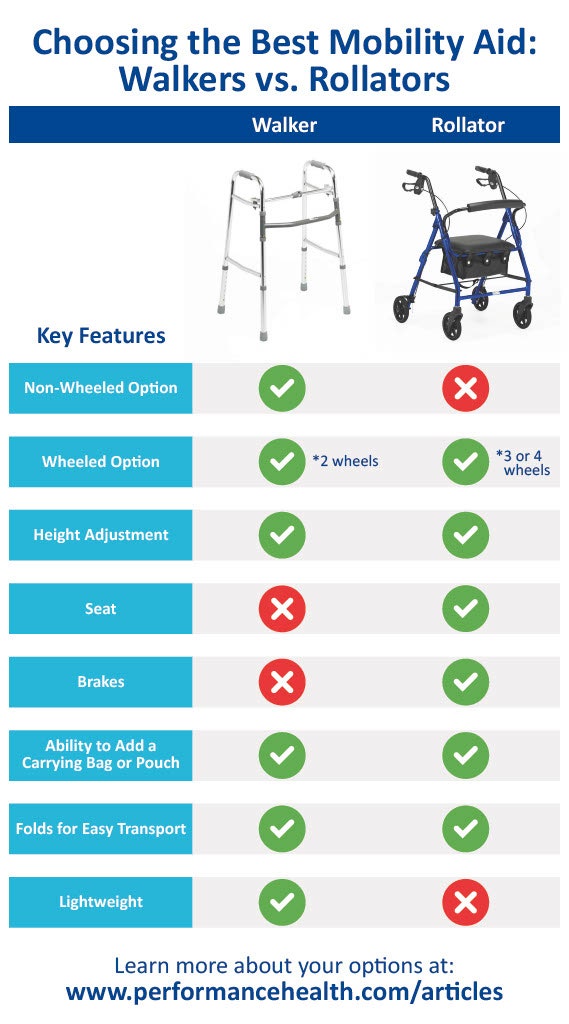
- Standard Walker (No Wheels or Two Wheels):
- Requires lifting to move
- Offers maximum stability
- Best for users with poor balance or post-surgery recovery
-
Lacks a seat and suits short distances
-
Rollator (Four Wheels):
- Glides smoothly with hand brakes
- Includes a seat for rest breaks
- Ideal for longer walks and outdoor use
- More maneuverable but less stable than a standard walker
Quick Guide:
– Pick a standard walker for short indoor walks with maximum support.
– Pick a rollator for regular outdoor use, rest breaks, or longer distances.
Prioritize Weight Capacity and Frame Strength
Select Capacity Based on User Weight
Weight capacity is a critical safety factor. Exceeding the limit risks frame failure and serious injury.
- Standard models: Support 200–250 lbs
- Heavy-duty models: Support 300–400 lbs
If the user weighs over 250 lbs, only consider heavy-duty rollators. These models feature reinforced frames, wider bases, and broader handlebar spacing for safer sitting and standing.
Avoid Compromising on Build Quality
A flimsy frame causes wobbling, poor brake performance, and reduced confidence. Look for:
- Steel or aircraft-grade aluminum frames
- Wider wheelbase for stability
- 3-inch wider handle spacing in heavy-duty models for safer seating
Pro Tip: Test the walker’s stability by gently rocking it side to side. Any flex or creaking indicates weak construction.
Ensure Proper Height and Fit
Adjust Handlebars to Wrist Level
An improperly sized walker causes hunching, shoulder strain, and poor posture. Follow these steps:
- Have the user stand straight with arms at their sides.
- The handlebars should align with the crease of the wrist.
- When gripping the handles, elbows should bend slightly (15–30 degrees).
Most walkers adjust in height, but verify the range. Some models only adjust up to 37 inches, which may be too short for taller users.
Confirm Seat Height for Safe Sitting
If the walker has a seat, check that:
- Hips sit slightly higher than knees when seated
- Feet rest flat on the floor
- The user can sit and stand without leaning forward
A seat that is too low forces the user to scoot forward, increasing fall risk.
Evaluate Braking System Reliability
Demand Easy-to-Use Hand Brakes
All rollators must have hand-operated brakes connecting to the rear wheels. These brakes are essential for:
- Slowing down on inclines
- Stopping safely
- Locking the walker when seated
Brakes should engage smoothly with minimal hand strength. Look for ergonomic levers that are easy to grip, especially for users with arthritis.
Prepare for Brake Maintenance
Brake cables stretch over time. Monthly checks and occasional adjustments are necessary. Learn how to:
- Tighten brake cables with a basic wrench
- Test both brakes before each use
- Replace worn brake pads when needed
Critical Warning: A walker with weak or uneven brakes is dangerous. If one brake fails, the user can lose control, especially on slopes.
Match Wheel Size to Walking Terrain
Pick Small Wheels for Indoor Use
For homes with hard floors or low-pile carpet:
- 4–5 inch wheels offer quiet, smooth movement
- Better maneuverability in tight spaces like bathrooms and kitchens
- Lighter weight for easier handling
Avoid using these on grass, as they sink and create resistance.
Choose Large Wheels for Outdoor Mobility
For sidewalks, parks, or uneven surfaces:
- 7-inch or larger wheels roll over cracks, curbs, and gravel
- Pneumatic (air-filled) tires absorb shocks and improve traction
- Ideal for users who walk outside regularly
Pro Tip: Solid rubber tires require no inflation but offer less cushion. Use them only on smooth surfaces.
Assess Seat and Storage Features
Require a Cushioned Seat with Back Support
A seat is more than a convenience. It serves as a safety feature. Look for:
- Padded seat with slight contour for comfort
- Supportive backrest to maintain posture
- Seat height matching the user’s body proportions
Avoid models with flimsy mesh seats or no back support. These designs discourage use and increase fatigue.
Confirm Storage Capacity
Many rollators include:
- Under-seat basket for groceries or medical supplies
- Pockets or compartments for wallet, phone, and keys
- Cup holder for hydration
These features reduce the need to carry bags, improving balance and convenience.
Test Before Buying: Sit on the seat and reach into the basket. If it feels uncomfortable or hard to access, keep looking.
Consider Portability and Storage Space
Choose Foldable Models for Small Spaces
If storage is limited in an apartment, car trunk, or airplane:
- Select a folding rollator that collapses quickly
- Look for one-handed folding mechanisms
- Verify folded dimensions match your space
Most foldable rollators weigh 15–25 lbs, light enough to lift into a car with assistance.
Beware of Bulk in Tight Areas
Even folded, rollators can be bulky. Consider:
- Can it fit in your elevator or narrow hallway?
- Is there space at restaurants or doctor’s offices?
- Can the user safely fold and unfold it?
If the user has weak arms or poor balance, avoid complex folding systems.
Review Additional Safety and Comfort Features

Add a Canopy for Weather Protection
For frequent outdoor users:
- A sunshade or rain canopy protects from UV rays and light rain
- Some models offer removable or adjustable canopies
- Ideal for park walks, shopping, or waiting outside
Consider Forearm Supports for Joint Pain
For users with arthritis, wrist pain, or recent fractures:
- Forearm support walkers transfer weight from hands to forearms
- Include padded rests for comfort
- Reduce strain on wrists and elbows
These models cost more but offer significant relief during recovery.
Include Lights and Reflectors for Visibility
For early morning or evening use:
- LED front and rear lights
- Reflective strips on frame and wheels
- Improved safety in low-light conditions
Verify Insurance Coverage and Prescription Needs
Confirm Medicare Part B Eligibility
In the U.S., Medicare Part B covers 30–40% of the cost of a walker with a seat when:
- A doctor provides a written prescription
- The supplier accepts Medicare
- The device is deemed medically necessary
Exclusions: Canopies, lights, and upgraded tires may not be covered.
Check Private Insurance Plans
Many Medicare Advantage and private insurers also cover rollators. Always:
- Call your provider before purchase
- Ask about coverage limits and required documentation
- Submit the prescription to the supplier (in-store or online)
Warning: Without a doctor’s order, reimbursement is unlikely.
Test Before You Buy Every Time
Insist on an In-Person Trial
Online shopping is convenient, but you cannot test fit, seat comfort, or brake feel remotely. Always:
- Visit a medical supply store
- Have the user walk 10–15 feet with the walker
- Sit and stand to test seat height and stability
- Turn corners to assess maneuverability
Red Flags: If the user hunches, struggles to brake, or feels unstable, keep looking.
Practice in Real-World Conditions
After purchase:
- Practice on level ground first
- Try turning, stopping, and sitting
- Gradually introduce slopes and uneven surfaces
- Use caution on wet or slippery floors
Build confidence before heading outdoors.
Follow Maintenance and Safety Protocols
Perform Monthly Safety Checks
Keep the walker safe and functional with regular care:
- Inspect brakes for smooth engagement
- Check tire pressure if pneumatic
- Tighten loose bolts on frame and wheels
- Lubricate joints every few months
- Clean with a damp cloth to prevent buildup
Store Properly to Extend Lifespan
- Keep in a dry, indoor location
- Avoid damp garages or outdoor storage
- Fold when not in use to prevent tripping hazards
Frequently Asked Questions About Choosing a Walker for Elderly
What weight capacity do I need in a walker?
Standard models support 200–250 lbs. If the user weighs more than 250 lbs, choose a heavy-duty model that supports 300–400 lbs for safe, reliable use.
How do I know if a walker fits properly?
Stand straight with arms at your sides. The handlebars should align with the crease of your wrist, and your elbows should bend slightly when gripping the handles.
Can I use a rollator on carpet?
Yes, but avoid thick or shaggy carpets. Smaller wheels may struggle with high-pile carpet, so choose a model with appropriately sized wheels for your flooring.
Are rollators covered by insurance?
Medicare Part B typically covers 30–40% of the cost with a physician’s prescription. Some Medicare Advantage and private insurers also cover rollators. Always verify coverage before purchasing.
Can I take a rollator on an airplane?
Most foldable rollators can be checked as luggage. Confirm specific policies with your airline before traveling.
What size wheels should I choose?
Choose 4–5 inch wheels for indoor use and 7-inch or larger wheels for outdoor terrain. Air-filled tires work best on rough or uneven surfaces.
Key Takeaways for Choosing the Right Walker
Choosing the right walker for an elderly person affects daily safety, comfort, and independence. Focus on weight capacity, proper handle height, wheel size, brake reliability, and real-world usability to find a walker that truly supports mobility. Always test in person, involve the user in the decision, and verify insurance coverage before purchasing.
Start by visiting a local medical supply store with the user. Have them walk, sit, and brake on different surfaces to identify the best fit. With the right walker, every step becomes safer, easier, and more confident.