Watching an elderly loved one slowly slide forward or slip off their chair is worrying. It’s a common struggle for caregivers, especially when caring for someone with weak muscles, limited mobility, or a neurological condition. Beyond discomfort, sliding can cause poor posture, pressure sores, skin damage, and dangerous falls. Fortunately, simple and affordable fixes can help. From non-slip mats and wedge cushions to chair design and medical insight, this guide covers practical ways to keep seniors safely seated.
Choose a Chair That Naturally Prevents Sliding
The chair itself is your first line of defense. Many standard chairs, particularly those with slippery leather or vinyl upholstery, make sliding almost inevitable.
Pick a Chair with a Slight Backward Tilt
A chair that reclines 5° to 10° helps counteract the natural tendency to slide forward. Look for firm cushions, high sides, and a back tall enough to support the shoulders and head. Avoid deep seats where the person cannot sit fully back with their feet flat on the floor.
Consider a Pommel Chair for Persistent Sliding
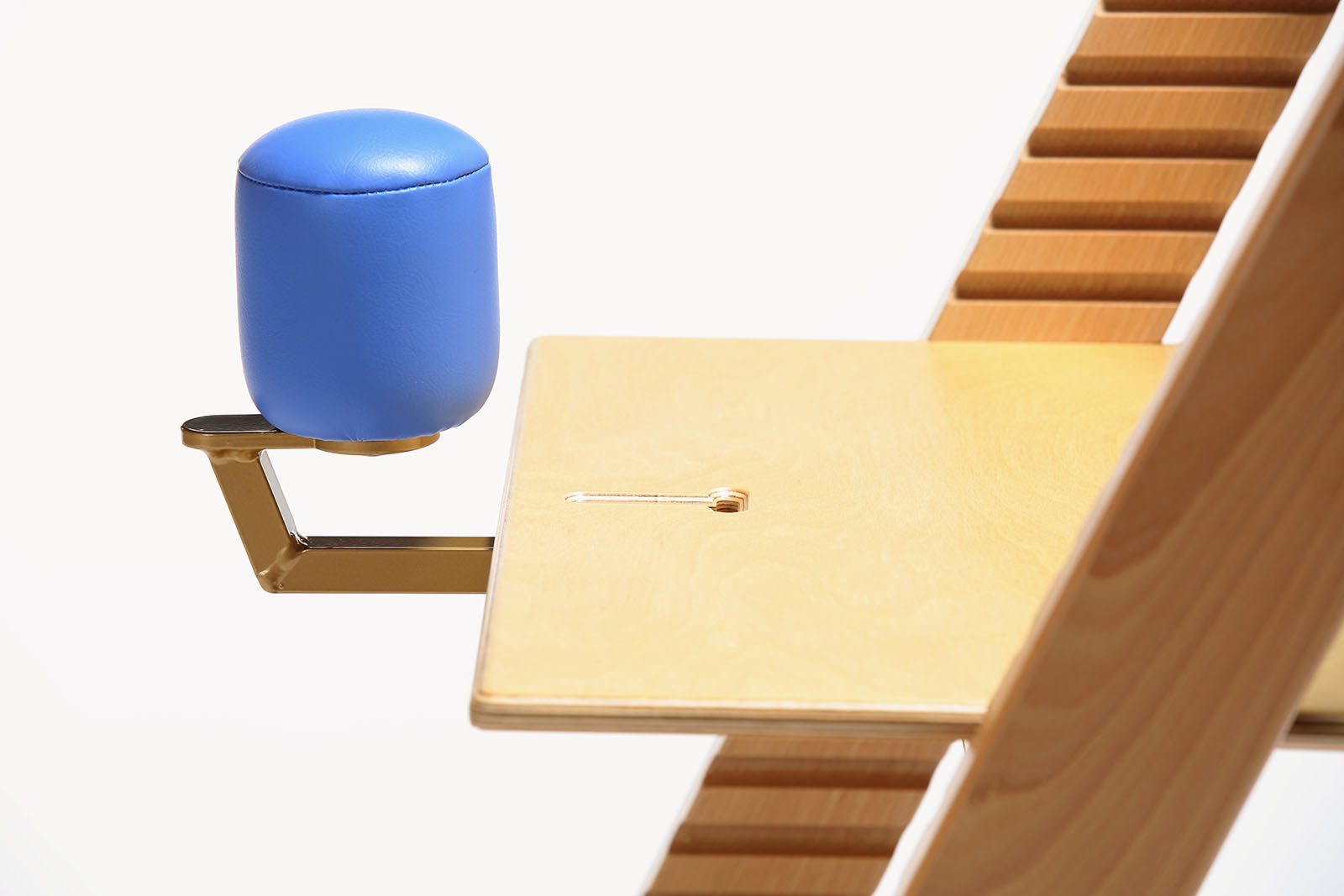
A pommel chair features a soft raised ridge at the front center of the seat. This gentle barrier keeps the pelvis anchored and prevents forward movement. While not comfortable for everyone, it works well in care settings for people with significant postural instability.
Add a Non-Slip Mat to the Chair Seat

One of the cheapest and most effective solutions involves a household item most people already have nearby: anti-slip rug underlay.
Cut an Anti-Slip Mat to Fit the Seat
Caregiver Jessbow reported success using an IKEA STOPP anti-slip mat cut to chair size. Placed directly on the seat, it grips both the cushion and the person’s clothing, stopping movement. The mat is thin, washable, breathable, and inexpensive, making it an easy first step.
Pro Tip: Look for latex-free, machine-washable underlay to avoid skin irritation and overheating during long sitting periods.
Try a Wedge Cushion with the Shallow End at the Back
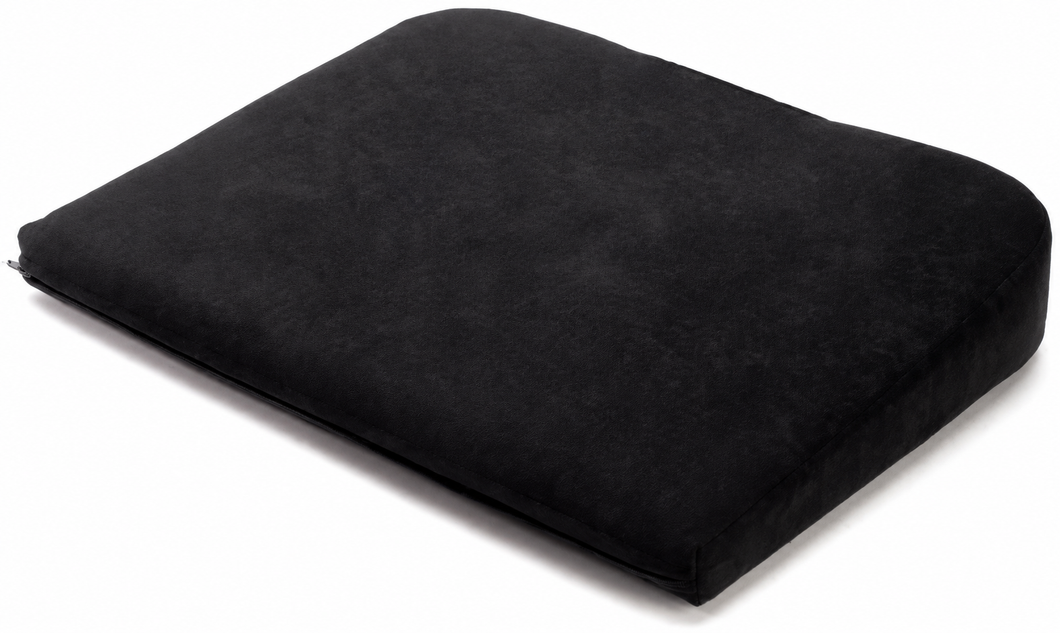
Wedge cushions change the angle of the pelvis, which directly affects how well someone stays seated.
Reverse a Standard Seat Wedge
Most wedge cushions are designed with the deep end at the back to relieve tailbone pressure. Turning it around (shallow end at the back) tilts the pelvis backward and discourages forward sliding. This reversed position often works well for people who constantly scoot forward in their seat.
Caution: Watch for discomfort or added strain on the lower back. Anyone with spinal issues should try this briefly first and stop if pain occurs.
Choose High-Density Foam for Lasting Support
Low-quality foam flattens quickly and loses its effect. A high-density foam wedge, like the Original Seat Wedge from Complete Care Shop, holds its shape and includes a soft, washable cover with a flexible strap for secure positioning.
Use a Lap Belt or Seatbelt for Extra Safety

For seniors who fidget, lean sharply, or have cognitive impairments, a gentle lap belt can prevent dangerous slips.
Try a Wheelchair-Style Seatbelt
As caregiver “try again” shared, a standard wheelchair seatbelt provides both security and support. Many geriatric chairs also offer optional lap belts. Always use these responsibly, remove them when the chair is unoccupied, and never rely on them in place of supervision.
Important: Restraints should support comfort and safety, not limit freedom unnecessarily. Consult a physical or occupational therapist if you’re unsure about proper use.
Check for Medical Reasons Behind the Sliding
Sometimes the chair isn’t the problem. Underlying health conditions can drive constant repositioning.
Look Into Restless Leg Syndrome
Caregiver Canary raised the possibility that Restless Leg Syndrome (RLS) could be the culprit. The urge to move the legs, especially at rest, can cause gradual forward shifting in the seat. If your loved one fidgets often or complains of uncomfortable leg sensations, mention it to a doctor. Treating RLS may reduce the sliding behavior.
Evaluate Muscle Weakness or Neurological Conditions
Parkinson’s disease, stroke recovery, and general deconditioning can all weaken trunk control. A physical or occupational therapist can assess posture, strength, and balance, then recommend targeted exercises or specialized seating.
Improve Overall Posture and Positioning
Even the best equipment fails if the person’s body is not properly aligned.
Keep Feet Flat and Supported
Dangling feet create instability and encourage forward sliding. Make sure feet rest flat on the floor or on a sturdy footrest. This stable base reduces the urge to lean forward.
Aim for 90-Degree Hips and Knees
The ideal seated position includes hips and knees bent at 90°, back fully supported against the chair, and shoulders relaxed. Adjust the chair height or add a small cushion under the feet if needed.
Reposition Every 30 to 60 Minutes
Long periods in one position lead to fatigue, pressure buildup, and slow sliding. Help your loved one shift position regularly to maintain comfort and circulation.
Combine Solutions for the Best Results

Few seniors respond to just one fix. Layering strategies usually delivers stronger, longer-lasting results.
Try This Layered Setup
- Place an anti-slip mat on the chair seat
- Add a wedge cushion with the shallow end at the back
- Fasten a lap belt during extended sitting
- Support the feet with a footrest
This combination tackles friction, posture, and safety at the same time.
Watch Skin Health Closely
Check the skin daily, especially around the tailbone, hips, and thighs. Redness that lingers more than 30 minutes after repositioning can signal early pressure damage. Rotate between different cushions and seating setups to relieve pressure points.
Know When to Call in a Professional
If home solutions aren’t enough, expert help can make a major difference.
Book an Occupational Therapy Assessment
An occupational therapist can perform a full seating evaluation, recommend adaptive equipment, and even arrange for custom-molded cushions. They’ll also assess strength, cognition, and fall risk to design a personalized plan.
Ask About Specialized Seating Systems
For severe postural challenges, geriatric or rehab chairs with adjustable tilt, lateral supports, and headrests may be an option. Some insurance plans and medical supply programs cover these chairs when prescribed.
Frequently Asked Questions About Keeping Elderly from Sliding Out of Chair
What Is the Cheapest Way to Stop an Elderly Person from Sliding?
An anti-slip rug underlay cut to fit the chair seat is the most affordable solution. It costs just a few dollars, grips both the cushion and clothing, and can be removed or replaced easily.
Can a Wedge Cushion Help Someone Who Keeps Sliding Forward?
Yes. When turned around so the shallow end is at the back of the seat, a wedge cushion tilts the pelvis backward and helps prevent forward sliding.
Is Restless Leg Syndrome Linked to Sliding Out of a Chair?
It can be. The constant urge to move the legs associated with RLS may cause gradual forward shifting in the seat. Treating the underlying condition often reduces sliding behavior.
When Should a Caregiver Seek Professional Help for Sliding?
If sliding continues despite trying mats, wedges, and proper positioning, consult an occupational therapist. They can assess posture, recommend equipment, and rule out medical causes.
Are Lap Belts Safe for Elderly Chair Users?
Lap belts can be safe when used correctly. They should support posture and prevent falls without restricting breathing or movement. Always follow care guidelines and remove belts when the chair is unoccupied.
Final Thoughts on Keeping Elderly from Sliding Out of Chair
Stopping an elderly person from sliding out of a chair starts with understanding why it’s happening. Often, the solution is a combination of small changes: a non-slip mat for friction, a wedge cushion for posture, a seatbelt for safety, and proper foot support. Pair these with regular repositioning and a quick medical check for restless legs or muscle weakness.
Start with one affordable change, like an anti-slip mat, and build from there based on what works. If sliding persists, an occupational therapist can design a tailored plan that keeps your loved one safe, comfortable, and dignified while seated.