

Joint stiffness, fear of falling, and chronic pain keep many older adults from staying active. Land-based workouts can feel punishing on aging knees, hips, and spines. Pool exercises for elderly individuals solve this problem by using water’s natural buoyancy and resistance. Studies show water reduces joint impact by up to 90%, creating one of the safest environments for building strength and confidence.
This guide covers proven routines you can do in chest-deep water, along with setup tips and safety guidelines. You’ll learn warm-up moves, strength drills, balance exercises, cardio intervals, and cool-down stretches designed specifically for seniors. Whether you manage arthritis, recover from surgery, or simply want to stay mobile, these water workouts deliver real results with minimal risk.
Shallow Water Setup Tips for Senior Workouts
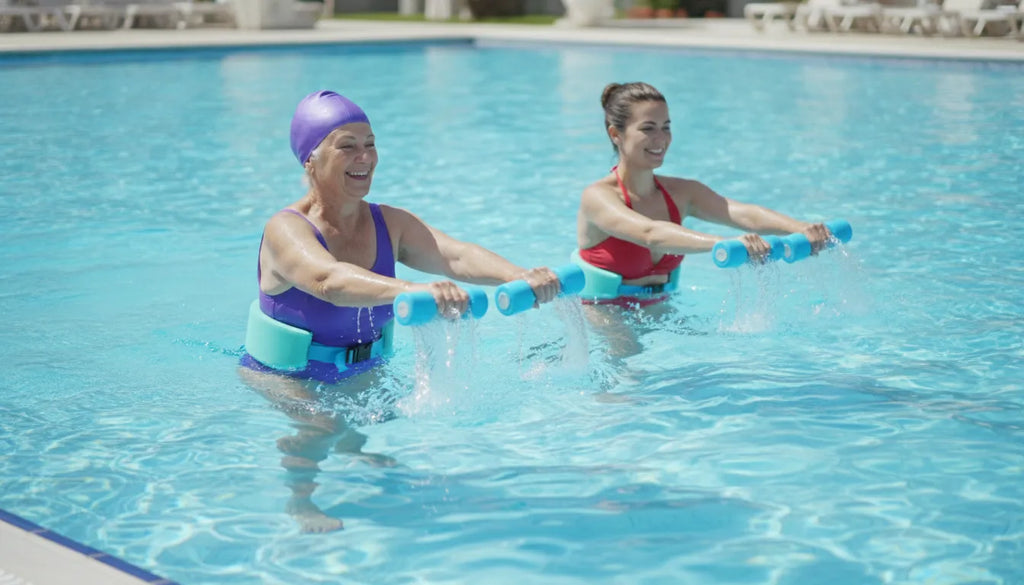
A safe environment makes every session more effective and enjoyable.
Choose the Right Pool Depth
Pick a pool where water reaches chest to waist height when standing. This depth provides enough resistance for strength work while keeping your feet planted for stability. Most community centers, YMCAs, and therapy pools offer shallow lanes ideal for seniors.
Wear Supportive Water Gear
Water shoes prevent slips on slick pool floors. A flotation belt adds confidence if balance feels shaky. Skip inflatable floats that shift your center of gravity. Lightweight mesh clothing dries fast and allows full range of motion during every move.
Time Your Workout Wisely
Aim for 20 to 30 minutes, 3 to 5 days per week. Morning sessions loosen stiff joints, while afternoon workouts may improve sleep. Always warm up for 5 minutes and cool down for 5 minutes to prevent strain and injury.
Warm-Up Movements in Water
Starting slow prepares muscles and reduces injury risk before the main workout.
March in Place Gently
Lift knees alternately as if walking in place. Keep movements small and controlled for 2 to 3 minutes. This boosts circulation and activates leg muscles. Hold the pool edge whenever you need extra balance support.
Arm Circles Forward and Back
Extend arms out to the sides at shoulder height. Make small forward circles for 30 seconds, then reverse direction. This warms up shoulder joints and improves range of motion, especially helpful for anyone living with arthritis.
Side Steps with Control
Step sideways across the pool, taking 10 steps right, then 10 left. Keep feet pointed forward and engage your core throughout. Use the wall to steady yourself at each turn. This activates hip abductors and improves lateral balance.
Strength Training Exercises in Water
Water resistance builds muscle without stressing joints or requiring weights.
Leg Lifts for Hip Stability
Hold the pool wall with both hands. Lift one leg out to the side slowly, keeping toes pointing forward. Lower it back with control. Complete 10 to 15 reps per leg to strengthen hip abductors, which are critical for walking stability.
Pro Tip: Move only from the hip, never swing. If balance wavers, shorten the range of motion until you feel steady.
Standing Knee Extensions
Hold the wall and extend one leg straight forward. Squeeze the quadriceps at the top, then lower slowly. Complete 10 to 15 reps per leg. This targets front thigh muscles that support knee function and stair climbing.
Water Bicep Curls
Submerge arms and bend elbows as if lifting weights. Use water resistance to simulate curls. Add foam dumbbells for extra challenge. Perform 12 to 15 reps to build arm strength for daily tasks like carrying groceries.
Wall Push-Ups for Chest
Stand an arm’s length from the pool wall. Place palms flat and lean in, bending elbows to 90 degrees. Push back gently and repeat for 10 to 15 reps. This strengthens chest and arms while improving posture.
Balance and Stability Drills
Falls are a leading cause of injury in older adults. These drills build confidence and coordination in a safe setting.
Single-Leg Stands
Hold the wall and lift one foot off the pool floor. Balance on the other leg for 15 to 30 seconds, then switch sides. As skill improves, try letting go with one hand for added challenge.
Visual Cue: Focus on a fixed point across the pool to steady your gaze and improve stability.
Heel-to-Toe Walk
Walk in a straight line, placing the heel of one foot directly in front of the toes of the other. Take 10 steps forward, then turn and repeat. This mimics the tandem walk used in clinical balance assessments.
Weight Shifts Side to Side
Stand with feet hip-width apart. Slowly shift weight to the right, lifting the left foot slightly. Return to center, then shift left. Repeat 10 times per side to train dynamic balance and core control.
Cardiovascular Water Workouts
Improve heart health without joint strain using these cardio moves.
Water Jogging or Running
Jog in place with high knees. Keep your head above water and arms pumping. Start with 1 to 2 minutes, rest 30 seconds, and repeat 3 to 5 times. Water resistance increases calorie burn compared to land jogging.
Time-Saving Shortcut: Try intervals of 30 seconds fast followed by 30 seconds slow for maximum heart benefit in less time.
Jumping Jacks in Water
Start with feet together and arms at sides. Jump while spreading legs and raising arms overhead. Return to start and complete 10 to 15 reps. Water slows the motion, making this safe yet effective for raising heart rate.
Flutter Kicking on Back
Hold a foam noodle under your arms or lower back. Float on your back and kick legs up and down rapidly for 30 to 60 seconds. This works the lower body and core while staying gentle on the spine.
Stretching and Cool-Down Routine
End every session with flexibility work to release tension and prevent stiffness.
Standing Hamstring Stretch
Extend one leg forward with heel on the pool floor, toe pointing up. Lean slightly forward from the hips and feel the stretch in the back of the thigh. Hold for 20 to 30 seconds per leg.
Shoulder Rolls and Release
Roll shoulders forward in slow circles 10 times, then reverse direction. Follow with gentle neck stretches by tilting your head side to side without forcing. This releases tension built during exercise.
Deep Breathing in Water
Stand still with hands on hips. Inhale deeply through the nose, expanding the belly. Exhale slowly through the mouth and repeat 5 times. This calms the nervous system and signals the body to relax.
Safety Rules for Senior Swimmers
Prevent accidents and maximize benefits with these essential guidelines.
Never Exercise Alone
Even strong swimmers should have someone nearby during workouts. Many facilities offer senior water aerobics classes with trained instructors who provide supervision and motivation.
Check Water Temperature
The ideal therapeutic range is 83 to 88°F (28 to 31°C). Cold water can stiffen joints, while hot water may cause dizziness. If the pool feels too cold or too warm, skip the workout for that day.
Stop If You Feel Pain
Mild discomfort is normal when starting, but sharp or joint pain means stop immediately. Cramps can occur, so exit the pool and stretch gently. Stay hydrated before and after, even if you don’t feel sweaty.
Benefits of Regular Water Exercise
Consistent pool workouts deliver measurable improvements in health and quality of life.
Joint Pain Relief
Buoyancy reduces pressure on knees, hips, and spine. Many people with osteoarthritis report less pain and better mobility after just 4 weeks of water exercise.
Improved Balance and Gait
Water challenges stability in a safe way. Over time, this translates to steadier walking and fewer falls on land.
Enhanced Heart Health
Research found seniors doing water aerobics 3 times per week lowered blood pressure and improved circulation within 8 weeks. The rhythmic movement of arms and legs acts like a pump for the cardiovascular system.
Mental and Emotional Boost
Group classes reduce isolation and build friendships. The soothing nature of water decreases stress hormones. Participants often report better sleep and improved mood after consistent pool workouts.
Adapting Exercises for Limited Mobility

Tailor routines to match individual ability and comfort levels.
Seated Exercises at Pool Edge
Sit on the pool deck with legs in water. Do leg extensions, ankle circles, and arm raises. This works muscles while eliminating balance demands entirely.
Use Pool Noodles for Support
Hold a noodle vertically and press it into the pool floor for added stability during standing moves. You can also wrap it around your back and under arms to create a floating harness.
Focus on Range of Motion
For those with severe stiffness, prioritize gentle movements over intensity. Small circles, slow marches, and controlled arm sweeps maintain joint flexibility without strain.
Choosing Between Classes and Solo Workouts

Weigh your options for long-term success and enjoyment.
Advantages of Group Classes
Classes offer structure, music, and social connection. Instructors ensure proper form and safe progression. Most senior-focused classes cost less than $10 per session and provide built-in accountability.
Creating a Home-Like Routine
If you have pool access, follow a simple 3-part template for every session:
- 5 min warm-up with marching and arm circles
- 20 min main set mixing strength, balance, and cardio
- 5 min cool-down with stretching and breathing
Repeat the same routine weekly, then add difficulty gradually as your fitness improves.
Frequently Asked Questions About Pool Exercises for Elderly
Are pool exercises safe for seniors with arthritis?
Yes, pool exercises are excellent for people with arthritis. Water’s buoyancy reduces joint pressure by up to 90%, while warm water (83 to 88°F) helps soothe stiff joints. Many seniors with osteoarthritis report less pain and better mobility after consistent water workouts.
How often should elderly adults do water exercises?
Aim for 3 to 5 sessions per week, with each session lasting 20 to 30 minutes. Consistency matters more than duration. Even short, regular workouts deliver measurable improvements in strength, balance, and heart health.
What is the best pool depth for senior workouts?
Chest-deep to waist-deep water works best for most seniors. This depth provides enough resistance for strength training while keeping feet planted for stability. Therapy pools and shallow lanes at community centers offer ideal conditions.
Do I need to know how to swim to do pool exercises?
No swimming skills are required for most senior pool exercises. These routines are performed while standing in shallow water with feet on the pool floor. Holding the wall provides extra support whenever needed.
Can pool exercises help prevent falls?
Yes, balance drills like single-leg stands, heel-to-toe walks, and weight shifts directly improve stability. Water provides a safe environment to practice these movements. Over time, better balance translates to fewer falls during daily activities on land.
What equipment do seniors need for water workouts?
Basic equipment includes water shoes for grip and a flotation belt for added confidence. Foam dumbbells and pool noodles add resistance and support. Most community pools provide this gear, or you can purchase affordable options online.
Key Takeaways for Starting Pool Exercises as a Senior
Pool exercises for elderly adults offer one of the safest paths to better strength, balance, and heart health. Water’s natural buoyancy protects joints while resistance builds muscle without weights. Start with shallow water, supportive gear, and 20 to 30 minute sessions 3 to 5 times weekly.
Focus on proper form over intensity, especially during your first weeks. Mix warm-ups, strength drills, balance work, cardio intervals, and cool-down stretches for a complete routine. Always warm up and cool down for 5 minutes each, and never exercise alone for safety.
Your next step is simple: visit a local community center or YMCA and ask about senior water aerobics classes or shallow pool access. Bring water shoes, start with the beginner routine in this guide, and track your progress weekly. Within a month, you’ll likely notice easier movement, less pain, and greater confidence in daily life.





